Concerns Grow Over Earthquake on 17th
"Epicenter at Nankai Trough"
30m Tsunami and 320,000 Deaths Expected
Recovery Costs Estimated at 1,997 Trillion Won
In Japan, fears of a 'Nankai Trough megaquake' have resurfaced following the earthquake that occurred on the 17th in the Kyushu-Shikoku strait. The Nankai Trough, a trench located south of Honshu, Japan, is known to generate massive earthquakes of magnitude 8 to 9 or higher on a cycle of 100 to 150 years.
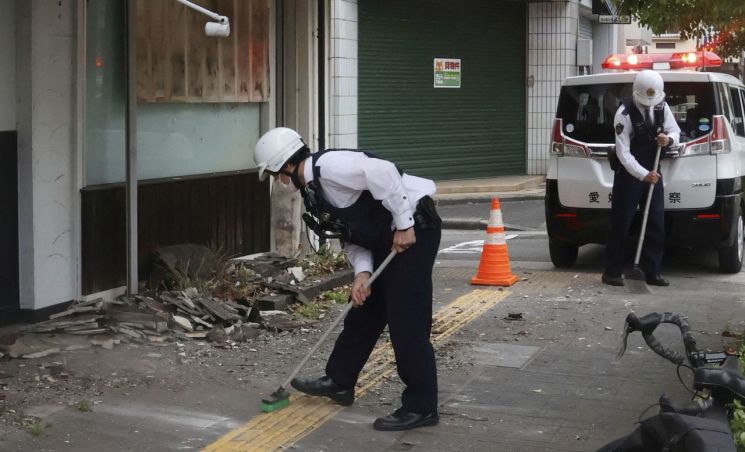
On the 19th, NHK reported that the magnitude 6.6 earthquake in Shikoku was the first since 1996 and that its epicenter is located in an area with the potential to trigger a megaquake.
The Nankai Trough is a trench located 4,000 meters underwater between Suruga Bay in Shizuoka Prefecture and the eastern Pacific coast of Kyushu, where the Eurasian Plate and the Philippine Plate meet. Along this trench, the Philippine Plate is subducting beneath the Eurasian Plate at a rate of several centimeters per year. As the Eurasian Plate is dragged down along with it, energy accumulates. When the plates can no longer withstand this energy and slip, they suddenly rebound, causing an earthquake.
All historical megaquakes along the Nankai Trough have been magnitude 8 or higher. In 1707, the Hoei Earthquake, the worst in Japanese history which also triggered the massive eruption of Mount Fuji, occurred. In 1854, the magnitude 8.6 Ansei Tokai Earthquake and the magnitude 8.7 Ansei Nankai Earthquake struck consecutively within 30 hours. Scholars estimate that megaquakes along the Nankai Trough occur at intervals of 100 to 150 years.
The problem is that the last Nankai Trough megaquake occurred about 80 years ago, between 1944 and 1946. Because of this, concerns are growing in Japan that another megaquake could strike within the next 20 to 30 years.
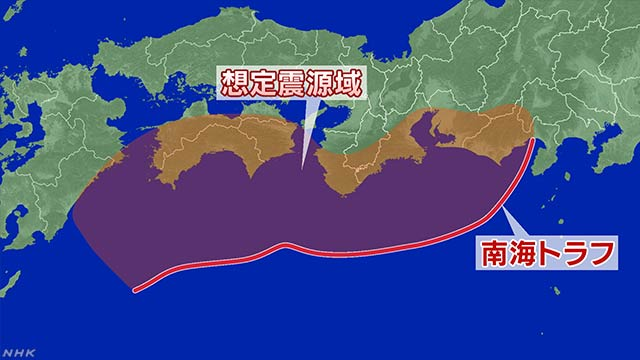 Location of Nankai Trough and Expected Earthquake Areas. The places marked with lines indicate the location of the Nankai Trough, and the colored areas represent potential epicenter locations. (Photo by NHK)
The Japanese government's Earthquake Research Committee estimates a 70 to 80% probability that a magnitude 8 to 9 earthquake will occur within the next 30 years. The damage is expected to surpass that of the Great East Japan Earthquake. Coastal areas could be hit by a massive tsunami exceeding 30 meters in height, potentially causing over 320,000 deaths from the Kanto region, which includes Tokyo, to Kyushu. Approximately 2.38 million buildings could be completely destroyed or lost, and up to 9.5 million evacuees could be left homeless. There is also a possibility of an eruption of Mount Fuji. The Japanese government projects that full recovery from the damage would cost more than twice the entire national budget, amounting to 220 trillion yen (1,997 trillion won).
With the epicenter of this recent earthquake near the Nankai Trough, both the Japanese government and media are paying close attention. The Earthquake Research Committee held a press conference the previous day, stating, "No significant changes have been observed in crustal movement data, but the likelihood of a megaquake has increased," emphasizing the need for preparedness even during normal times.
Naoshi Hirata, honorary professor at the University of Tokyo and chairman of the committee, reiterated, "The fact that no data showing special changes have been obtained only means that we must keep in mind that a megaquake could occur at any time and prepare for seismic resistance accordingly." The Japan Meteorological Agency also stated that the magnitude of this earthquake does not indicate a precursor to a megaquake but will conduct expert reviews.
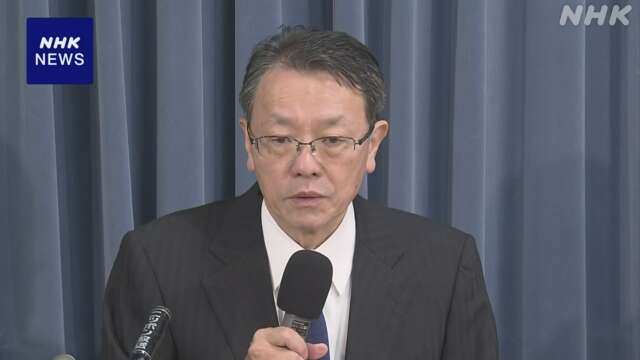 Professor Naoshi Hirata, Chair of the Japan Earthquake Research Committee and Emeritus Professor at the University of Tokyo, is explaining the possible connection between the recent earthquake and the Nankai Trough. (Photo by NHK)
Japanese media have pointed out that preparations for a megaquake remain insufficient. The Japan Meteorological Agency issues 'Nankai Trough Earthquake Temporary Information' when abnormal phenomena are observed in the Nankai Trough or when the probability of an earthquake increases relatively. This is a preparedness alert advising residents in expected damage areas to evacuate to higher ground for a week. However, Asahi Shimbun criticized the lack of publicity about this, noting that more than half of the residents are unaware of it.
Asahi reported, "Residents in expected damage areas such as Shizuoka Prefecture are completely unaware of this." According to a survey, 32.0% of respondents said they had heard of the 'Temporary Information' but did not know its contents, and 31.1% said they had never heard of it. The article emphasized, "We need to seriously reflect on whether we are truly prepared for earthquakes."
© The Asia Business Daily(www.asiae.co.kr). All rights reserved.



















