Incheon City announced on the 18th that the labor and management of the quasi-public city bus system have reached a final agreement to increase drivers' wages by 4.48% this year. The labor and management began wage negotiations in January and reached this agreement after meetings before the Local Labor Relations Commission mediation and adjustments of differences among labor, management, and government.
Initially, the labor union demanded a 9.3% wage increase, citing inflation and increased living expenses. On the other hand, the management insisted on a 2.5% wage increase, arguing that a higher rate could burden the finances of Incheon City and the Incheon Bus Transportation Business Association, which made reaching an agreement difficult.
However, during the 7th local government administration, Incheon steadily raised wages by an average of 6.69% over the past three years (2019?2021) to match the wage levels of Seoul drivers, which even led to a reversal of wage levels between Incheon and Seoul drivers. In this context, labor, management, and government agreed that this was unreasonable given Incheon’s smaller economic scale, and reached an agreement to increase wages by 4.48% without additional allowances.
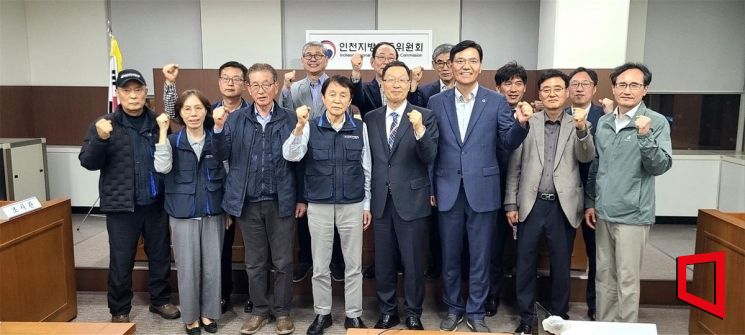 The labor and management of the semi-public city buses in Incheon are taking a commemorative photo after agreeing on a 4.48% wage increase for drivers this year.
 [Photo by Incheon City]
Before Incheon, the labor and management of quasi-public city bus systems in Seoul, Busan, Daegu, and Daejeon, which concluded wage negotiations this year, also agreed on a 4.48% increase.
The Incheon city bus quasi-public system, implemented since 2009, currently operates on 188 routes (34 companies, 1,922 buses). The quasi-public bus system supports deficits per route compared to transportation costs through city budget subsidies, with 281.6 billion KRW allocated last year.
An Incheon city official said, "We thank both labor and management for their decision to cooperate for mutual growth," and added, "We look forward to establishing a continuous cooperative system in the future."
Meanwhile, as the financial burden is expected to continue increasing due to the implementation of the city bus quasi-public system, the city plans to form a "City Bus Quasi-Public System Financial Efficiency Task Force (TF)" consisting of labor, management, government, and financial experts to devise countermeasures.
© The Asia Business Daily(www.asiae.co.kr). All rights reserved.

















