Strengthening Response System for Early Detection of At-Risk Children, Protection of Abused Children, and Prevention of Reabuse
① Early Detection: Expanding Investigation Targets and Operating Diverse, Detailed Discovery Systems for Early Identification of At-Risk Children
② Protection and Recovery Support: Expanding Support for ‘Home Visit Family Recovery Projects’ and Enhancing Case Management to Prevent Reabuse
③ Infrastructure Expansion: Increasing Four Temporary Protection Facilities for Reabuse Prevention and Abused Children, Strengthening Cooperation with Related Agencies
④ Prevention Education and Promotion: Enhancing Field Response through Capacity Training for Responders, Focused Campaigns during Family Month, etc.
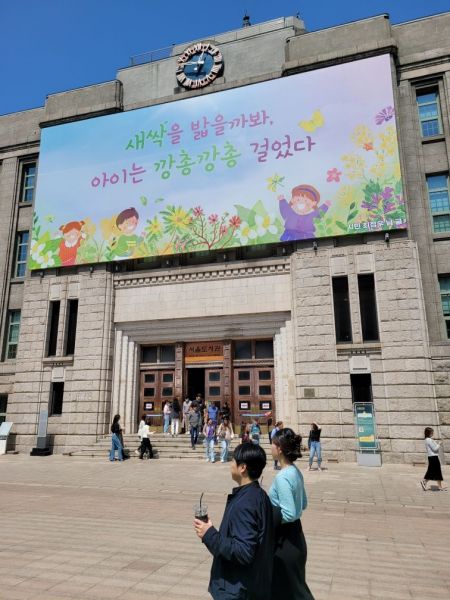
As low birth rates emerge as a serious social issue, efforts to not only encourage childbirth but also to raise already born children in a healthy and safe environment are equally important.
In this context, the Seoul Metropolitan Government is actively advancing the ‘Zero Child Abuse Seoul’ initiative by strengthening the response system for early detection of children showing signs of crisis, protection of abused children, and prevention of re-abuse.
To this end, Seoul plans to expand and reinforce the entire process including ① early detection, ② protection and recovery support, ③ infrastructure expansion, and ④ prevention and publicity, dedicating all efforts to creating a Seoul where no child suffers from abuse.
① Early Detection: Operating a diverse and detailed discovery system for early detection of children showing signs of crisis
First, year-round investigations will be conducted using social security big data to identify children at risk, a full survey of children registered under temporary newborn numbers, and joint inspections of high-risk children by related agencies.
Additionally, a focused and planned investigation will be newly established for children under the age of 2 who have difficulty expressing themselves and are hard to detect for abuse.
Seoul is conducting quarterly investigations of children showing signs of crisis through the e-Child Happiness Support Project by utilizing 44 types of social security big data such as missed vaccinations, missed infant health checkups, power outages, and long-term school absences to detect abused children early. It also conducts an annual full survey of 3-year-old children being raised at home.
Joint inspections by related agencies (police, local governments, child protection agencies) are conducted twice a year for high-risk children (those with repeated reports, refusal of case management or home visits, etc.), and a biannual survey is conducted on children recorded under temporary newborn numbers to verify birth registration and caregiving status.
The newly launched investigation for children under 2 years old will begin as early as July once the Ministry of Health and Welfare’s e-Child Happiness Support System is established. It will analyze characteristic factors by family type and region to identify households at risk of caregiving gaps and will be conducted across all 25 autonomous districts.
For households showing signs of crisis, direct visits will be made to check the caregiving environment and welfare needs, and if support is required, follow-up actions such as abuse reporting and linkage to welfare services will be carried out.
- e-Child Happiness Support Project location and safety survey (’23 quarterly): 15,760 children
- Joint inspection of high-risk children by related agencies (’23.6.13.~7.13.): 223 children
- Full survey of children with temporary newborn numbers (unregistered births) (’23.6~’24.2): 1,547 children
② Protection and Recovery Support: Expanding support targets for the ‘Home Visit Family Recovery Project’ and strengthening case management to prevent re-abuse
To protect and help recover abused children, the scope of integrated family-centered case management will be expanded to prevent re-abuse. Even in cases not classified as abuse, early support will be provided through parenting education and coaching programs to improve family relationships and prevent child abuse.
First, the ‘Home Visit Family Recovery Project,’ which targets families requiring intensive case management due to abuse, will be expanded from 60 families to 240 families this year. Support will also be extended to non-offending caregivers, siblings, and other family members, focusing on ‘family’-centered assistance. The aim is to help the entire family recover its self-correcting functions, including healing the aftereffects on the abused child and changing parenting attitudes.
The ‘Home Visit Family Recovery Project’ was conducted in two child protection agencies in 2022-2023 and will be fully expanded to eight child protection agencies in 2024.
※ Child Protection Agencies: 2 locations (Jungbu, Nowon District) → 8 locations
For ‘general cases’ where abuse was reported but not confirmed, and where there are conflicts between children and parents or difficulties in child-rearing, a pilot ‘Child Abuse Prevention and Early Support Project (Parenting Coaching Support Type)’ will be implemented to provide parenting coaching aimed at improving family relationships.
The support targets are families requiring preventive approaches despite no abuse (general cases). Professional counseling on parenting methods, the child’s psychological state and relationships, psychological testing, and treatment will be provided to caregivers.
③ Infrastructure Expansion: Expanding four facilities for re-abuse prevention and temporary protection of abused children, and strengthening cooperation with related agencies
Infrastructure for child abuse prevention and victim support will be expanded and strengthened. This includes increasing the number of ‘Child Protection Agencies’ that play a role in preventing re-abuse through professional case management from 2 (Dongjak District, Seodaemun District) to 4, and ‘Shelters for Abused Children’ providing temporary protection from 2 (Yeongdeungpo District, Gangdong District) to 4. Facility renovations and functional enhancements will improve user convenience and environment.
※ Child Protection Agencies: 10 locations (’23) → 12 locations (’24), Shelters for Abused Children: 8 locations (’23) → 10 locations (’24)
Furthermore, cooperation with related agencies involved in child abuse response, such as the National Police Agency, educational institutions, medical institutions, and child protection agencies, will be strengthened to enable immediate response and support measures tailored to child abuse issues and situations.
On March 27, a meeting of the ‘Seoul Child Protection Task Force,’ composed of related agencies responding to child abuse, was held to share the previous year’s child abuse-related project progress, discuss the 2024 project direction and plans, gather field opinions, and coordinate cooperation, thereby solidifying inter-agency collaboration. For urgent issues and cases, meetings will be held as needed to devise response and support measures.
※ Seoul Child Protection Task Force: 9 members (key child abuse response agencies), quarterly meetings in principle
④ Prevention Education and Publicity: Enhancing field response capabilities through training, and conducting focused publicity campaigns during Family Month and other occasions
Finally, on-site response capabilities will be enhanced through child abuse response simulation training and specialized education that can be immediately applied in the field. A total of 11 diverse training programs will be conducted, including customized education for each response entity such as autonomous districts, police, and child protection agencies, as well as integrated education linking institutions to strengthen expertise and capabilities.
To improve public awareness of child abuse prevention, year-round publicity campaigns will be conducted using child-contact institutions and during Family Month and Child Abuse Prevention Week.
Among child meal service franchise stores with high child usage and accessibility, 24-hour convenience stores will be targeted to distribute child abuse prevention materials, focusing on discovering and reporting children showing signs of suspected abuse.
Additionally, events such as displaying promotional videos on subway station electronic billboards and screen doors, and citizen participation events will be held to commemorate the ‘2024 Korea Children’s Expo (April 12-13, 2024),’ Family Month in May, and Child Abuse Prevention Week in November.
※ Child Abuse Prevention Week: November 19 is designated as Child Abuse Prevention Day annually, and the week following is Child Abuse Prevention Week (Article 23 of the Child Welfare Act).
Kim Seon-soon, Director of the Seoul Metropolitan Government’s Women and Family Policy Office, stated, “To prevent the continuously occurring child abuse, we will significantly strengthen the investigation and discovery system for early detection of children showing signs of crisis, as well as the support system to protect abused children and prevent re-abuse. We will do our utmost to create a Seoul where children are respected and can grow up healthy and safe.”
© The Asia Business Daily(www.asiae.co.kr). All rights reserved.
![Clutching a Stolen Dior Bag, Saying "I Hate Being Poor but Real"... The Grotesque Con of a "Human Knockoff" [Slate]](https://cwcontent.asiae.co.kr/asiaresize/183/2026021902243444107_1771435474.jpg)











