Monthly Education Expenses Sales Drop by Over 20%
Greater Income Decline Leads to Larger Education Expense Reduction
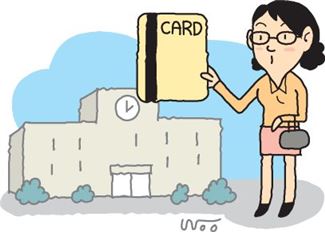 Illustration by Youngwoo Lee 20wo@
BC Card has released an analysis suggesting that the reduction in education expenses due to high inflation could accelerate educational polarization.
According to BC Card's New Finance Research Institute on the 17th, education-related sales in the first quarter decreased by 24.5% compared to the same period last year. This is the highest decline among all sectors and industries analyzed. Education expenses sales in January and February fell by 22.8% and 24%, respectively, compared to the previous year, and in March, the decline widened to 26.7%.
By industry, the largest sales decrease in the first quarter was seen in arts and physical education academies at 57.8%, followed by tutoring academies (44.9%), foreign language academies (42.1%), and study rooms (39.3%).
The institute cited high inflation as the reason for the reduction in education expenses. When considering education sales in 2020 as 100 and calculating other years' sales relatively, 2021 recorded 132 and 2022 recorded 141, showing an increasing trend. However, in the past year, when inflation began to rise significantly, education sales dropped to 126, about 11% lower than in 2022.

The institute forecasted that the decrease in education spending could accelerate educational polarization, as the gap in education expenses by income level is widening. According to the recent annual Household Trends Survey released by Statistics Korea, education expenses in the lower income brackets (1st and 2nd quintiles) decreased by 52.4% and 19.7%, respectively, compared to the previous year. In contrast, households in the middle to upper income brackets (3rd to 5th quintiles) increased their education spending by up to 25.9%.
Woo Sang-hyun, Vice President of BC Card, stated, “As the difficult economic situation continues, education expenses have decreased for three consecutive months. If the reduction in education spending deepens educational polarization, it could lead to a worsening low birthrate phenomenon. We will strive to produce content that can assist policy support by utilizing consumption data.”
© The Asia Business Daily(www.asiae.co.kr). All rights reserved.
![Clutching a Stolen Dior Bag, Saying "I Hate Being Poor but Real"... The Grotesque Con of a "Human Knockoff" [Slate]](https://cwcontent.asiae.co.kr/asiaresize/183/2026021902243444107_1771435474.jpg)
















