Already Reflected... "Depends on Israel's Response"
The risk of escalation between Israel and Iran eased, leading to a drop in international oil prices on the 15th (local time) compared to the previous day.
On this day at the New York Mercantile Exchange, West Texas Intermediate (WTI) crude oil closed at $85.41 per barrel, down $0.25 (0.29%) from the previous trading day. Brent crude fell $0.35 (0.4%) to $90.10 per barrel.
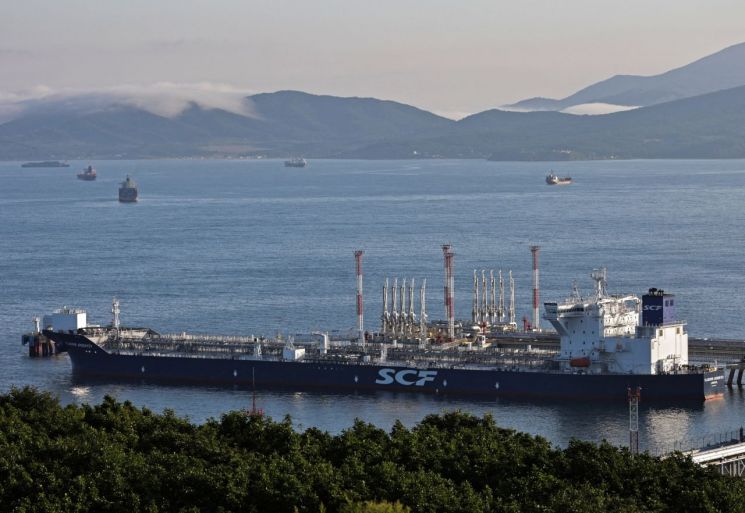
Oil prices declined as the United States and other Western countries worked to ease tensions in the Middle East and restrained Israel's retaliatory responses.
Bob Yager, Head of Energy Futures at Mizuho Bank, stated, "Israel's successful defense means that geopolitical risks have significantly decreased." He also noted that U.S. retail sales in March rose 0.7% month-over-month, which supports maintaining interest rates and increases the likelihood of reduced oil demand.
In particular, Israel's earlier attack on the Iranian consulate in Syria and the anticipated Iranian retaliation were already priced in. Future price fluctuations depend on Israel's response. Amrita Sen, founder of Energy Aspects, explained, "The market has already reflected the anticipated events, which explains the price decline. However, this does not mean prices will continue to fall; (oil price fluctuations) depend on Israel's reaction and the next steps."
Natasha Kaneva and other JP Morgan analysts said, "At this point, the oil outlook depends on Israel's response," adding, "If aggressive rhetoric emerges from both sides, the market could assign a premium in the short term."
However, the market believes it is too early to be complacent. As tensions in the Middle East escalate, some forecasts suggest oil prices could exceed $100 per barrel. Soci?t? G?n?rale (SA) predicted that if the conflict expands into direct military action between the U.S. and Iran, Brent crude could surge to $140 per barrel.
Shipping risks are also being closely monitored. On the 13th, ahead of airstrikes, Iran seized a container ship in the Strait of Hormuz. According to the U.S. Energy Information Administration, shipping through this "world's most important oil gateway" accounts for 21% of global oil liquid consumption in 2022.
Holger Schmieding, Chief Economist at German investment bank Berenberg, said, "Iran's unprecedented attack on Israel casts a shadow over economic and financial prospects beyond the Middle East," adding that the risk of the Middle East conflict expanding has increased. While he believes the impact of the Israel-Iran conflict on the global economy is limited, he emphasized the need to be cautious about any disruption to oil transportation through the Strait of Hormuz.
© The Asia Business Daily(www.asiae.co.kr). All rights reserved.
![Clutching a Stolen Dior Bag, Saying "I Hate Being Poor but Real"... The Grotesque Con of a "Human Knockoff" [Slate]](https://cwcontent.asiae.co.kr/asiaresize/183/2026021902243444107_1771435474.jpg)
















