Bank of Korea's 'February Money and Liquidity'
Increase Centered on Regular Savings and Securities
Increased Bank Fundraising Efforts Due to Maturity of Youth Hope Savings, etc.
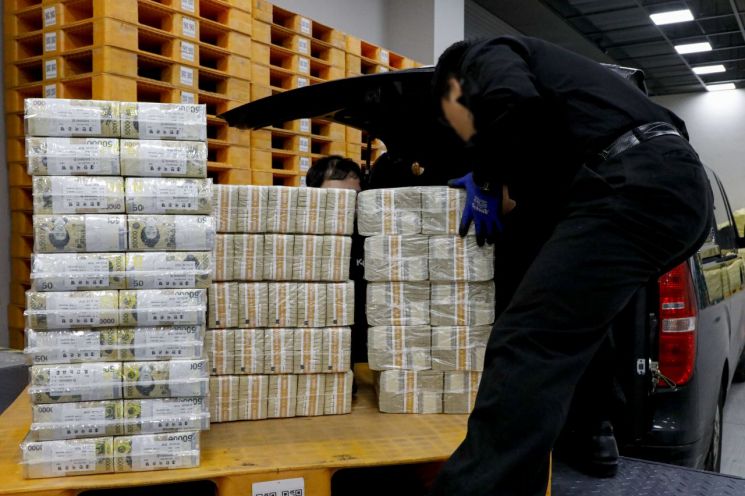
With active fund attraction by banks centered on regular savings and time deposits, the money supply in the market has been increasing for nine consecutive months. However, the growth rate decreased to 0.1% compared to the previous month.
According to the 'February 2024 Money and Liquidity' report released by the Bank of Korea on the 16th, the broad money supply (M2, seasonally adjusted, average balance basis) in February was 3,929.9 trillion won, an increase of 5.7 trillion won from the previous month. The growth rate was 0.1%, down from 0.3% in the previous month. The money supply has been rising for nine consecutive months since a 0.4% increase in June last year.
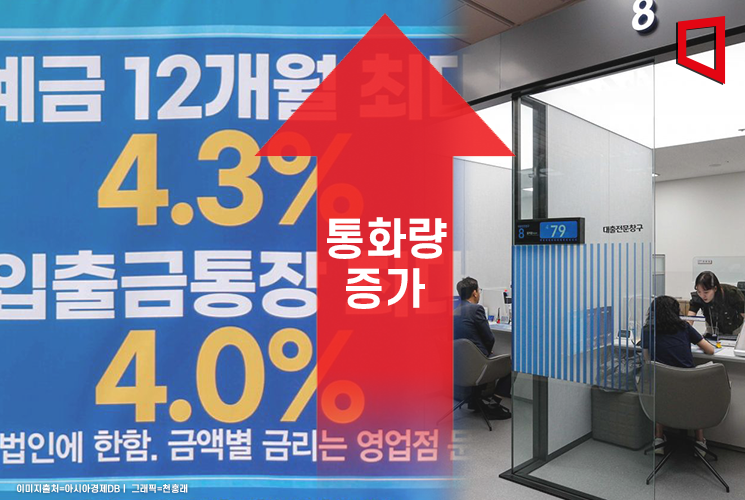
M2 is an indicator used to represent the amount of money circulating in the market. It includes narrow money (M1), which consists of cash, demand deposits, and savings deposits with check-writing privileges, plus financial products such as money market funds (MMF), regular savings and time deposits under two years, beneficiary certificates, negotiable certificates of deposit (CD), and repurchase agreements (RP).
Looking at the products individually, regular savings and time deposits showed the largest increase. Compared to the previous month, regular savings and time deposits increased by 18.3 trillion won, and beneficiary certificates by 6.8 trillion won, while money trusts under two years decreased by 9.2 trillion won, and MMFs decreased by 5.5 trillion won.
Regular savings and time deposits increased due to the perception of deposit interest rates peaking and banks' efforts to attract funds, while beneficiary certificates rose as domestic and international stock markets became active in February, leading to inflows into equity funds.
On the other hand, money trusts decreased as ABCP (asset-backed commercial paper) linked to regular deposits, which had been net issued until January, started net repayments from February, and MMFs declined mainly due to social security institutions.
Ji-seon Lee, a manager of the Financial Statistics Team at the Bank of Korea's Economic Statistics Bureau, explained, “Regarding monetary policy, as deposit interest rates are perceived to have peaked, demand for regular savings and time deposits increased. Also, with maturities of products like the Youth Hope Savings approaching, banks' efforts to attract funds have become more active, leading to an increase in the money supply.”
By economic agents, households and non-profit organizations, other financial institutions, and other sectors increased, while corporations decreased. Households and non-profit organizations increased by 12.7 trillion won, mainly in regular savings and time deposits; other financial institutions increased by 4.8 trillion won, mainly in demand deposits; and other sectors increased by 1.8 trillion won, mainly in beneficiary certificates. Conversely, corporations decreased by 5.9 trillion won, mainly in savings deposits with check-writing privileges.
Lee explained, "The money holdings of corporations decreased as facility investment funds increased mainly among some companies. Also, due to holiday bonuses and other factors, more money than usual flowed out."
Meanwhile, M1 (seasonally adjusted, average balance basis) was 1,217.7 trillion won, down 3.5 trillion won from the previous month. With decreases in cash currency and savings deposits with check-writing privileges, the growth rate turned negative at -0.3%.
© The Asia Business Daily(www.asiae.co.kr). All rights reserved.


















