Support for Installation of Power Generation Facilities at 137 Houses and Buildings
Gyeongju City has launched efforts to promote and expand renewable energy to reduce energy costs and achieve carbon neutrality by 2050.
This year, Gyeongju City is allocating a budget of 1.9 billion KRW to implement projects including ▲Renewable energy support for houses and buildings (1.4 billion KRW) ▲Energy welfare projects for vulnerable groups (300 million KRW) ▲Replacement of heating and cooling systems and installation of heat recovery ventilation devices in welfare facilities (100 million KRW) ▲Support for high-efficiency equipment improvement in enterprises (100 million KRW).
The renewable energy support project for houses and buildings provides partial installation cost support when solar power, geothermal, and other facilities are installed for self-consumption in detached houses, welfare centers, and senior citizen centers.
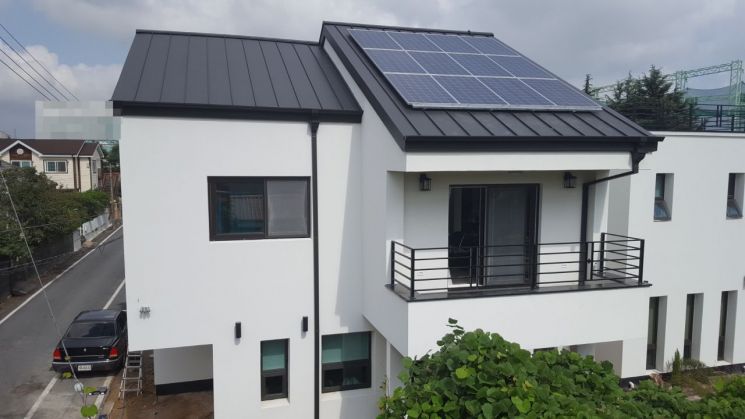
For the housing support project (106 locations), the total installation cost for solar power with a capacity of ㎾ is about 5.96 million KRW per household, with a self-payment amount of approximately 1.78 million KRW (30%). Through this project, households using 400㎾ per month can save about 600,000 KRW annually on electricity bills.
The building support project (31 locations) involves installation in local welfare centers, senior citizen centers, and local root small and medium enterprises. The total installation cost for solar power with a capacity of 3㎾ per building is about 6 million KRW, with a 20% self-payment required only for small and medium enterprises.
The energy welfare project for vulnerable groups supports the replacement of lighting devices in low-income households or social welfare facilities with high-efficiency LED lighting. This can reduce electricity consumption by up to 50%, achieving energy savings and electricity bill reductions simultaneously.
This project is scheduled to begin construction in the first half of the year, targeting 400 low-income households in Naenam-myeon, Yangnam-myeon, Wolseong-dong, Bulguk-dong, and Bodeok-dong areas, as well as 10 welfare facilities in Gampo.
In addition to LED lighting replacement, the welfare facilities project also promotes the replacement of high-efficiency heating and cooling systems with support of up to 16 million KRW per location for 18 sites, and installs energy-saving heat recovery ventilation devices in six elderly welfare facilities to provide comfortable indoor air quality.
This year, a new project will be launched to select two companies and provide up to 30 million KRW in support for high-efficiency equipment improvement.
Last year, Gyeongju City supported 198 locations for the housing and building support project and 323 locations for the energy welfare project for vulnerable groups.
Mayor Joo Nak-young of Gyeongju said, “We are striving to expand the distribution of renewable energy to realize carbon neutrality and build an eco-friendly energy self-reliant city,” adding, “We will participate in various government renewable energy contest projects to reduce electricity costs and strengthen the realization of electricity energy welfare policies.”
© The Asia Business Daily(www.asiae.co.kr). All rights reserved.
![Clutching a Stolen Dior Bag, Saying "I Hate Being Poor but Real"... The Grotesque Con of a "Human Knockoff" [Slate]](https://cwcontent.asiae.co.kr/asiaresize/183/2026021902243444107_1771435474.jpg)
















