Court Rules Against Exclusive Use by First-Floor Units
Garden Designated as General Common Area for All Residents
The court has ordered a first-floor resident, who fenced off and installed a deck in the garden accessible via their apartment's veranda to create an exclusive private space, to remove these structures. The court explained that the garden is part of the apartment complex's land and is designated as a common area. Given its objective use, it constitutes a general common area for all unit owners, and therefore, it cannot be recognized as a partial common area designated solely for the first-floor unit owner.
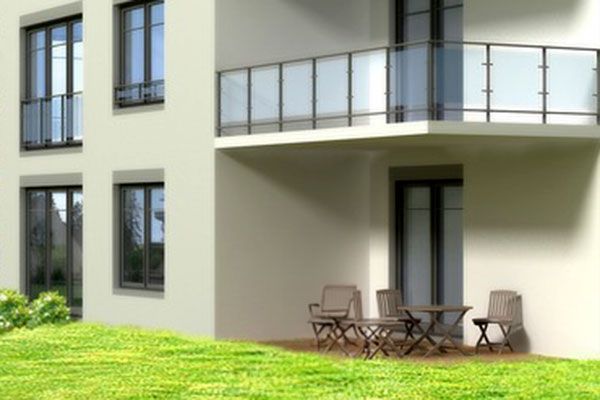
Due to reasons such as privacy, it can be more difficult to sell first-floor units in apartment buildings. However, if a resident is able to create an independent space in the garden accessible through their veranda and use a larger area than other units, this could affect the property value. This ruling is interpreted as putting a stop to such situations.
On March 15, the Seoul High Court's 13th Civil Division (Presiding Judge Moon Kwangseop, Senior Judges Choi Seongbo and Lee Junhyeon) dismissed the defendant's appeal in case 2023Na2032335, a lawsuit filed by Mr. A, who lives on the second floor of the apartment (represented by Jung Dongwook and Oh Sangyeop of Sunbaek Law Firm), against Mr. B, a first-floor resident, demanding the removal of the structures. The lower court had partially ruled in favor of the plaintiff.
Mr. B, who lived on the first floor of an apartment in Bangbae-dong, Seoul, claimed in June 2020 that he had the exclusive right to use the garden area in front of his veranda. He fenced off the area and installed a deck, using it as an independent outdoor space. In response, the apartment residents' representative council and the second-floor resident filed lawsuits demanding removal and restitution.
The first trial dismissed the claim by the residents' representative council due to lack of standing but ruled in favor of the second-floor resident.
The court in the first trial stated, "There is no evidence to support that the garden was registered as a partial common area for the exclusive use of first-floor unit owners, nor that the apartment's supply contract designated the garden as a partial common area. Mr. B claims that, since he can only access the garden through the management office's approval or through his own apartment, it should be considered a partial common area. However, if the garden were intended to be a common area for all first-floor unit owners, other first-floor unit owners should also have access. In this case, the garden can only be accessed through Mr. B's balcony door, meaning only Mr. B's household uses the garden exclusively. Therefore, it is difficult to recognize this garden as a partial common area," the court explained.
The appellate court also agreed with the lower court's judgment and dismissed Mr. B's appeal.
Oh Sangyeop, the attorney (age 43, 1st Bar Exam) who led the plaintiff to victory, commented, "This ruling is significant in that, although some use of the common area as a garden was allowed for the privacy and slight convenience of first-floor residents, the court confirmed that such use does not entitle one to privatize the common area, and doing so constitutes an infringement on shared property."
Park Suyeon, Law Times Reporter
※This article is based on content supplied by Law Times.
© The Asia Business Daily(www.asiae.co.kr). All rights reserved.
![Clutching a Stolen Dior Bag, Saying "I Hate Being Poor but Real"... The Grotesque Con of a "Human Knockoff" [Slate]](https://cwcontent.asiae.co.kr/asiaresize/183/2026021902243444107_1771435474.jpg)
















