National Research Institute of Cultural Heritage Stone Material Source Survey Results Released
9,961 Items Surveyed... Over 95% Rose-Red Granite
It has been confirmed that stone materials from Bukaksan and Bulamsan were used in the Joseon palaces (Gyeongbokgung, Changdeokgung, Changgyeonggung, Deoksugung) and Jongmyo Shrine.
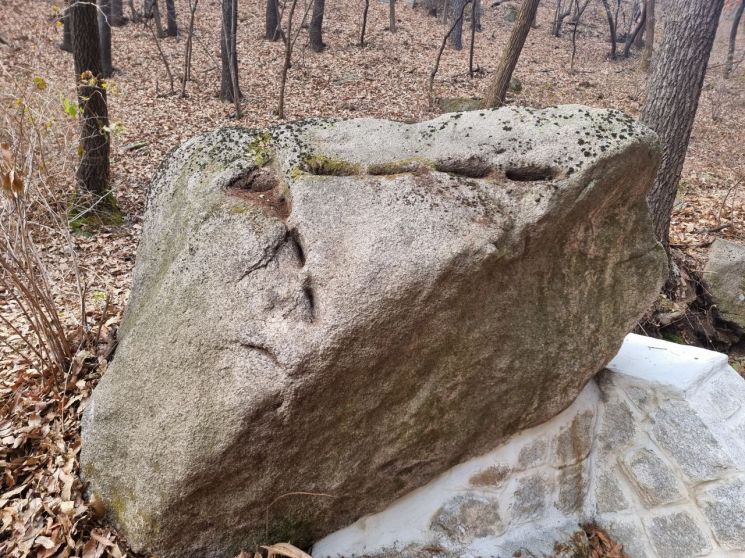
On the 15th, the National Research Institute of Cultural Heritage disclosed the results of an investigation into the origins of the stone materials through historical documents, field surveys, and non-destructive analysis. Since the 1980s, the Cultural Heritage Administration has been conducting restoration projects to restore the original form of the palaces and Jongmyo Shrine, which have repeatedly suffered destruction and reconstruction. The Research Institute carried out long-term investigations and studies to select substitute stone materials to be used during this process.
The total number of stone samples investigated reached 9,961. Non-destructive rock analysis showed that over 95% were light reddish granite. The remainder consisted of dark reddish granite, biotite granite, and others.
According to historical records, the stone quarry sites were broadly divided into three areas: inside the Hanyang Fortress, Seogyo (Western Suburbs), and Donggyo (Eastern Suburbs). Quarrying within the Hanyang Fortress was prohibited during the Joseon Dynasty. However, records show that in 1865, during the reconstruction of Gyeongbokgung, stones were quarried in Samcheong-dong.
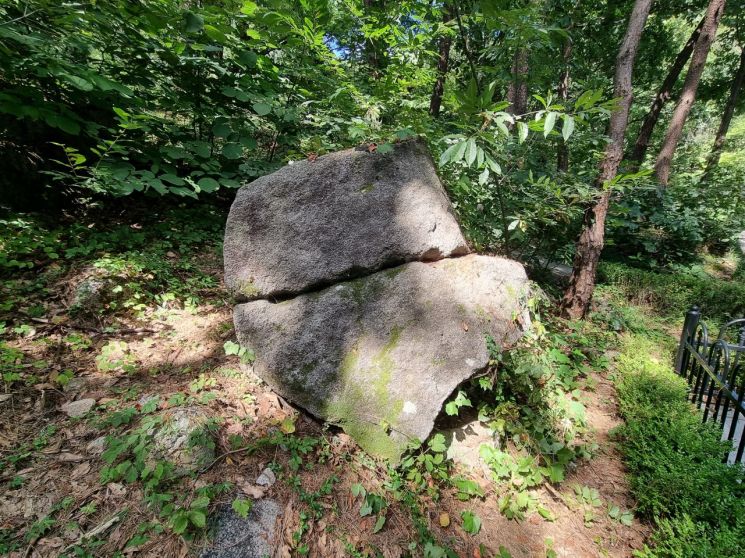
Seogyo included Sadong, Nokbeon, Okcheonam, Eungam, and Saam, while Donggyo covered areas around Nowon, Bulam, Ui, and Jogye. Quarrying was actively conducted in these areas during the 17th and 18th centuries.
Field surveys confirmed that stone materials from Bukaksan, Bulamsan, Uidong, Yeongpungjeong (Changsin-dong), Hongjewon, Okcheonam, and Nokbeon matched those used in the palaces. Actual quarrying traces were also found on some regional rock formations.
The Research Institute explained, "After a verification process comparing the report published at the end of last year, 'Translated Records of Stone Quarry Sites Used in Joseon Dynasty Palaces and Royal Tombs,' with the stone materials used in the actual palace extensions, we finally confirmed that their characteristics match."
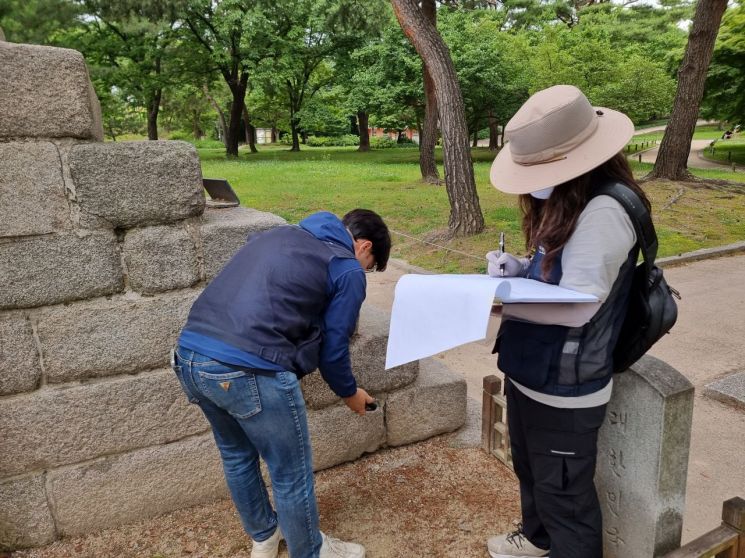
A similar verification was conducted at the Gwanghwamun Woldae restored in October last year. Non-destructive investigation and analysis of stone cultural heritage showed that the stone balustrade pillars (curved members) of the Woldae and the balustrade components stored at Donggureung in Guri shared the same petrological characteristics. The stone quarry sites were identified as the Suraksan and Bulamsan areas.
© The Asia Business Daily(www.asiae.co.kr). All rights reserved.
![Clutching a Stolen Dior Bag, Saying "I Hate Being Poor but Real"... The Grotesque Con of a "Human Knockoff" [Slate]](https://cwcontent.asiae.co.kr/asiaresize/183/2026021902243444107_1771435474.jpg)


















