Seoul City Introduces Reusable Containers at Jamsil Stadium
Enhances Familiarity to Expand to Other Sports Events
Various Attempts Including Personal Cup Point System
Disposable containers that used to flood the baseball stadium are expected to disappear in the future. Starting this month, the Seoul Metropolitan Government has decided to promote the introduction of reusable containers at food and beverage stores using plastic disposable containers within Jamsil Baseball Stadium, the home stadium of local teams. Seoul Mayor Oh Se-hoon said, "It is a commitment to a sustainable future."
On the 12th, the Seoul Metropolitan Government will sign a 'Reusable Container Operation Business Agreement' together with the Seoul Metropolitan Council, Doosan Bears and LG Sports, the local teams of Seoul (Jamsil), Aramco Korea supporting the production of reusable containers, the Seoul Regional Self-Support Center Association responsible for collection and washing, and Amoje Food, the food and beverage vendor within Jamsil Stadium.
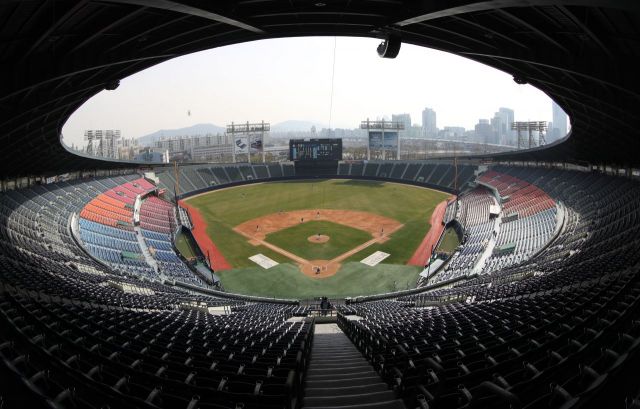
This agreement was prepared to reduce the waste generated at baseball stadiums. In 2021 alone, 3,444 tons of waste were generated annually at baseball stadiums nationwide, of which Jamsil Baseball Stadium produced 86.7 tons annually. Through the successful introduction of reusable containers at Jamsil Baseball Stadium, the plan is to increase familiarity with reusable containers and expand this to other sports events to boost citizen participation.
Through this reusable container usage agreement, Seoul expects that from April until the end of the season in November, about 800,000 uses of reusable containers will replace disposable items, creating more than 30 jobs and reducing approximately 24 tons of plastic waste.
To this end, the city will provide administrative support and promotion for the introduction of reusable containers, and the Seoul Metropolitan Council will pursue legislative support such as enacting and revising ordinances related to waste reduction. Aramco Korea will support the production, washing, and logistics costs of reusable containers, while the Seoul Regional Self-Support Center Association will be responsible for production, washing, and logistics.
Various other attempts to reduce disposable container use will continue to expand. The city already rewards citizens who use reusable containers such as personal cups by accumulating points to reduce plastic waste, and prioritizes the introduction of reusable containers in places with high waste output such as funeral halls. A representative example is the 'Personal Cup Usage Point System,' which awards 300 won of carbon neutrality points per transaction when ordering drinks with a personal cup (tumbler) and paying with Seoul Pay. Starting with Seoul Medical Center last year, this year three municipal funeral halls including Dongbu Hospital will be converted to disposable-free funeral halls.
Participation from citizens and businesses is also high. During the pilot operation of the 'Additional Discount for Personal Cup Use' conducted by Seoul from September to November last year, a total of 104 stores participated, and more than 56,000 personal cups were used. Looking at the usage trend, it was about 10,000 cases in the first month of September but increased significantly to about 27,000 cases in November, the last month. A Seoul city official stated, "Citizens' environmental awareness to reduce disposable container use has greatly improved, and interest from businesses has increased, so Seoul will continue to consider efforts to reduce waste in various places."
© The Asia Business Daily(www.asiae.co.kr). All rights reserved.
![Clutching a Stolen Dior Bag, Saying "I Hate Being Poor but Real"... The Grotesque Con of a "Human Knockoff" [Slate]](https://cwcontent.asiae.co.kr/asiaresize/183/2026021902243444107_1771435474.jpg)
















