Liver and Kidney Failure Cause Wife's Death
No Beds at Large Hospitals Lead to 'Roundabout'
Deepening Medical-Political Conflict Increases Aftereffects
As the departure of medical residents opposing the government's plan to increase the number of medical students has prolonged for over eight weeks, causing a growing medical vacuum, a heartbreaking story of a husband whose wife died after not receiving timely treatment has come to light.
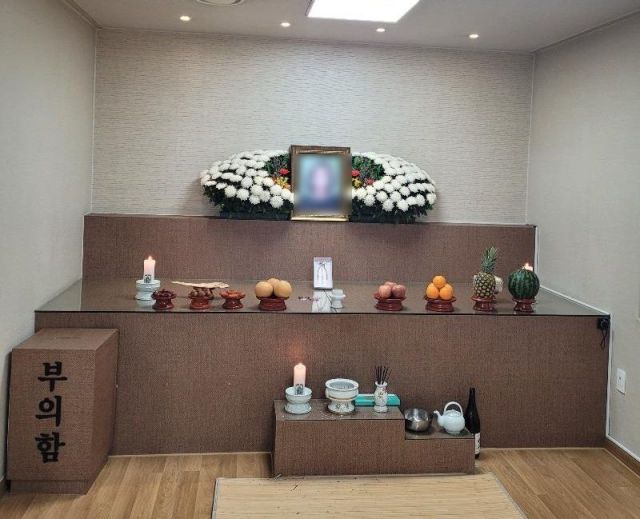
On the 11th, a post titled "I lost my wife due to the medical strike" was uploaded on an online community. As of 8 a.m. on the 12th, the post had garnered 147,000 views and 3,700 recommendations, becoming a major topic of discussion. The author, Mr. A, who identified himself as the head of an ordinary family raising two daughters aged 14 and 10 with his wife of the same age in Busan, began by saying, "Three days ago, I received a call from my wife saying, 'I'm very unwell and have been admitted to a hospital near our home.'"
Mr. A explained the situation, saying, "My wife was admitted to a small- to medium-sized hospital far from home, even though there is a large hospital nearby. When I asked her why, she told me that due to the medical residents' strike, there were no doctors available in the emergency room of the large hospital, so she looked elsewhere and ended up here." He added, "At that time, I didn't think much of it. Since I often travel to the provinces for work, my wife was practically raising our two children alone and often said she was tired, so I just thought that was the reason."
However, his wife's condition did not improve. Mr. A recounted, "Early the next morning, my father-in-law called me. He said my wife's condition was critical and she had been transferred to the intensive care unit of a large hospital about an hour away from home, urging me to come quickly." He continued, "I called my wife, hoping against hope, but she didn't answer. Until the day before, whenever I asked if she was feeling unwell, she would just say she was tired and would answer calls well."
Mr. A said, "When I arrived at the hospital late in the afternoon, my wife was in the ICU and not allowed visitors. Shortly after, a nurse told me, 'She is currently stable, and the attending physician will make rounds tomorrow morning, so you can have a consultation then.'" He claimed, "Feeling reassured by the nurse's words, I told my parents-in-law, who were waiting in the lounge, to rest and come back the next day." However, around 3 a.m. the next day, the nurse delivered devastating news to Mr. A. His wife had suffered cardiac arrest and was undergoing emergency cardiopulmonary resuscitation (CPR). The nurse said that if the heart did not restart after about 10 minutes of CPR, there was virtually no hope."
Mr. A said, "Just two days ago, she was perfectly fine, walking by the river with our two children and posting photos of cherry blossom viewing. Yet within a day or two, she suffered cardiac arrest." He added, "At 3:55 a.m., my wife left me and our two children. The cause was liver failure and kidney failure. She had been taken by ambulance in poor condition of her liver and kidneys, but because the large hospital had no available beds, she was admitted to a smaller hospital. The smaller hospital conducted all tests, including blood tests, but judged there was nothing wrong and admitted her for what they thought was a simple cold."
He continued, "When my wife was struggling, they administered a sedative. But with her liver and kidney failure causing waste to accumulate in her body, they left it untreated and gave her sleeping pills. Ultimately, my wife lost consciousness and passed away," he lamented.
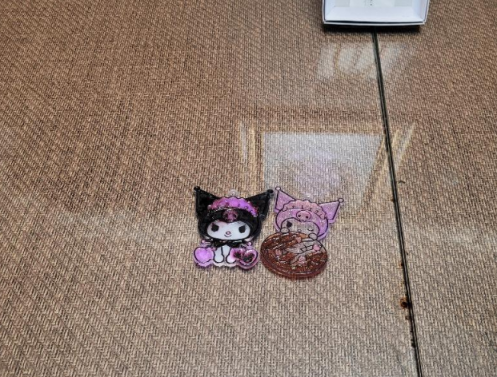
Mr. A said, "I can't believe my wife has left my side. If there had been no medical strike, there would have been a bed available at a large hospital, and whether through dialysis or liver transplant, my wife could have been saved. At least I wouldn't have had to send her off so emptily without hearing a final word from her." He added, "My younger daughter's birthday became my wife's memorial day. On the altar is a doll the younger daughter made to give to her mother on her birthday." He expressed his troubled feelings, saying, "I want to ask how the two children who lost their mother should cope. I don't know what I should do from now on."
Netizens who read the story responded with comments such as, "My deepest condolences to the deceased," "They shouldn't have disturbed the doctors who were providing proper care," "Only innocent citizens suffer," "It's realistic and heartbreaking. I guess I shouldn't get sick for a while," "The sadness is so profound it breaks my heart," "It might be best to focus on caring for the children," and "It's such a sad story that I don't know what words of comfort to offer."
Meanwhile, as the standoff between the government and the medical community drags on, the aftereffects are growing. On the 26th of last month, a patient diagnosed with acute aortic dissection was unable to find a surgeon and was transported 56 km away for treatment but eventually died after a long delay in care. On the 1st, a 3-year-old girl in Boeun, Chungbuk, died after failing to receive treatment at a higher-level hospital.
Originally, the medical community had planned to hold a joint press conference but suddenly postponed it, leaving the normalization of medical services uncertain even after the general election. President Yoon Seok-yeol has repeatedly stated in public addresses that there will be no compromise on increasing medical student admissions by 2,000. However, following the ruling party's defeat in the April 10 general election, there are voices suggesting that the existing policy direction may change.
© The Asia Business Daily(www.asiae.co.kr). All rights reserved.
!["The Woman Who Threw Herself into the Water Clutching a Stolen Dior Bag"...A Grotesque Success Story That Shakes the Korean Psyche [Slate]](https://cwcontent.asiae.co.kr/asiaresize/183/2026021902243444107_1771435474.jpg)

















