Refugees May Be Distributed to Other Countries or Repatriated
Criticism Over Human Rights Violations Including Detention Up to 6 Months
The 'New Migration and Refugee Agreement' that strictly regulates refugees entering Europe passed the European Parliament on the 10th (local time). However, opposition from some European Union (EU) member states is expected to pose challenges until its actual implementation.
On the same day, the European Parliament held a plenary session in Brussels, Belgium, and approved the new migration and refugee agreement that regulates the distribution of immigrants and refugee application procedures. According to the new regulations, member states can distribute refugees to other member states if they face burdens from refugee inflows. If a member state does not wish to accept refugees, it can either pay 20,000 euros (about 29 million KRW) per refugee to the EU or support goods and infrastructure in the refugees' home countries to facilitate their return. It is also possible to transfer refugees to a third country deemed safe.
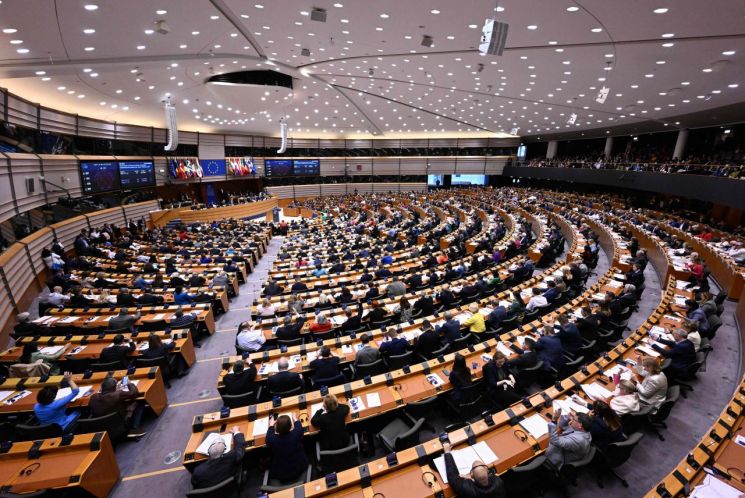
Additionally, all refugees must undergo identity verification starting with a 7-day entry screening, followed by health checks and security inspections. Migrants from countries with refugee approval rates below 20% will undergo a fast-track review within a maximum of 12 weeks to decide on repatriation. During this period, asylum seekers will stay in detention centers. This is interpreted as an effort to shorten the review period, which previously took over a year, and to block refugee applications with low chances of approval at the source.
Roberta Metsola, President of the European Parliament, described the refugee agreement as "a balance between solidarity and responsibility," adding, "Not everything will be resolved overnight, but it will certainly be a giant leap forward." Ilva Johansson, EU Commissioner for Migration, stated, "It will enable the protection of the EU's external borders, vulnerable groups, and refugees, and allow for the swift return of those without residence permits."
However, there are also voices of criticism. Concerns have been raised about potential human rights violations, such as allowing the detention of asylum seekers for up to six months if deemed a 'security risk.' Philippe Lamberts, co-chair of the Greens/European Free Alliance group in the European Parliament, opposed the agreement, saying, "You cannot stop migration by fortifying Europe with fences, paying warlords, and normalizing inhumane practices. This agreement disproportionately focuses on deterrence measures like widespread detention of people and children, reducing their rights and entrenching existing problems."
Hungary declared that it will not accept refugees "regardless of any migration agreement." Polish Prime Minister Donald Tusk expressed refusal, stating, "We cannot accept a mechanism that requires countries hosting asylum seekers or receiving refugees on the front lines to pay into an EU fund."
There is also an assessment that political motives aimed at capturing votes in the upcoming European Parliament elections in June lie behind the push for the new refugee agreement. CNN analyzed that migration will emerge as a key issue in the June European Parliament elections, as many EU countries such as Italy, Hungary, Slovakia, and Sweden are governed by anti-immigration politicians.
Joel Grogan, Chief Researcher for Changing Europe (CE) in the UK, explained, "For mainstream EU parties, it is important to pass such reforms before the elections to show that they are actively addressing migration."
© The Asia Business Daily(www.asiae.co.kr). All rights reserved.

















