Major foreign media outlets, reporting in real-time on South Korea's April 10 general election in which the ruling party suffered a significant defeat, predicted that President Yoon Seok-yeol's lame-duck period is inevitable.
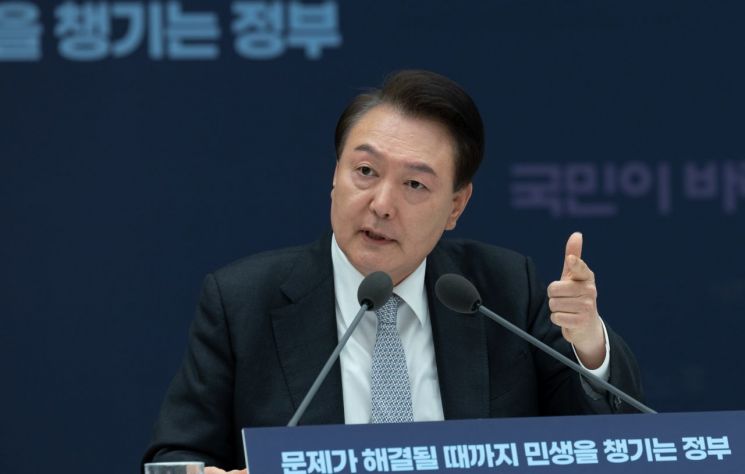
Bloomberg News reported on the 10th (local time) that "President Yoon's conservative alliance suffered a major setback in the general election, and his position will be significantly weakened during the remaining three years of his term." It also forecasted a high possibility that investor-friendly policies promoted by the Yoon administration, such as the abolition of capital gains tax and the value-up program, could be derailed.
The New York Times (NYT) also noted that this election strongly resembles a midterm evaluation of the administration, suggesting that domestic issues driven by President Yoon?such as corporate tax cuts, business-friendly policies, and the expansion of medical school quotas?may lose momentum. The Associated Press (AP) stated, "The opposition party will expand its control over the National Assembly," adding, "President Yoon is grappling with low domestic approval ratings and a parliament controlled by the opposition."
The British daily The Guardian reported that the opposition party achieved a landslide victory in the South Korean election held amid economic anger. The outlet mentioned remarks such as the 875 won per radish comment and noted that although the ruling party avoided losing the constitutional amendment threshold (200 seats) it feared, experts expressed concerns that a lame-duck period is highly likely in the future. France's Le Monde analyzed, "The results of this general election go beyond public opinion on political parties and represent a rejection of President Yoon's policies."
Japanese media focused on the potential impact on Korea-Japan relations. The Nihon Keizai Shimbun included a Seoul-based general election report on its front page on the 11th, stating that "the Yoon Seok-yeol administration is cornered." The newspaper pointed out, "If the opposition secures a majority, the Yoon administration will remain a minority party in the legislature from the start to the end of its five-year term, making it impossible to push forward policies requiring legislation and bold budget measures."
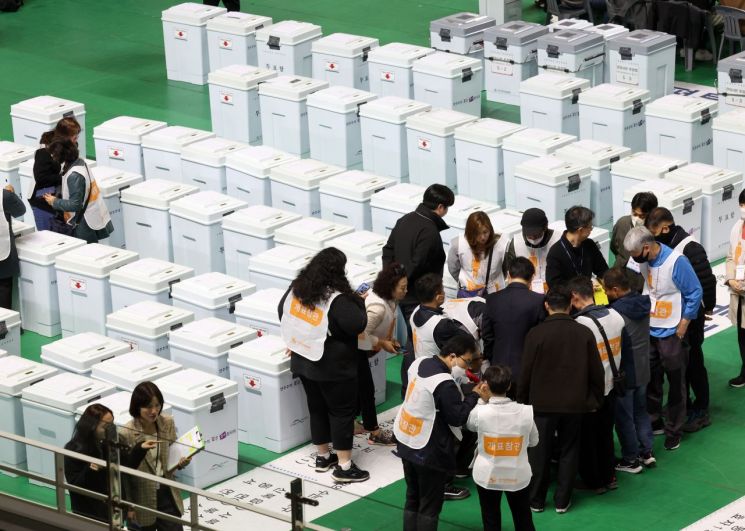
In additional online coverage of the vote count that morning, it was noted that "many voters agreed with the opposition's appeal for a judgment on the administration," diagnosing that "President Yoon's centripetal force decline is inevitable, and the momentum to improve Korea-Japan relations is likely to be braked."
Progressive-leaning TV Asahi analyzed, "President Yoon's lame-duck period is unavoidable, and it has cast a shadow over the Korea-Japan relations improvements made since his inauguration." The Mainichi Shimbun also reported that the election results "will deal a blow to the Yoon administration," noting that the People Power Party aimed to secure a majority but fell short.
The far-right Sankei Shimbun stated, "This general election focused on whether the opposition's majority (minority ruling party, majority opposition) 'twist state' would be resolved and lead to stabilization of the Yoon administration's governance," predicting that "due to the ruling party's crushing defeat, the possibility of President Yoon entering a lame-duck period early has increased." The conservative Yomiuri Shimbun reported that "the opposition appealed for a judgment on the administration ahead of the general election," relaying the coverage by Korean media.
Within China, evaluations emerged that the election process and results revealed issues of polarization and policy absence in South Korean politics.
Li Min, Associate Research Fellow at the Asia-Pacific Research Institute of the China Institute of International Studies, told the local media Xin Jing Bao (Xinhua News Agency), "As the election day approached, party interests shifted from the people's welfare or policies to attacks on opponents," pointing out that "political polarization was also evident, with a series of assault incidents occurring." He further predicted, "President Yoon will receive a failing grade in this midterm exam, and the remainder of his term will become difficult."
Meanwhile, the U.S. Center for Strategic and International Studies (CSIS) forecasted in a separate report that the existing direction of foreign policy, including strengthening the Korea-U.S. alliance and a tough stance on North Korea, will be maintained.
Victor Cha, Korea Chair and other authors of the report, analyzed, "Although President Yoon's domestic and foreign policies will face considerable headwinds, no major changes in policy direction are expected since he inherited a divided government two years ago and has been managing state affairs accordingly," adding, "Despite strong opposition from the Democratic Party in the National Assembly and relatively low approval ratings from the start of his administration, President Yoon has not been able to overturn the previous government's foreign diplomacy policies."
However, criticism from the opposition party that President Yoon's foreign policy is unrealistic is expected to grow, and strategic divisions may deepen. In this general election, the ruling People Power Party suffered its third consecutive defeat, while the Democratic Party secured a majority of seats on its own.
© The Asia Business Daily(www.asiae.co.kr). All rights reserved.
![Clutching a Stolen Dior Bag, Saying "I Hate Being Poor but Real"... The Grotesque Con of a "Human Knockoff" [Slate]](https://cwcontent.asiae.co.kr/asiaresize/183/2026021902243444107_1771435474.jpg)

















