Voters Consider Objective Economic Indicators but Are Also Influenced by Personal Political Preferences
Recent Decline in Economic Sentiment...May Affect Elections
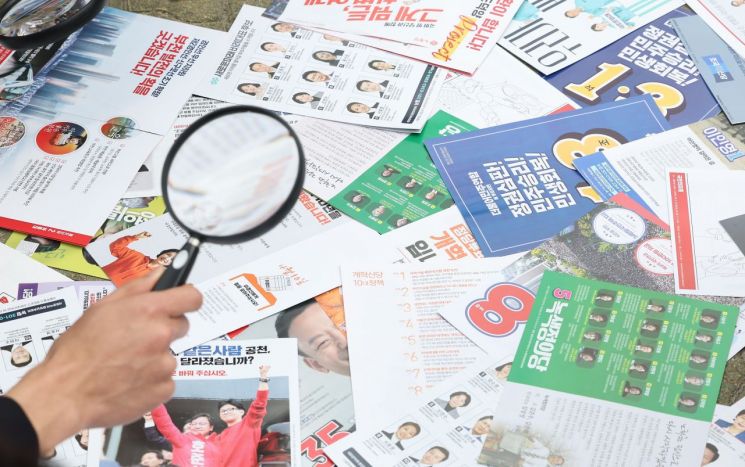
On the eve of the 22nd general election, as the impact of the economy on the election draws attention, a study highlighting that evaluations and forecasts of the economic situation can vary according to voters' political preferences is gaining notice.
Voters assess the ruling party by participating in the vote. One of the main factors influencing voters' decisions is the economic situation.
When evaluating the country's economic situation, voters are influenced not only by objective economic indicators but also by their personal political preferences.
According to academia, voters' evaluations of the economy are divided into 'retrospective evaluation,' which reflects whether they think the economy has improved, and 'prospective evaluation,' which reflects whether they believe the economy will improve in the future. While voters sometimes base their evaluations on objective economic indicators, they may form different forecasts influenced by their political preferences.
Professor Kim Seong-yeon of Konkuk University's Department of Political Science and Diplomacy stated in a December paper last year titled "A Study on Prospective Economic Evaluations of Korean Voters," "Predicting uncertain future economic conditions is a very complex and difficult task for voters," adding, "Therefore, voters are likely to predict future economic conditions in very diverse and personal ways."
According to the paper, voters are influenced by political preferences such as emotional likes or dislikes toward the ruling power and stereotypes when forecasting the economy. According to the psychological emotional priming effect, people tend to more easily recall positive thoughts about subjects they like and negative thoughts about those they dislike.
Applying this, ruling party supporters more easily associate the ruling power with managing the economy well, while opposition party supporters more readily recall the ruling power damaging the economy. Voters evaluate and forecast the current economic situation based on their preferred candidates or parties.
Professor Kang Woo-jin of Kyungpook National University's Department of Political Science and Diplomacy said, "Because evaluations of the economic situation can vary according to one's political orientation, there may be voters who think the economy is doing well even if it is actually poor."
There are also opinions that recent sluggish domestic demand indicators could affect the election results. Although real economy indicators such as exports have shown a recovery trend this year due to the semiconductor industry's rebound, the consumer sentiment directly linked to daily life remains weak. According to the Bank of Korea, the March expected inflation rate, which reflects consumer price inflation expectations for the next year, rose by 0.2 percentage points from the previous month to 3.2%, maintaining a high level. This is due to a significant rise in perceived prices, especially for agricultural products.
Professor Kang said, "The economy is ultimately psychology," adding, "Since the (perceived) economic indicators currently recognized by voters are in a poor state, this can also influence the election."
© The Asia Business Daily(www.asiae.co.kr). All rights reserved.

















