Jangbawi Mountain Columnar Joints Including Public Waters
Visually Harmonizing with Coastal Erosion Landforms
The columnar joints of Manjaedo Island in Sinan, famous as the filming location of the variety show 'Three Meals a Day,' will be designated as a nationally protected natural monument. The Cultural Heritage Administration announced on the 9th that it will collect opinions from various sectors for a month and finalize the designation after a review by the Cultural Heritage Committee.
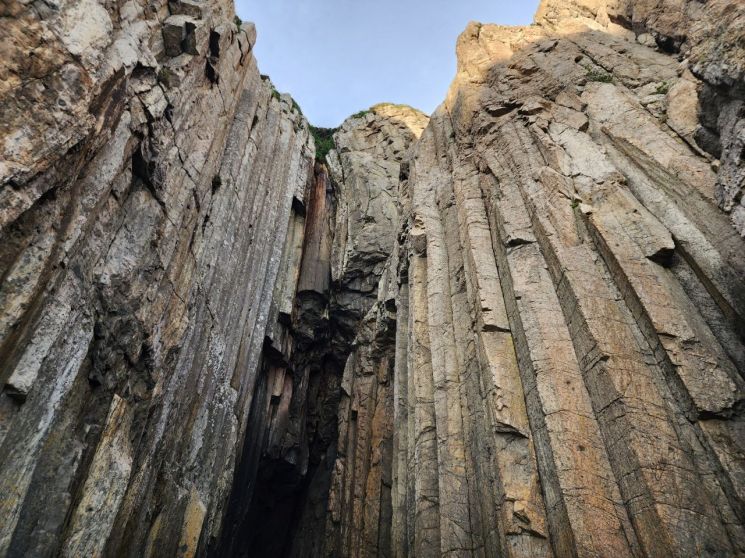
Columnar joints are landforms formed by the contraction of lava or volcanic clastic materials due to rapid cooling. Five locations, including the 'Jeju Jungmun-Daepo Coast Columnar Joints' and the 'Gyeongju Yangnam Columnar Joint Cluster,' have already been designated as natural monuments and are being protected.
Manjaedo is composed entirely of welded tuff formed from clastic materials generated by volcanic activity during the Cretaceous period of the Mesozoic era. Volcanic ash, pumice, and rock fragments expanded and solidified due to overlying material pressure, hot gases, and thermal bonding effects.
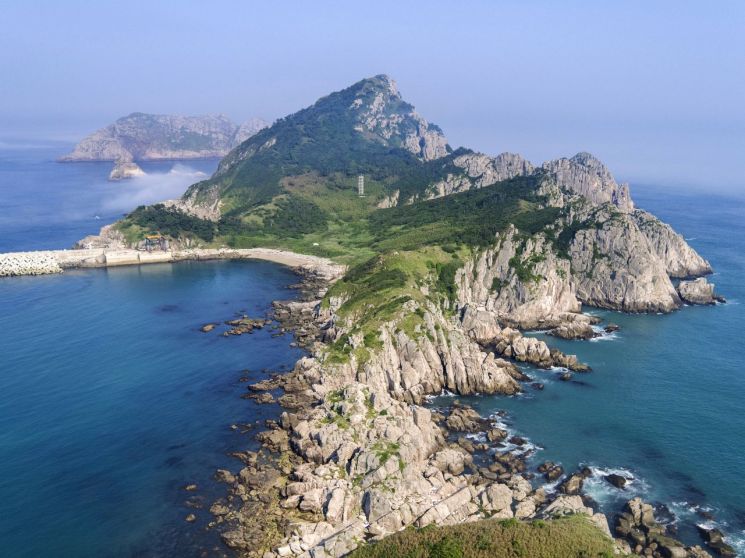
The area proposed for designation as a natural monument covers 181,729 square meters, including the public waters around Jangbawi Mountain on the east side, where the columnar joints are located. Welded textures, which indicate the temperature at the time the tuff was deposited, are evenly observed throughout the rock body. Welded texture is formed when volcanic clastic materials are deposited at high temperatures, and pumice containing many pores is flattened by pressure. The tuff must have been deposited at temperatures above 600℃ to form this texture.
The columnar joints visually harmonize with coastal erosion landforms such as sea caves, sea arches, and sea stacks, which have been sculpted over a long time by waves and wind. Boasting a grand and beautiful landscape, they have been frequently featured in popular variety shows like 'Three Meals a Day.'
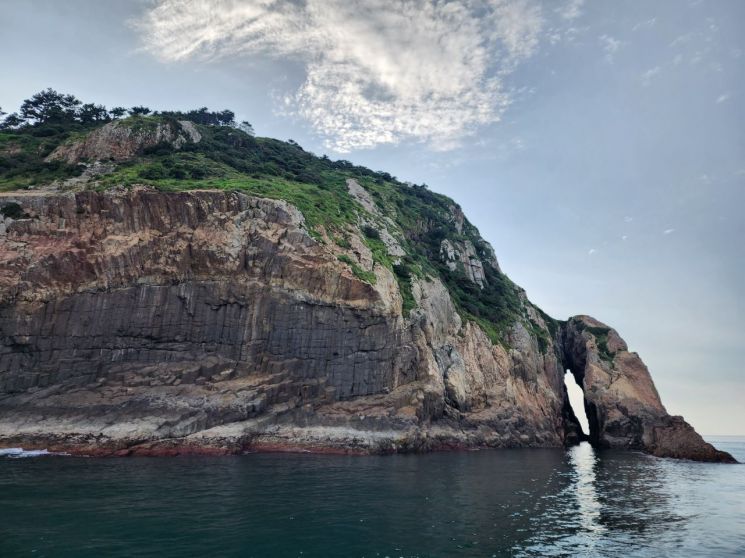
The Cultural Heritage Administration stated, "The columnar joints, which develop diversely along the coastal cliffs with varying spacing and directions, provide important information for interpreting volcanic eruptions and depositional environments of the Cretaceous period on the Korean Peninsula, thus holding high geological value." They added, "We are committed to thoroughly preserving and managing the site so that many visitors can freely see and experience it."
© The Asia Business Daily(www.asiae.co.kr). All rights reserved.



















