8 out of 10 Koreans Have Gaming Experience
WHO Grants Official Disease Code
Discussion Underway on Adoption in Korea
In the past year, 8 out of 10 citizens have enjoyed gaming, sparking controversy over whether to introduce the ‘gaming disorder’ disease code domestically. While social perceptions of gaming have changed and eSports have established themselves as a cultural phenomenon, some voices argue that the regulation is outdated. Ahead of the April 10 general election, political circles have included the removal of the gaming addiction disease code registration as a campaign pledge.
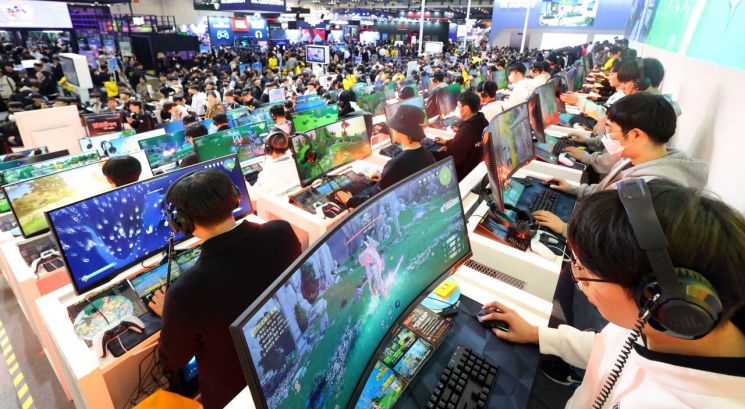 Visitors are enjoying games at G-STAR 2023, the largest domestic game exhibition held at BEXCO in Busan.
 [Image source=Yonhap News]
Gaming as a Hobby... Society Focuses Only on Negative Aspects
Yu (31), who lives in Gwanak-gu, Seoul, said, "I play games to relieve stress with a small amount of time in daily life, but social perception still seems stuck in the past," adding, "There are world-famous gaming tournaments that many people watch, so I cannot agree with viewing it solely as an addiction." Bang (36) criticized, "Where else can you find a wholesome hobby as much as gaming with friends? In a world where you can easily access professional gamers and game YouTubers, it seems unreasonable."
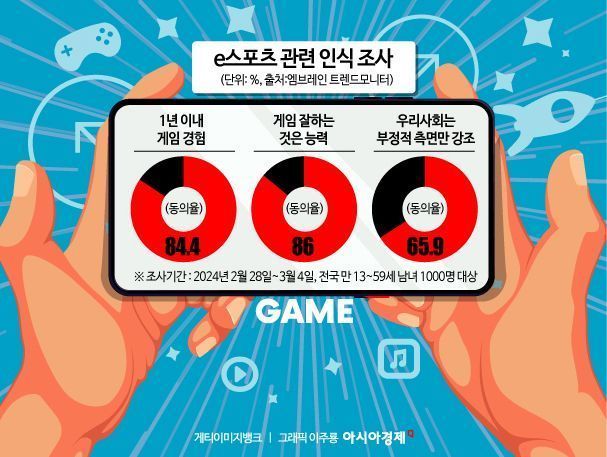
According to a survey on ‘eSports-related perceptions’ conducted by Embrain Trend Monitor from February 28 to March 4 this year targeting 1,000 men and women aged 13 to 59 nationwide, 84.4% of respondents had played games within the past year, and 90.4% considered gaming part of their hobbies. High responses were recorded for gaming skills being a personal ability (86.0%) and society’s tendency to emphasize only the negative aspects (65.9%).
The growth potential of eSports was also positively evaluated. 81.5% of respondents felt that gaming disciplines are being recognized as sports, and 79.8% hoped that many world-class eSports players would emerge from Korea.
Political Circles Pledging Gaming Policies... "Be Cautious About Introducing Disease Codes"
Both ruling and opposition parties have been releasing eSports-related pledges to capture the votes of the ‘MZ generation.’ The People Power Party stated, “Gaming and eSports have rapidly grown into promising future industries and have become universal leisure activities enjoyed by all ages,” promising to punish illegal game hacking, support the development of anti-cheating programs, and promote eSports.
The Democratic Party also pledged tax credits for eSports tournament operations, establishment of an eSports Promotion Foundation, hosting international competitions, and creating key facilities such as a legend player memorial hall and museum in the western Busan area. Notably, on the 2nd, they announced plans to amend the Statistics Act, which underpins the registration of the gaming addiction disease code, reflecting online community opinions.

Meanwhile, the World Health Organization (WHO) defined gaming addiction as gaming disorder in 2019 and assigned it an official disease code, and Korea is currently discussing whether to adopt it. Under current law, domestic standard classifications must directly reflect international standard classifications. In February last year, Democratic Party lawmaker Lee Sang-heon proposed an amendment to the Statistics Act to decide on reflecting the international standard classification through expert and stakeholder consultations, citing concerns that the introduction of gaming-related disease codes could reduce industry size and sales.
According to the 2022 report titled ‘Impact Study on the Introduction of Gaming Disorder Disease Code,’ the gaming industry is expected to suffer losses of 8.8 trillion KRW over two years and lose 80,000 jobs if the disease code is introduced. The Regulatory Innovation Promotion Team under the Office for Government Policy Coordination commissioned a study on ‘Regulatory Improvement and Promotion Measures for the Gaming Industry’ on the 20th of last month, and a review of the gaming disease code introduction is expected.
A study titled ‘Supplementary Research on Diagnostic Tools for Gaming Disorder Status Survey,’ led by Professor Cho Hyun-seop of Chongshin University and published by the Korea Creative Content Agency in January this year, stated, “There is a very high possibility of false positives classifying passionate gamers as at-risk groups,” and recommended “a neutral and objective opinion-gathering process regarding future tool development, survey methods, and decisions on introducing gaming disorder.”
© The Asia Business Daily(www.asiae.co.kr). All rights reserved.
![Clutching a Stolen Dior Bag, Saying "I Hate Being Poor but Real"... The Grotesque Con of a "Human Knockoff" [Slate]](https://cwcontent.asiae.co.kr/asiaresize/183/2026021902243444107_1771435474.jpg)


















