Interview with Kim Jung-woong, CEO of Surplus Global
"While it is important to manufacture semiconductors using new advanced technologies, it is also meaningful to protect the legacy semiconductor ecosystem where the majority of demand occurs."
Kim Jeong-ung, CEO of Surplus Global, emphasized in an interview with Asia Economy on the 11th that maintaining the supply chain is crucial amid the intensifying US-China conflict, even for legacy semiconductors.
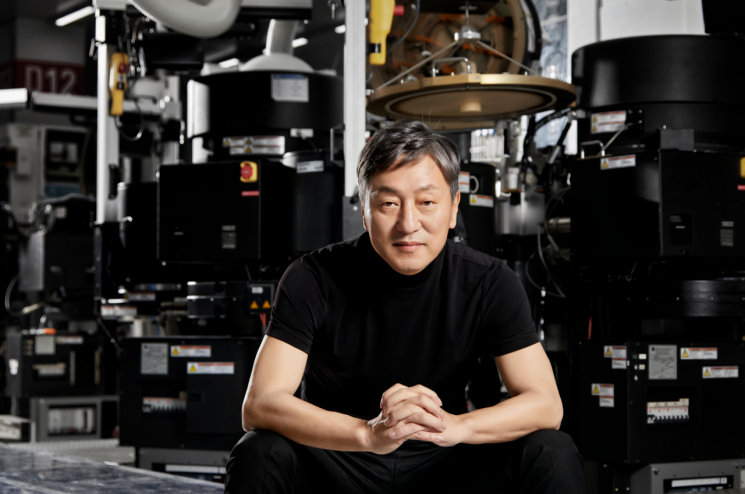
Surplus Global buys legacy semiconductor equipment from around the world, including domestically, and resells it to companies in need. Since its establishment in 2000, the company has sold approximately 60,000 units of equipment. More than 6,000 customers have purchased this equipment. As customers from all over the world seek the company, overseas sales account for 70-80% of total revenue. He stated that through the legacy semiconductor used equipment business, they plan to increase sales to the scale of 1 trillion won by 2030.
Legacy semiconductors are mainly produced using processes of 28 nanometers (nm; 1 nm is one billionth of a meter) or larger. Although they receive relatively less attention as major global semiconductor companies compete in advanced technologies, they are widely used in various fields. Legacy semiconductors are used in everyday items such as calculators and electric rice cookers, as well as in medical equipment, automobiles, and weapons.
The legacy semiconductor market size is increasing. Market research firm IBS forecasts that demand for legacy semiconductors with processes of 28 nm or larger will grow to $28.1 billion by 2030. This is expected to be more than three times larger than ten years ago. Market research firm TrendForce projects that by 2027, legacy processes of 28 nm or larger will account for about 70% of the total semiconductor manufacturing processes.
To meet market demand, CEO Kim also plans to establish a large-scale parts mall called 'SemiMarket' based on an open market concept. He said, "There are places that distribute equipment parts, but most are small-scale, and many customers worry about what parts to get and how to obtain them. Once the parts mall is established, it will improve the inefficient distribution structure and significantly resolve bottlenecks occurring within the supply chain."
© The Asia Business Daily(www.asiae.co.kr). All rights reserved.

















