Underwater Exploration Team Releases 45-Day Survey Results
Rich in Natural Resources... Yet Scientists Oppose Development
A uniquely shaped deep-sea creature was captured on camera by an underwater exploration team in the Clarion Clipperton Zone (CCZ) of the Pacific Ocean, known as a treasure trove of natural resources.
On the 4th (local time), the US CNN reported the results of a 45-day investigation of the CCZ by the underwater exploration project ‘SMARTEX,’ led by the Natural History Museum in London, UK. The CCZ is a mud plain located in the middle of the Pacific Ocean, between Mexico and Hawaii, at an average depth of 5,000 meters, covering an area of 6 million square kilometers, twice the size of India.
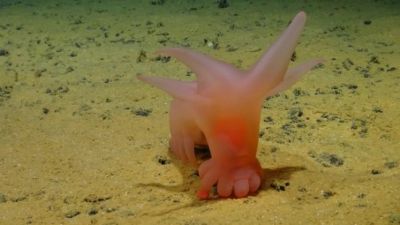
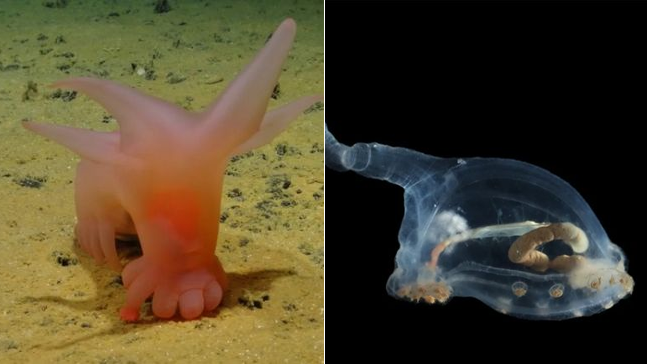
Photos taken by the exploration team using remotely operated vehicles at depths of 4,000 to 5,000 meters captured images of ‘sea-pigs.’ Sea-pigs, a type of invertebrate, are well known for their excellent sense of smell used to locate the carcasses of other organisms and for walking on the seabed using multiple legs. While sea-pigs are generally white or pale pink, the specimen discovered this time was deep pink, leading scientists to speculate that it may be a new species.
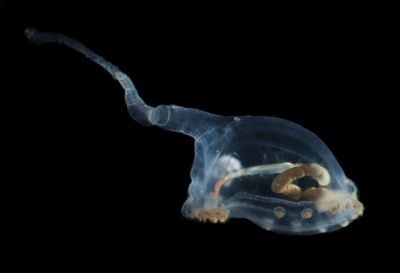
A transparent sea cucumber was also observed. Marine biologist Rejen Drennen said, “This creature is a ‘unicumber,’ which has been identified in previous surveys, but this is the first time we have observed it in such high-definition detail.”
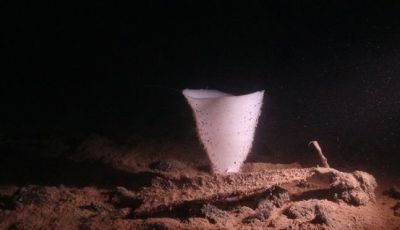
A sponge resembling a white glass cup was also spotted. Although sponges are multicellular animals with multiple cells, they lack differentiated digestive, excretory, muscular, and nervous systems, classifying them as the most primitive multicellular animals. They are also the longest-living animals on Earth. The deep sea, where sunlight does not penetrate and temperatures are as low as 1.5 degrees Celsius, provides an ideal environment for sponges to thrive.
Marine biologists estimate that there may be 6,000 to 8,000 new species in the CCZ. Researchers from the Natural History Museum in London announced in May last year in the international journal Current Biology that “a total of 5,578 species were discovered in the CCZ, of which 92% are estimated to be new species.”
Meanwhile, the CCZ is also believed to contain nearly 21.1 billion tons of various metals, including manganese, nickel, and cobalt, which are key minerals for batteries. The science media outlet IFL Science explained, “The minerals in the CCZ are enough to produce more than 280 million cars.” The International Seabed Authority (ISA), a UN-affiliated organization, has granted 31 deep-sea mineral mining rights to companies and research institutes worldwide, with 19 of these concentrated in the CCZ. South Korea, which joined the ISA in November 1996, can participate in the development of mineral resources in the CCZ as a member country.
However, scientists strongly oppose the development of deep-sea mines in the CCZ and other areas, warning that it will destroy the deep-sea ecosystem. Researchers at the German Marine Research Center stated, “Deep-sea mineral extraction will reduce biodiversity,” adding, “This could threaten important functions of the marine ecosystem such as carbon dioxide absorption and nutrient cycling.” Beth Ockert, Vice President of the Marine Science Institute in Maine, USA, also pointed out, “If deep-sea mining is forced ahead without a basic understanding of biology, it will be impossible to effectively protect or restore the deep-sea ecosystem.”
© The Asia Business Daily(www.asiae.co.kr). All rights reserved.



















