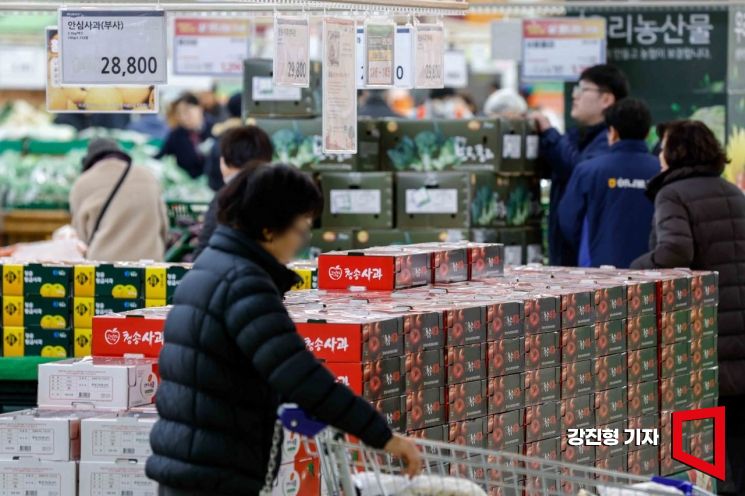
Unlike South Korea, where soaring agricultural product prices are driving inflation, the 'grocery shopping prices' in major overseas countries, including the United States, have shown signs of leveling off.
According to U.S. Department of Labor statistics on the 7th, the U.S. Consumer Price Index (CPI) for February rose 0.4% from the previous month and 3.2% compared to the same month last year, but the food price index increased by only 0.1% month-over-month and 2.2% year-over-year, showing a relatively smaller increase.
In contrast, South Korea's consumer price index rose more than 3% year-over-year for two consecutive months in February and March. Notably, the year-over-year agricultural product price increase in South Korea was 20.9% in February and 20.5% in March, maintaining a 20% range for two months and driving overall inflation.
South Korea's fresh fruit price index rose more than 40% in March following February. In particular, the price of apples last month surged 88.2% compared to the same month last year, marking the highest increase since statistics began in January 1980. The fresh food index last month rose 19.5% year-over-year, continuing double-digit growth for six consecutive months.
In the United States, while overall prices rose 19% over the past four years, grocery prices increased by 25%, placing a heavy burden on consumers, but recently, the pace of grocery price increases has slowed. The U.S. Department of Agriculture projects a 2.5% rise in food prices this year, explaining that the upward trend is easing compared to recent years.
In China, which is experiencing deflation, the consumer price index in February rose 1% month-over-month and 0.7% year-over-year. The year-over-year increase in the consumer price index turned positive for the first time in six months and reached the highest level in 11 months.
Last year, the biggest holiday with high consumption, the Spring Festival (Chinese New Year), was in January, but this year it fell in February, leading to a significant base effect, according to analysis. China's food price index rose 3.3% month-over-month but fell 0.9% compared to a year ago.
In Japan, the February consumer price index (excluding fresh food) rose 2.8% year-over-year. Fresh food prices increased 2.5% compared to the same month last year but fell 2.8% from the previous month. Japan's fresh food price inflation was around 10% in the fourth quarter of last year but has shown signs of stabilization this year.
The overall food price index rose 4.8% year-over-year but fell 0.4% month-over-month. Fresh fruit prices increased 8.3% year-over-year but decreased 0.4% from the previous month. Fresh vegetable prices rose 2.6% year-over-year but dropped 4.1% month-over-month.
In the Eurozone, the February consumer price index rose 2.6% year-over-year, a decrease from 2.8% in January. The food, alcohol, and tobacco price index rose 4.0% in February, down from 5.6% in January. In September last year, it recorded more than double at 8.8%, but the monthly inflation rate has been declining since then.
© The Asia Business Daily(www.asiae.co.kr). All rights reserved.

















