Australian Research Team Builds Predictive Model
"Increase in Plastic Usage... More Waste Expected"
A study has revealed that up to 11 million tons of plastic waste have accumulated on the deep ocean floor.
Dr. Brita Denise Hadesti's team from the Commonwealth Scientific and Industrial Research Organisation (CSIRO) in Australia disclosed these findings on the 6th through the scientific journal Deep Sea Research Part I Oceanographic Research Papers.
To assess pollution caused by plastic waste larger than 5 mm, the research team systematically reviewed previous study data and used this data to build a predictive model estimating the amount and distribution of plastic present on the seabed. The model incorporated seabed plastic waste data obtained via remotely operated vehicles (ROVs) and bottom trawl nets.
Dr. Hadesti explained the research background, saying, "While we know that millions of tons of plastic waste enter the ocean every year, we did not know where and how it moves or where and how much accumulates."
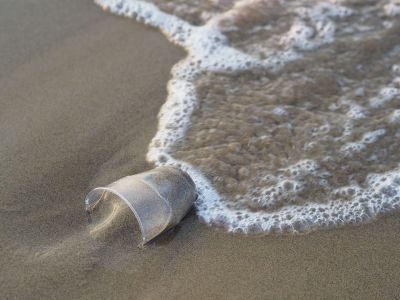
Analysis results showed that as of 2020, the amount of plastic waste accumulated on the seabed ranged from a minimum of 3 million tons to a maximum of 11 million tons. Sha Zhu, the study's first author and a doctoral candidate, explained, "This estimate of seabed plastic waste is up to 100 times greater than the amount of plastic floating on the ocean surface."
In particular, 46% of the seabed plastic waste was found to be accumulated within 200 meters depth near continental coastal areas or densely populated coastal zones, while 54% was analyzed to have sunk to the deep sea at depths ranging from 200 meters to as deep as 11,000 meters.
Dr. Hadesti stated, "This study investigated large debris such as nets, cups, and plastic bags," adding, "These results are the first to estimate how much plastic waste reaches and accumulates on the seabed before it breaks down into smaller pieces and mixes with marine sediments."
The research team currently estimates that the equivalent of one truckload of plastic waste flows into the ocean every minute. Plastic usage is expected to double by 2040, suggesting that waste will continue to increase.
Lead researcher Zhu said, "This study shows that the seabed is the final destination for plastic waste flowing into the ocean," and added, "Understanding the movement and accumulation of plastic in the deep sea will help reduce risks to marine life and aid in developing countermeasures."
© The Asia Business Daily(www.asiae.co.kr). All rights reserved.
![Clutching a Stolen Dior Bag, Saying "I Hate Being Poor but Real"... The Grotesque Con of a "Human Knockoff" [Slate]](https://cwcontent.asiae.co.kr/asiaresize/183/2026021902243444107_1771435474.jpg)
















