Hyundai Livart, Hanssem, Enex, and 31 Other Companies
Colluded on a Scale of 2 Trillion Won Over 10 Years
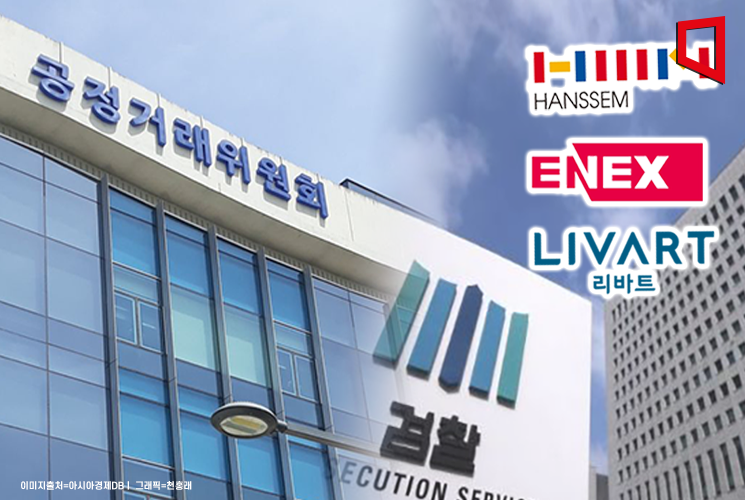
Hanssem, Hyundai Livart, Enex, and 28 other furniture companies were found to have colluded in bidding worth over 2 trillion won in built-in furniture construction for apartments and officetels, resulting in sanctions from the Fair Trade Commission (FTC).
On the 7th, the FTC announced that it decided to impose corrective orders and a total fine of 93.1 billion won (tentative amount) on the 31 furniture manufacturing and sales companies.
According to the FTC, these 31 companies colluded by agreeing in advance on the expected winning bidder or sharing bid prices during the process of participating in 738 special purchase furniture bids ordered by 24 construction companies over about 10 years from 2012 to 2022.
Special purchase furniture refers to furniture installed in newly built apartments and officetels, such as kitchen sinks and built-in wardrobes, and the cost is included in the sale price of the apartments.
Domestic construction companies often conduct designated competitive bidding among registered partner companies when purchasing special purchase furniture, contracting with the lowest bidding company. Sales representatives of furniture companies for each construction company agreed on the expected winning bidder, decoy participants, and bid prices through meetings or phone calls before participating in the bids.
Afterward, the agreed expected winning bidder sent estimates to the decoy companies via email or KakaoTalk, and the decoy companies submitted bids either exactly as per the estimate or with slightly increased amounts to execute the agreement.
Additionally, to increase the probability of winning or maintain eligibility to participate in the bid, they sometimes agreed only on bid prices through exchanging estimates without explicitly agreeing on the expected winning bidder. In these cases, the companies receiving the estimates submitted bids at the exact or higher amounts stated in the estimates.
This case represents a chronic collusion that occurred nationwide over a long period of 10 years, with related sales amounting to approximately 1.9457 trillion won. The FTC pointed out that "the collusive behavior of these furniture companies is also evaluated to have partially contributed to the increase in the sale price of apartments."
An FTC official said, "This action is a case of sanctioning special purchase furniture bid collusion that has been widespread and ongoing nationwide for a long time, and it is expected to serve as an opportunity to eradicate the chronic collusion practices in the furniture industry."
The FTC had filed complaints with the prosecution last year against 8 furniture companies and 12 current and former executives on April 8, and criminal trials are currently underway.
© The Asia Business Daily(www.asiae.co.kr). All rights reserved.

















