9% Increase Year-on-Year... Recovery to Pre-COVID-19 Levels
Family and Asian Segments Grow While European Restaurants Decline
Burger Market Expected to Expand to 5 Trillion Won by 2028
Last year, the domestic dining-out market size surpassed 100 trillion won, recovering to pre-COVID-19 pandemic levels. In particular, buffet-style restaurants with reasonable prices and high cost-effectiveness, such as Ashley, gained attention amid the ongoing high inflation trend during the economic downturn.
According to the 2023 consumer dining-out market survey released on the 4th by global market research firm Euromonitor International, the domestic dining-out market size recorded 100 trillion won, a 9% increase compared to the previous year. This exceeded the pre-COVID-19 market size of 99 trillion won (2019) for the first time since 2020.
However, the transaction volume only increased by 3.6% year-on-year to 78,272,398,000 transactions, which is about half of the global transaction volume growth rate of 7.8%. Euromonitor analyzed that "the high sales growth rate in Korea’s dining-out industry is attributed to the rise in dining menu prices rather than active consumer participation."
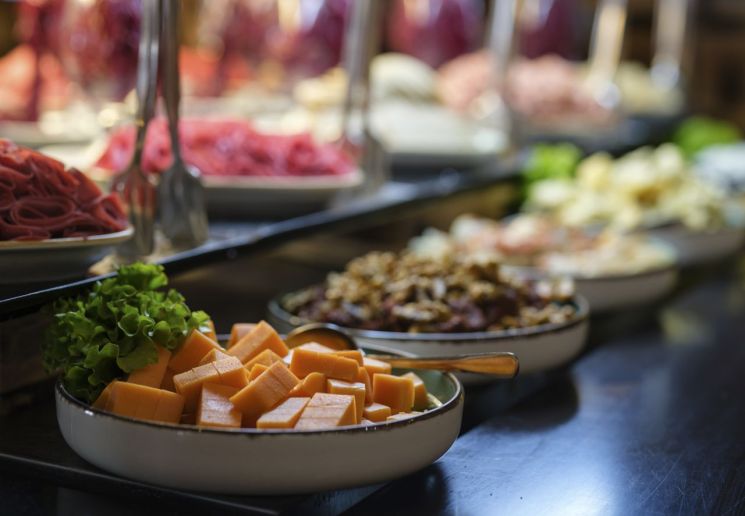
Among Asian, family, European, and pizza restaurants, the category with the highest sales growth rate was family restaurants, which grew by 30% compared to the previous year. Next, Asian restaurants grew by 10%. Euromonitor pointed to the boom of buffet-style dining specialty stores as the background for the steep growth of family and Asian restaurants, which had experienced a long recession due to social distancing and reduced consumption. Euromonitor explained, "Buffet-style dining specialty stores offering reasonable price ranges, such as Myeongnyun Jinsagalbi and Ashley, gained popularity," adding, "This reflects the market trend where consumers increasingly seek both cost-effectiveness (performance relative to price) and emotional satisfaction (psychological satisfaction relative to price) in an era of high inflation." Meanwhile, pizza and European restaurants shrank by 6.8% and 1.8%, respectively, compared to the previous year.
Meanwhile, the domestic burger fast-food market recorded 4.15 trillion won last year, growing 10.5% year-on-year. Since the sales growth rate was higher than the transaction volume growth rate (5.3%), it is interpreted that consumers sought relatively higher-priced burgers. Euromonitor stated, "While burgers used to be a cost-effective lunch or snack, the recent entry of premium burgers has raised consumers’ psychological price point for burgers." Euromonitor forecasts that the Korean burger market will enter the 5 trillion won range by 2028.
The domestic cafe market is still growing but the explosive growth phase is over. Last year, the number of stores was 38,199, a 4% increase compared to the previous year, which is one-fifth of the previous year’s growth rate of 20%.
© The Asia Business Daily(www.asiae.co.kr). All rights reserved.
![From Bar Hostess to Organ Seller to High Society... The Grotesque Con of a "Human Counterfeit" [Slate]](https://cwcontent.asiae.co.kr/asiaresize/183/2026021902243444107_1771435474.jpg)
















