There is a bias where the initially started side appears more frequently
Is the probability of a coin landing on heads or tails really 50% each? A foreign research team conducted an astonishing 350,757 coin toss tests and revealed that this is not actually the case.
Franti?ek Bartos, a researcher at the University of Amsterdam in the Netherlands, recently conducted a unique experiment. He 'verified' whether the probability of heads and tails is 50% each by tossing coins from 46 countries around the world. The experiment involved 46 coins and 48 experimenters, with a total of 350,757 coin tosses.
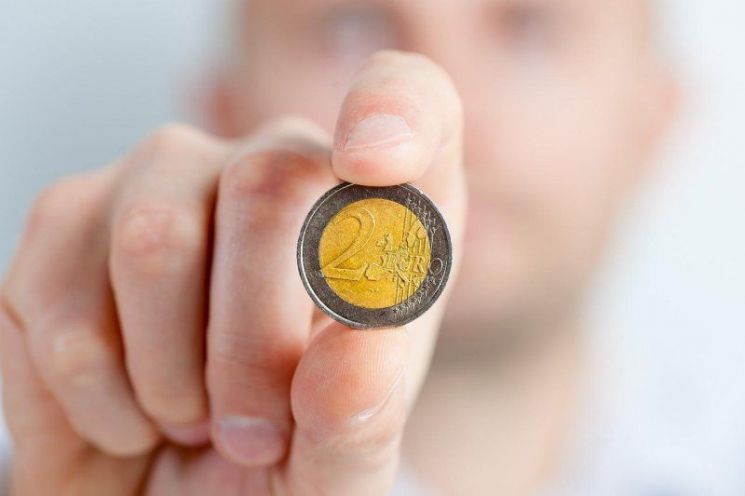
In fact, the theory that coin tossing may not be a fair game was first proposed in 2007. The hypothesis is that there is a 'same-side bias' in coin tossing.
In other words, if the coin is started with heads facing up, the probability of landing on heads is higher, and the same applies to tails. Bartos's experiment directly tested whether the same-side bias theory is true.
The results showed that the probability of a coin toss actually depends on which side it starts on. The side initially placed on the palm had a probability of 50.8%, slightly higher than the opposite side.
If two people bet 1 dollar each on a coin toss, after 1,000 tosses, the person who chooses the favorable side could earn an average of 19 dollars more.
However, there is a limitation in that this experiment was not conducted in a completely controlled environment. Bartos's research team admitted that some coins showed a definite same-side bias, while others did not at all. This means that the skill of the person tossing the coin may have been a variable.
© The Asia Business Daily(www.asiae.co.kr). All rights reserved.
![Clutching a Stolen Dior Bag, Saying "I Hate Being Poor but Real"... The Grotesque Con of a "Human Knockoff" [Slate]](https://cwcontent.asiae.co.kr/asiaresize/183/2026021902243444107_1771435474.jpg)
















