The Three Major Principles of US-China Relations: Peace, Stability, and Trust
Chinese President Xi Jinping warned in a phone call with U.S. President Joe Biden that "China will not stand by if efforts are made to suppress its development of advanced technology." At the same time, he presented peace, stability, and trust as the three main principles of bilateral relations, indicating the need to maintain a stable and peaceful relationship.
On the 2nd, the Chinese Ministry of Foreign Affairs announced that President Xi held a phone call with President Biden at Biden's request that evening, during which they exchanged candid and in-depth views on bilateral relations and mutual concerns. Xi emphasized that "strategic understanding is fundamental to China-U.S. relations, like fastening the first button on a shirt," and stressed that "the two major powers should not sever ties or turn their backs on each other due to conflicts or confrontations."
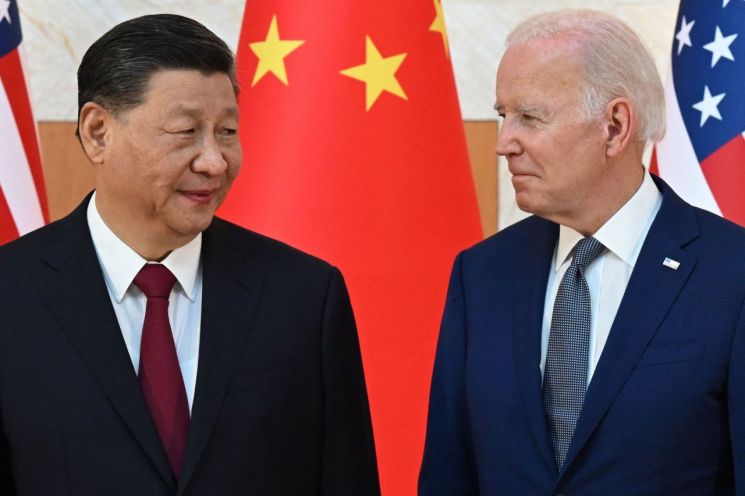
Regarding the U.S.'s increased sanctions on Chinese companies, Xi pointed out that "there is a growing number of cases where Chinese companies are added to sanction lists," calling it "not risk elimination but risk creation." He further warned, "If the U.S. is willing to seek cooperation and burden-sharing that benefits both sides, China's door will always be open. However, if the U.S. suppresses China's advanced technology development and deprives China of its legitimate development rights, China will not stand by."
He then identified the three main principles to guide bilateral relations this year as 'emphasis on peace,' 'emphasis on stability,' and 'maintaining trust.' Xi stated, "Both sides should open a stage free of conflict and continuously strengthen the positive prospects of the relationship," adding, "They should refrain from actions that cause setbacks, incidents, or crossing red lines." He continued, "They must respect commitments to each other through actions and realize the San Francisco vision," and urged, "Differences should be managed prudently, cooperation should advance in pursuit of mutual benefits, and coordination on international issues should be strengthened with a responsible attitude."
Regarding the Taiwan issue, Xi separately emphasized that it is "the first red line that must not be crossed in China-U.S. relations." He stated, "China will not tolerate Taiwan independence separatist activities and the encouragement or support of such activities," and urged, "The U.S. must translate President Biden's promise not to support Taiwan independence into concrete actions."
Additionally, the Ministry of Foreign Affairs reported that Xi expressed China's positions on Hong Kong-related issues, human rights, and the South China Sea. It also explained that the two sides exchanged views on the Ukraine situation and the Korean Peninsula situation.
The Ministry of Foreign Affairs said, "Both presidents judged the call to be frank and constructive," and "agreed to maintain communication, including expanding people-to-people exchanges and strengthening communication on international and regional issues." It also added, "China welcomed Treasury Secretary Janet Yellen and Secretary of State Tony Blinken's visits to China in the near future."
Meanwhile, Secretary Yellen is scheduled to visit China from the 3rd to the 9th. During her visit, the first in nine months since July last year, she plans to request equal treatment for American workers and companies. Secretary Blinken is also reportedly planning to visit China soon.
© The Asia Business Daily(www.asiae.co.kr). All rights reserved.

















