Construction Cost Collateral for Ulsan Mixed-Use Complex and Gangwon Goseong Saengsuk
Self-Help Measures to Overcome Liquidity Crisis
Shinsegae Construction secured emergency liquidity worth 200 billion KRW by using construction payments from its construction sites as collateral. This is a self-help measure to overcome the liquidity crisis caused by project financing (PF) defaults and unsold units amid difficulties in raising funds due to a credit rating downgrade.
According to the investment banking (IB) industry on the 3rd, Shinsegae Construction received a secured loan of 200 billion KRW, led by Shinhan Bank. The loan has a maturity of two years, with the principal to be repaid in four installments by the maturity date. Starting one year and three months later, 25 billion KRW will be repaid every three months, with 125 billion KRW to be repaid at maturity.
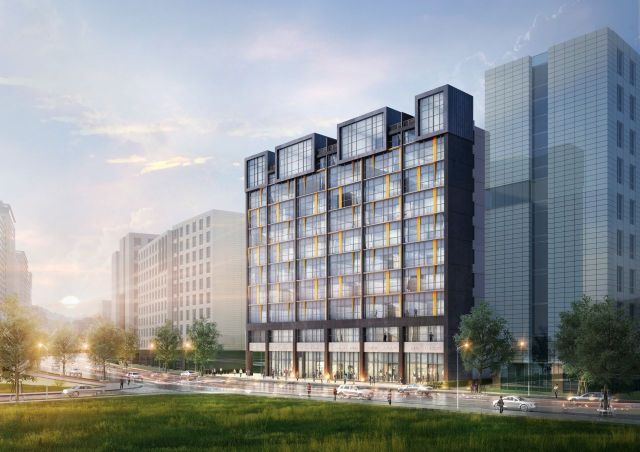
In this process, Shinsegae Construction provided construction payments to be received from the project owners as collateral. These are payments for the construction of the mixed-use complex (Billive Riverant) in Sinjeong-dong, Nam-gu, Ulsan, and the residential lodging facility (Wyndham Gangwon Goseong) in Goseong, Gangwon-do. When the project owners pay the construction fees, the funds will be primarily used to repay the loan.
Earlier in January, Shinsegae Construction also put up as collateral the three types of beneficiary certificates received from entrusting construction payments from 15 construction sites to KDB Industrial Bank. After entrusting the construction payments, Shinsegae Construction provided senior (Type 1) and mezzanine (Type 2) beneficiary certificates issued at that time as collateral to financial companies, while retaining the subordinated (Type 3) beneficiary certificates. When construction payments are received from the sites, borrowings are repaid first, and any remaining funds go to Shinsegae Construction as the Type 3 beneficiary.
The Billive Riverant in Ulsan and Wyndham Gangwon Goseong, which were provided as collateral for this loan, have sales rates of 74% and 64%, respectively. These are relatively high sales rates among Shinsegae Construction’s major projects. An IB industry insider said, "Due to uncertainties in the real estate market, it is difficult to accurately predict cash flows from construction sites under contract," but added, "The loan was secured by providing construction payments from projects where payments can be received stably as collateral."
Shinsegae Construction has been striving to raise funds this year to overcome the liquidity crisis. In January, it secured about 66 billion KRW in cash through a merger with Shinsegae Yeongrangho Resort. It also plans to issue 200 billion KRW worth of private bonds targeting its affiliate Shinsegae I&C and the Industrial Bank of Korea. About 100 billion KRW of corporate bonds have been issued, with an additional 100 billion KRW planned. In April this year, it plans to sell its leisure business division to Chosun Hotel & Resort for about 180 billion KRW.
Despite consecutive fund-raising efforts, concerns about Shinsegae Construction persist. The company recently announced an operating loss of 187.8 billion KRW last year. Its performance deteriorated due to recognizing losses from increased construction costs and unsold units at projects such as the Daegu Chilseong-dong mixed-use complex, Daegu Suseong 4-ga apartment complex, and Osiria Resort. The debt ratio soared to 976% due to a decrease in equity capital caused by net losses.
Cash flow also worsened. The operating cash flow (OCF) deteriorated due to large-scale deficits, and expenditures such as golf course expansions further increased the free cash flow (FCF) deficit to over 200 billion KRW. Credit rating agencies reflected the performance deterioration by downgrading Shinsegae Construction’s long-term credit rating from A to A-, and its short-term credit rating from A2 to A2-.
The possibility of additional losses cannot be ruled out. This is because the sales rates of major projects such as Daegu Bondong and Chilseong-dong mixed-use complexes and Daegu Suseong 4-ga apartment complex are only in the 20% to 30% range. Projects such as the Busan Myeongji district apartel and Yeonsinnae complex development also have sales rates around 50%, which is not high. Profitability has already worsened due to soaring construction costs, and it is uncertain whether sufficient construction payments can be recovered due to unsold units.
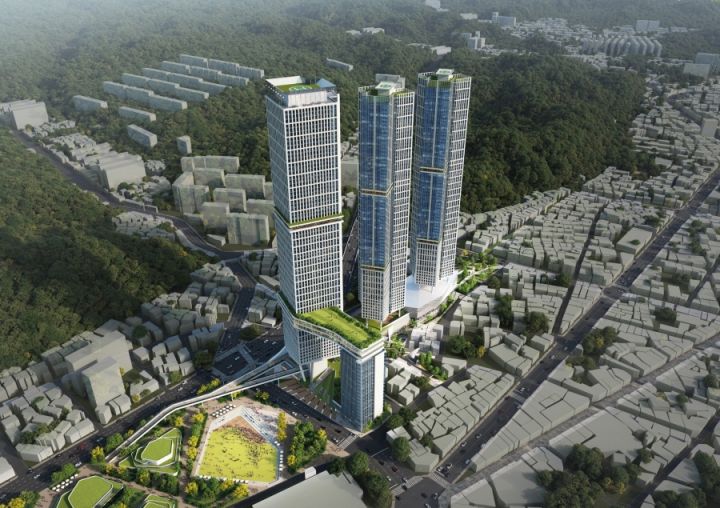 Perspective view of the redevelopment project on the former Pohang Station site, constructed by Shinsegae Construction
Additionally, there are concerns about potential defaults on PF guarantee liabilities for projects that have not yet started construction. As of the end of December last year, Shinsegae Construction had provided debt guarantees exceeding 300 billion KRW for projects including the former Pohang Station site development, Guri Galmae knowledge industry center, Yeonsinnae complex development, and Mokdong KT site development.
An industry insider in PF said, "Even if Shinsegae Construction reduces its debt ratio to the 400% range through affiliate mergers and business unit sales as part of financial improvement, its financial condition remains poor," adding, "Concerns about additional losses from unsold units in regional projects and defaults on contingent PF liabilities continue."
© The Asia Business Daily(www.asiae.co.kr). All rights reserved.


















