Apple Stands Alone in Big Tech AI Battle
'Closed' Approach That Led to Success Hinders Innovation
Misses AI Investment Timing and Loses Talent
"This year, we will open a new horizon in the field of generative artificial intelligence (AI)."
This was said by Apple CEO Tim Cook at the company's annual shareholders' meeting last February. While Cook mentioned, "We are making significant investments in the AI field," he postponed revealing specific plans. Despite the stock price dropping nearly 9% from the beginning of the year amid concerns about Apple's crisis, there was no surprise card to reverse the situation. This contrasts with major information technology companies (big tech) like Google and Microsoft (MS), which release new AI technologies almost daily. Analysts say Apple is failing to make its presence felt in the AI battle, held back by its characteristic closed nature.
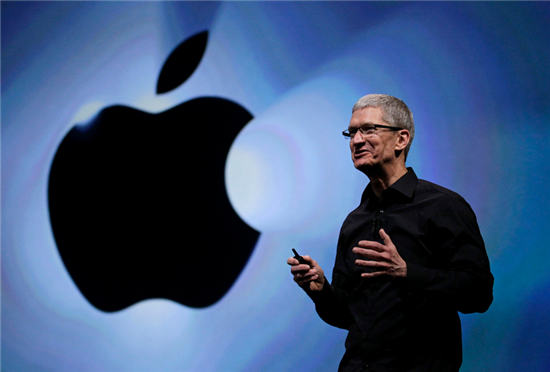 Tim Cook Apple CEO
Apple Left Out of AI Alliances
Apple is the only big tech company whose name cannot be found in recent global AI alliances. Its only move was acquiring Canadian startup DarwinAI last March. DarwinAI develops technology to make AI models smaller and faster. The industry interprets this as a move to strengthen on-device AI capabilities that run AI directly on Apple devices. Although Apple has belatedly started securing allies, the tactic of staying within the Apple ecosystem itself has not changed.
In contrast, competitors made trillion-won investments in startups early on. They even partnered with rivals when necessary. MS formed an alliance with OpenAI in 2019. At that time, OpenAI was in its fourth year and had just released GPT-2 (with 1.5 billion parameters). AI performance improves with more parameters. Considering the latest version GPT-4 has 1.7 trillion parameters, MS partnered with OpenAI from its infancy. In response, Google and Amazon invested $2 billion (about 2.7 trillion won) and $4 billion (about 5.4 trillion won), respectively, in Anthropic, considered a rival to OpenAI. Meta and IBM built a broader front. Including semiconductor companies Intel and AMD, cloud companies, startups, universities, and government agencies, they formed an ‘AI alliance’ of over 50 companies. They cooperate across all AI-related ecosystems, from semiconductors to cloud and solutions, regardless of the field.
Experts point out that Apple's rigid strategy makes it difficult to take the lead in AI. The generative AI field requires securing more data and verifying models in an open ecosystem to advance technology. The ‘Transformer’ model underlying ChatGPT also started from a paper published by Google in 2017. Infrastructure partners supporting technology, solutions for rapid market penetration, and partnerships with device manufacturers are also necessary. Hong In-ki, professor of electronic engineering at Kyung Hee University, said, "Apple fundamentally has a very strong independent ecosystem and has only chosen partners that meet its own standards," adding, "It is not accustomed to the kind of alliances and mergers seen in the AI field."
A-Grade Developers Rejected by the iPhone Empire
Apple was not behind in AI development from the start. When it installed the voice assistant ‘Siri’ on the iPhone 4S in 2011, it was considered a pioneer. Early on, Siri gained attention riding the popularity of the iPhone, but soon evaluations mainly pointed to its lack of accuracy and usefulness. To fix response errors, Apple added human editing to make Siri provide perfect answers. To protect personal information, it minimized cloud usage and processed everything on the device. Bound by a closed policy to protect the iPhone empire, AI development could not accelerate.

The form factor (device shape) centered strategy led to AI neglect. After the iPhone and Apple Watch, Apple targeted autonomous vehicles as the next form factor, pushing AI to a lower priority. Despite pouring $10 billion (about 13 trillion won) into the Apple Car project since 2014, it failed to produce significant results. Recently, Apple abandoned the Apple Car project and transferred many related personnel to the AI department. As a result, Apple missed the huge wave of AI while concentrating resources on the Apple Car for the past decade.
Apple’s characteristic closed culture also hindered innovation. Leading developers in the AI field prefer open ecosystems. They want to disclose development codes to identify potential risks in advance and accelerate technology development. In contrast, Apple’s culture of thoroughly hiding development information makes A-grade AI developers avoid Apple. Key Siri developers recruited from Google, such as Steven Baker, Anand Shukla, and Srinivasan Venkatachari, left Apple after clashing with company policies.
There are also opinions that it is too early to judge Apple’s victory or defeat. The annual Worldwide Developers Conference (WWDC) scheduled for June is expected to be a testing ground. Apple may reveal specific AI strategies, including AI technologies to be installed in the iPhone 16 to be released in the second half of this year. On the other hand, if it fails to show a proper vision, the image of a loser in the AI battle may solidify. Professor Hong said, "Apple has focused on the convenience of its own ecosystem centered on loyal consumers, so it has tended to see AI as a different area or underestimate it," adding, "If Apple does not find a compromise between its closed nature and AI’s openness, it will be difficult to differentiate itself."
© The Asia Business Daily(www.asiae.co.kr). All rights reserved.


















