Effective Low Birthrate Measures in the Northern Alps Region
Fathers Also Eligible for Shortened Work Hours for 'Breastfeeding'
The New York Times (NYT) introduced on the 1st (local time) a case where the birth rate remains high in a region of Italy, a European country with a low birth rate.
Italy has the second-lowest birth rate among the 38 member countries of the Organisation for Economic Co-operation and Development (OECD), following South Korea. It is also the country with the lowest birth rate in Europe, to the extent that Italian Prime Minister Giorgia Meloni and Pope Francis have warned of a 'national extinction.' In this Italy, there was a region maintaining a birth rate above the national average (total fertility rate of 1.2 as of last year).
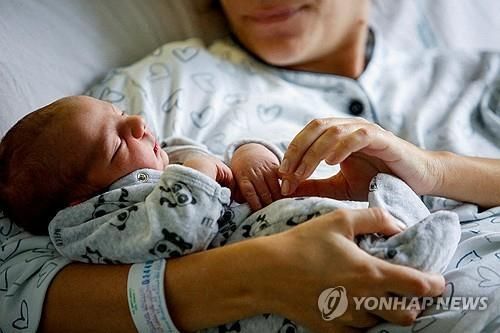
The region where the birth rate has not declined for decades is Alto Adige in the Trentino-Alto Adige (South Tyrol) autonomous province. This region did not limit its low birth rate measures to one-time cash payments but enabled parents to plan childbirth and child-rearing according to the child's life cycle. The provincial government provides systematic and long-term support for childcare costs, and both parents can freely use flexible working hours enough to avoid career interruptions.
In Bolzano, the largest city of Alto Adige introduced by the New York Times, the couple Stefano Baldo (38) and Tiziana Valchama (39), raising six children, receive a monthly allowance of 200 euros (about 300,000 KRW) per child until the child turns three. This is paid separately from the 1,900 euros (about 2.75 million KRW) monthly provided by the central government. In the Bolzano area, one parent of a preschool child can take paid leave or work reduced hours at any time, allowing him to leave work early.
Economic support for living expenses was also significant. The Baldo family can purchase various daily necessities at a 20% discount using the 'Family Plus' card issued by the provincial government for families with three or more children. This card is also linked to the local branches of the retail chain Despar, allowing additional discounts. Valchama explained to the media that using this card also saves on public transportation costs. Discounts are also available for electricity bills, after-school activity fees, summer camp participation fees, and healthcare expenses.
Experts advised that all of this creates conditions where women can continue working without career interruptions due to the burden of childbirth and child-rearing, which helps alleviate low birth rates.

Like France and some Northern European Scandinavian countries, Italy has shown that policies providing affordable childcare services have the power to overcome the population cliff caused by declining birth rates.
Agnese Vitali, associate professor of demography at the University of Trento, pointed out that unlike the central government, which mostly provides one-time support, Alto Adige makes continuous investments over several years, saying, "No one plans to have children based on one-time policies."
Meanwhile, the number of births in South Korea has nearly halved from about 436,000 in 2013 to 230,000 last year. According to the 'National Land Policy Brief' report published by the Korea Research Institute for Human Settlements in January, the decline in South Korea's birth rate was mainly attributed to housing costs such as sale prices and jeonse prices, as well as private education expenses.
© The Asia Business Daily(www.asiae.co.kr). All rights reserved.


















