"Increasing Number of Regional Emergency Medical Centers Restricting Treatment for Severe Emergency Diseases"
"From 10 Centers in the First Week of March to 14 Centers in the Last Week"
As collective action by the medical community opposing the 2,000 additional medical school admissions continues for an extended period, the emergency medical response capabilities by region are also declining. The government plans to thoroughly manage the appropriate transfer of emergency patients to suitable emergency medical institutions while mobilizing all available personnel to respond to emergency medical care. The health insurance financial support, amounting to 188.2 billion KRW per month and implemented since March, will also be extended.
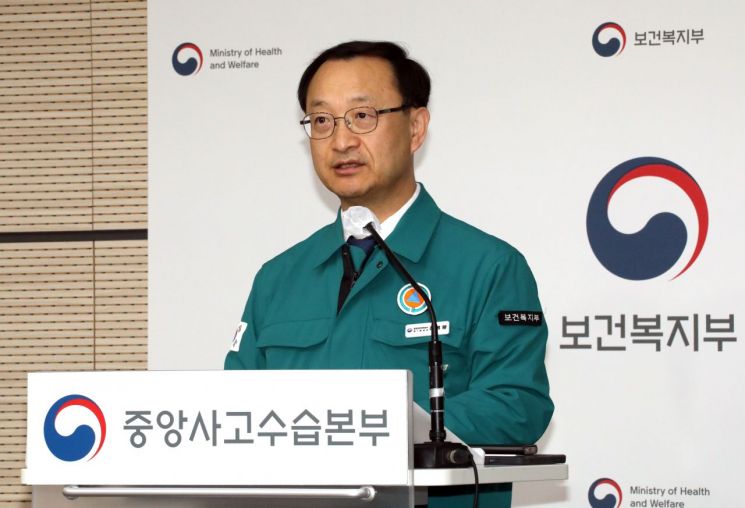
Jeon Byeong-wang, the General Director of the Central Accident Response Headquarters for the doctors' collective action (Director of Health and Medical Policy at the Ministry of Health and Welfare), stated at the Central Accident Response Headquarters briefing held on the 2nd, "Due to the prolonged collective action by doctors, a slight decrease in medical capacity has been detected in some areas," adding, "Among the 27 severe emergency diseases, the number of regional emergency medical centers displaying 'treatment restriction' messages (indicating some limitations in care) increased slightly from 10 centers in the first week of March to 14 centers in the last week of March."
There are 44 regional emergency medical centers nationwide. These centers manage 27 severe emergency diseases, and if treatment is not possible, they display a treatment restriction message to facilitate the transfer or evacuation of emergency patients. The Ministry of Health and Welfare plans to closely monitor the backup treatment capacity of emergency medical institutions and thoroughly manage the transfer of emergency patients to appropriate emergency medical institutions.
Director Jeon explained, "When such (treatment restriction) situations occur, we arrange for patients to be transferred from one regional emergency medical center to another, or the central emergency medical center handles inter-hospital transfers so that patients can receive treatment in other regions."
At the Central Disaster and Safety Countermeasures Headquarters meeting held the previous day, emergency medical plans in response to reduced working hours of medical school faculty were discussed. Considering that outpatient care, surgeries, and inpatient care will inevitably decrease if university hospital faculty work 52 hours per week, all available personnel will be mobilized and deployed mainly to tertiary general hospitals, and the cooperation system between tertiary general hospitals and general hospitals will be further strengthened.
Accordingly, in addition to the 413 personnel already dispatched, military doctors and public health doctors will be additionally deployed. Medical institutions that continue to employ or rehire newly recruited or retiring doctors among the 4,166 senior doctors will receive employment support funds. Furthermore, individual private practitioners or employed doctors who wish to do so will be allowed to work at tertiary general hospitals, and additional hiring of nursing staff to support medical care will be permitted if necessary. The Ministry of Health and Welfare expects to secure an additional 1,900 nursing staff to support medical care, on top of the current approximately 4,877 nursing staff.
Director Jeon said, "We plan to provide financial support such as education, training, and allowances to ensure that nursing staff supporting medical care can work without difficulties."
The emergency medical measures implemented in March will be extended in April as well. To this end, on the 28th of last month, the Health Insurance Policy Deliberation Committee decided to extend the 'health insurance support' worth 188.2 billion KRW per month for one more month.
Specifically, to support the maintenance of the emergency medical system, emergency room specialist consultation fees will be increased by 100%, and 68 emergency medical procedures performed in the emergency room, such as cardiopulmonary resuscitation, intubation, and hyperbaric oxygen therapy, will be compensated at 150%. When emergency medical institutions treat severe patients assigned through the central emergency medical center, an assignment support fee of about 70,000 KRW will also be paid. Treatment and surgery fees for severe and emergency surgeries performed within 24 hours after visiting regional emergency medical centers and regional trauma centers will be compensated at 150%, and for inpatient care of specialized treatment disease groups requiring high-level procedures to maintain care for severe patients, an additional 100% of the hospitalization fee will be compensated retrospectively.
On this day, Director Jeon urged the medical community continuing collective action, saying, "Please return to the medical field and present specific medical policy opinions to the government regarding the implementation plan of medical reform and investment priorities for it."
He added, "If the collective action is halted and a unified, more rational plan within the medical community is proposed based on scientific evidence and logic, the government is willing to discuss it with an open mind," and requested, "Please convey your opinions in a reasonable manner while protecting patients' lives."
© The Asia Business Daily(www.asiae.co.kr). All rights reserved.
![Clutching a Stolen Dior Bag, Saying "I Hate Being Poor but Real"... The Grotesque Con of a "Human Knockoff" [Slate]](https://cwcontent.asiae.co.kr/asiaresize/183/2026021902243444107_1771435474.jpg)










