Since October last year, 66 suspected bedbug complaints (62 texts, 4 calls) received... No actual cases found
Electric trains' vibrations and constant lighting during operation create an environment unfavorable for bedbug habitation and activity
Fabric seats to be replaced with 'reinforced plastic seats' by 2029 to maintain cleanliness
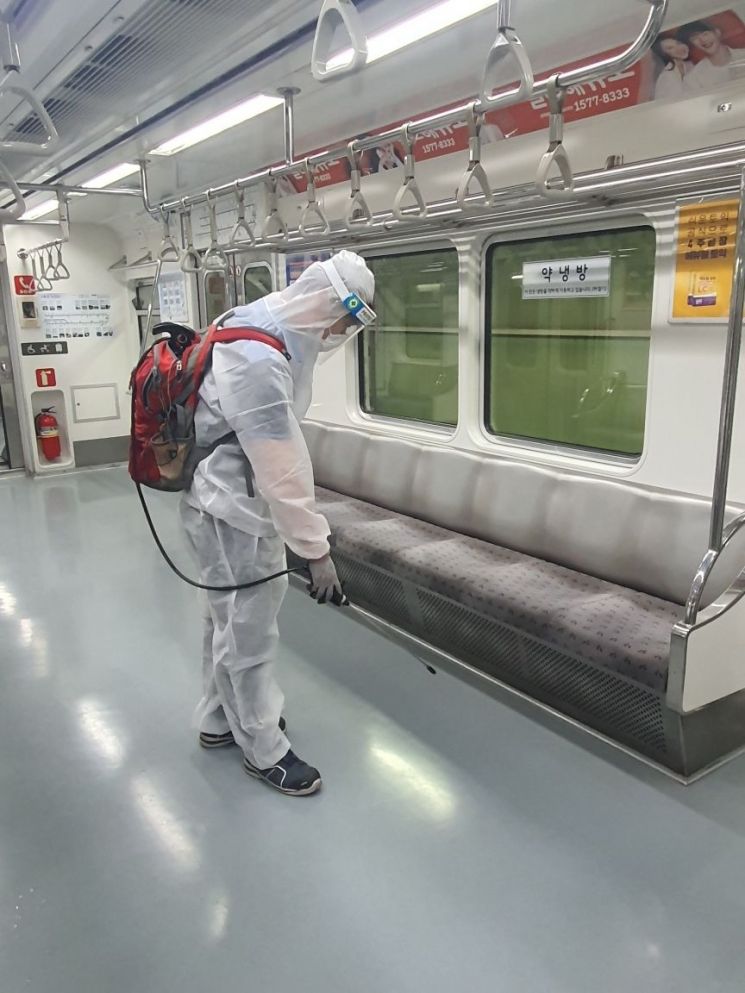
Starting last year in Europe and recently in Korea, bedbugs have been discovered, becoming a social issue. Furthermore, recent sightings of bedbugs on subway lines mainly used by tourists in Japan have once again heightened public anxiety.
Seoul Metro (President Baek Ho) announced that from October last year to March this year, a total of 66 related complaints (62 text messages and 4 phone calls) were received when bedbugs became a social issue, but upon investigation, no actual cases of bedbugs were found.
Photos submitted by passengers who suspected bedbugs were all insects that looked similar, and after the relevant train cars were brought to the vehicle depot and inspected by the company’s pest control team and the external pest control specialist CESCO, no bedbugs or traces of bedbugs were found.
Bedbugs are insects that mainly hide in crevices during the day and are active in the dark; they dislike light and prefer humid and warm environments. Meanwhile, the basic structure of the train cars is made of metal, and after operation, the cars are stored outdoors at the vehicle depot where the temperature drops below 13 degrees Celsius, which is below the developmental temperature for bedbugs, making it an unsuitable environment for their growth.
According to the diagnosis by the pest control specialist CESCO, “Since the lights are always on during operation, it is difficult for bedbugs to inhabit and be active inside the train.”
Bedbugs are nocturnal and both males and females feed on blood; during the day, they hide in crevices and mainly feed in the early morning hours (3 to 4 a.m.) rather than in the evening.
A representative from the pest control company stated, “Since the train lights are always on, it is difficult to consider the train as a main habitat for bedbugs, but there is a possibility of introduction through passengers’ clothing, bags, and other luggage.”
As the subway is a facility used by many people, the company conducts pest control by combining physical control methods with chemical control to ensure citizens can use the subway with peace of mind. They also conduct monthly inspections through professional pest control companies to check for bedbug habitation.
Chemical Control Residual Spray Method
As a physical control method, the company performs high-temperature steam vacuum cleaning at 100 degrees Celsius once a month during major cleanings on fabric-covered seats, which account for 54% of the operating train cars. In parallel, chemical control is applied by disinfecting and sterilizing frequently touched areas such as seats and handrails, and applying residual spray on the cabin floors. These treatments follow dosage, usage, and precautionary guidelines and are conducted more frequently than the standards set by the Infectious Disease Control and Prevention Act (9 times annually), with a frequency of twice a month during normal times and four times a month in summer.
Additionally, monthly inspections are conducted by the professional pest control company CESCO to check for bedbug habitation under seats and in crevices, enhancing reliability.
The replacement cycle for fabric seat covers is maintained at about 15 years, considering cases from related organizations and the wear condition of the fabric seat covers.
The company also plans to promote a project to replace fabric seats with “reinforced plastic seats” to create a cabin environment free from bedbugs.
The ratio of seat materials in the trains operated by the company is fabric seats (1,955 cars, 54%), stainless steel (613 cars, 17%), and reinforced plastic (1,044 cars, 29%), with fabric seats making up the majority.
Among the 1,955 fabric seats operated by the company, 340 cars on Line 3 have reached the replacement period (15 years) and are scheduled to be replaced with reinforced plastic seats, with an estimated budget of about 4.5 billion KRW.
In the future, fabric seats will be gradually replaced considering their replacement timing, and according to the new train replacement plan, all existing fabric seats will be replaced by 2029.
Chang-gyu Ahn, head of the company’s Vehicle Headquarters, said, “Although there have been no cases of bedbugs found in the Seoul subway so far, we are doing our best in proactive pest control to ensure passengers can use the subway with peace of mind. However, since there is a possibility of bedbugs being introduced by passengers despite the train environment being unsuitable for their survival, we ask for cooperation in bedbug prevention by refraining from bringing food on board, maintaining cleanliness, and using seats considerately to keep them clean.”
© The Asia Business Daily(www.asiae.co.kr). All rights reserved.

















