ISM March Manufacturing PMI 50.3... Expansion After 16 Months
Fed Rate Cut Retreat Expected
10-Year Treasury Yield Surges 13bp
US manufacturing activity in March revived with increases in production and new orders, entering an expansion phase for the first time in a year and a half. The stronger-than-expected rebound in manufacturing has led to speculation that the US Federal Reserve (Fed) will not rush to cut interest rates. Expectations that the timing of rate cuts may be pushed to the second half of the year have caused government bond yields to surge.
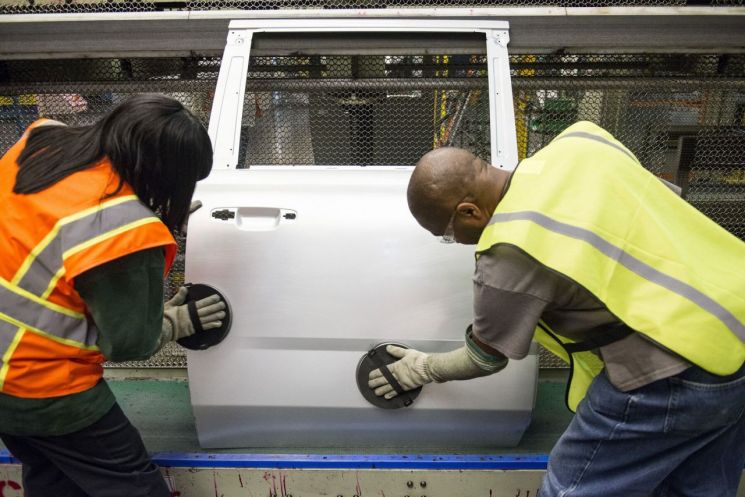
On the 1st (local time), the US Institute for Supply Management (ISM) announced that the manufacturing Purchasing Managers' Index (PMI) for March recorded 50.3. This not only exceeded the previous month's PMI of 47.8 but also surpassed experts' forecast of 48.5.
ISM conducts a monthly survey of 400 companies to assess manufacturing conditions and compiles the PMI. A reading above 50 indicates expansion, while below 50 signals contraction. This is the first time in 1 year and 6 months since September 2022 that the US manufacturing PMI compiled by ISM has entered an expansion phase. Previously, the US manufacturing PMI compiled by S&P Global had already entered expansion territory.
The ISM manufacturing employment index rose slightly from 45.9 in February to 47.4 in March. The new orders index increased from 49.2 to 51.4, entering expansion territory. The manufacturing prices index rose from 52.5 to 55.8.
Timothy Fiore, chairman of the ISM manufacturing survey committee, analyzed, "Demand is still in the early stages of recovery, and there are clear signs that conditions are improving," adding, "As companies re-enter the expansion phase, production surged compared to January and February." He further explained, "Customer inventory levels declined at a faster pace in March, and companies reported that their customers continue to experience inventory shortages," noting, "This is considered a positive factor for future new orders and production."
With last month's US ISM manufacturing activity exceeding expectations and entering expansion territory, there is speculation that the Fed's timing for rate cuts may be delayed. On the 29th of last month, when the February Personal Consumption Expenditures (PCE) price index came in line with market expectations, Fed Chair Jerome Powell reaffirmed a cautious stance, stating that additional evidence of sustained inflation slowdown is needed.
While the market largely expects the Fed to cut rates in June, some investors have begun to withdraw their bets on June. According to the Chicago Mercantile Exchange (CME) FedWatch tool, the federal funds futures market on that day priced in about a 58% chance that the Fed would cut rates by 0.25 percentage points at the June Federal Open Market Committee (FOMC) meeting, down from over 70% a week earlier.
Government bond yields are on the rise. The US 10-year Treasury yield, a global benchmark for bond yields, rose 13 basis points (bp) from the previous trading day to 4.32%, while the US 2-year Treasury yield, sensitive to monetary policy, increased 8 bp to around 4.7%.
Jose Torres, senior economist at Interactive Brokers, said, "Investors are moving in anticipation that the Fed may pivot to a more hawkish (monetary tightening preference) stance," and forecasted, "The Fed's first rate cut could occur in the second half of this year."
© The Asia Business Daily(www.asiae.co.kr). All rights reserved.

















