Professor Hiroshi Yoshida of Tohoku University Announces Survey Results
Keidanren Chairman and Business Leaders Urge Introduction of Separate Spousal Taxation
In Japan, there is a system where married couples share the same surname, following either the husband's or the wife's family name. A study has predicted that 500 years from now, all Japanese surnames will be unified under the single surname "Sato (佐藤)."
On the 1st, Nihon Keizai Shimbun (Nikkei) cited research by Professor Hiroshi Yoshida of Tohoku University, reporting that by the year 2531, which is 500 years from now, the surname "Sato" will account for 100% of all surnames in Japan.
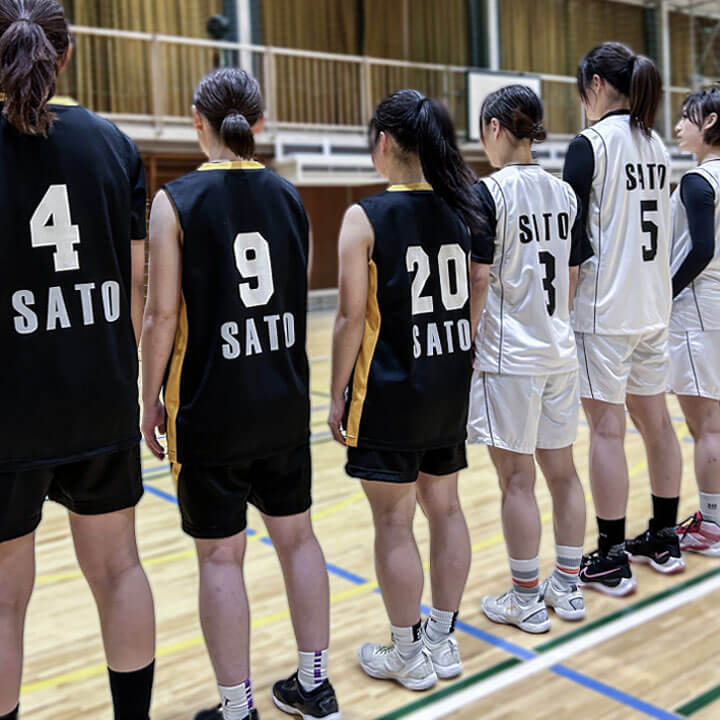 The Tokyo BB women's basketball team wearing uniforms unified with the name 'Sato'. (Photo by Think name Project)
Sato is the most common surname in Japan. Currently, it accounts for about 1.5% of all surnames in the country. Although the Korean surname Kim accounts for about 20% of the population, this projection arises due to Japan's system of shared surnames for married couples.
Japanese civil law stipulates that "a married couple shall adopt either the husband's or the wife's surname as agreed upon at the time of marriage." If couples do not follow this and maintain separate surnames, their marriage will not be legally recognized. Consequently, if this system continues, marriages with people bearing the surname Sato will inevitably increase, and over a long period, all surnames will be absorbed into Sato, according to Professor Yoshida's theory.
Professor Yoshida calculated surname ratios based on population data from the Ministry of Internal Affairs and Communications for 2022 and 2023, considering variables such as marriage, divorce, birth, and death. According to this, the population with the surname Sato increases by 0.8% annually due to marriage and childbirth, and assuming the continuation of the system where one spouse adopts the other's surname, it will reach 100% by 2531. However, if a "selective separate surname system" is introduced, where both spouses keep their own surnames after marriage, the time for Sato to reach 100% is postponed to 3310.
Professor Yoshida stated, "This is a projection supporting the claim that surnames will disappear if the current system is maintained," adding, "It is time to consider measures to respect the traditions, culture, and personal views associated with surnames." Nikkei added, "Out of approximately 130,000 surnames, 50,000 are already endangered. Many surnames have already become extinct."
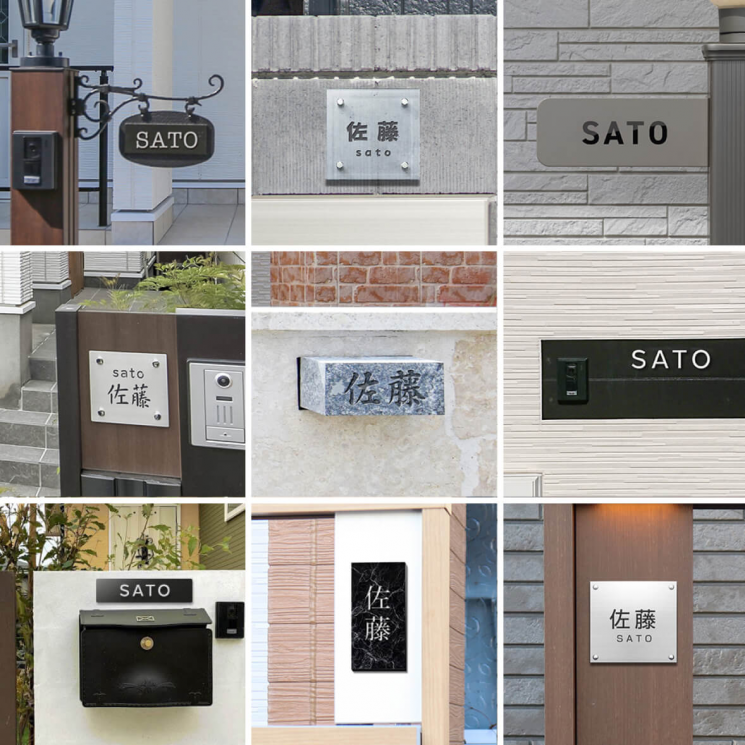 A conceptual drawing by construction company Aida Design imagining all residential nameplates in Japan in the year 2531 unified as 'Sato'. (Photo by Think name Project)
In fact, there is a growing call in Japan for the introduction of a separate surname system for married couples. Since over 90% of those who change their surname upon marriage are women, it is argued that this practice hinders women's social advancement. According to a family trend survey by the Ministry of Health, Labour and Welfare last year, support for separate surnames among couples reached 61%, the highest ever recorded.
The Tokyo Shimbun introduced various cases, such as a female CEO who inherited a family business for three generations being suspected by banks or clients because her surname changed to her husband's after marriage, differing from the founder's family name, or patents filed before marriage causing issues after her surname changed. Nikkei pointed out that "changing surnames upon marriage causes career interruptions for women and difficulties in managing both old and new surnames."
In response, on March 8th, World Women's Day, 1,000 business leaders including CEOs submitted a petition to the government urging the early implementation of the separate surname system. Signatories included Takeshi Niinami, Chairman of Suntory Holdings, and Hiroshi Mikitani, Chairman of Rakuten Group, lending their support. In February, Keidanren Chairman Tokura also stated, "I hope the introduction of the separate surname system will be prioritized to support improvements in women's working styles."
Alongside the announcement of this study, 40 companies in Japan are participating in a private project to raise awareness of the drawbacks of the shared surname system. For example, an interior design company is creating designs where all nameplates read "Sato," and a food distribution company is staging a scenario where all producers' names are "Sato" in the year 2531.
Takashima Kohei, President of Oisix, one of the participating companies, said, "If Japan remains backward in this regard, it will inevitably be a disadvantage from the perspective of corporate talent acquisition."
© The Asia Business Daily(www.asiae.co.kr). All rights reserved.
![Clutching a Stolen Dior Bag, Saying "I Hate Being Poor but Real"... The Grotesque Con of a "Human Knockoff" [Slate]](https://cwcontent.asiae.co.kr/asiaresize/183/2026021902243444107_1771435474.jpg)

















