"Continue Investment in Korea and Taiwan, Reduce in Japan"
Emphasizing Strengthening Technology, Sustaining Investment, and Securing Talent
"I am grateful that the government recognizes the importance of semiconductors and provides support. However, it is necessary to devise strategies so that companies do not become dependent on government support."
Japan, which was the semiconductor powerhouse in the 1980s, is pouring massive support to regain semiconductor dominance. After attracting Taiwan's TSMC, the world's largest foundry (semiconductor contract manufacturing) company, to its own country, Japan created a large corporation called Rapidus to pool technological capabilities for producing cutting-edge semiconductors domestically. Japan is also actively working at the national level to expand its influence in the semiconductor supply chain by partnering with the United States, which is at the forefront of the dominance competition.
Amid these movements, Kawai Toshiki, president of Tokyo Electron, a leading Japanese semiconductor manufacturing equipment company, voiced the need to reduce semiconductor companies' dependence on the state. His concern is that if companies blindly rely on government support, which can change depending on market conditions, they may falter and fail to invest independently as they did over 40 years ago.
In a recent interview with Japan's Nihon Keizai Shimbun, President Kawai emphasized, "Semiconductors undergo rapid technological innovation and market changes." He added, "Continuity in investment is crucial; even a one-year pause becomes a weakness. Isn't that difference significant compared to overseas, especially Asian companies?" He further stated, "We must always maintain competitiveness in preparation for technological development."
President Kawai personally experienced this realization in the 1980s when Japan, having exerted great influence in the semiconductor market, gradually declined. He said, "At that time, I was in charge of sales and received many orders from customers in Taiwan and Korea," explaining, "I felt that while Japanese companies were unable to invest, Asian customers continued to invest." He noted, "During the major downturn in the semiconductor market, Japanese comprehensive electronics companies reduced investments in the semiconductor sector, whereas overseas companies actually increased their investments."
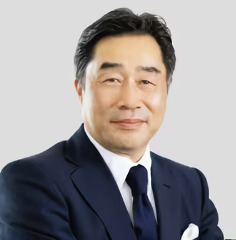 Toshiki Kawai, President of Tokyo Electron Japan (Photo by Tokyo Electron)
The Japanese government has prepared a budget of 4 trillion yen (approximately 35.6 trillion won) for semiconductor industry investment over the next three years. Regarding this, President Kawai said, "There must be a supply chain that can properly deliver what is needed when semiconductors are required," and added, "It is very appreciated as a member of the industry that the importance of semiconductors is being re-recognized and the government is providing support. Government support will serve as a catalyst to create new investments in the semiconductor industry and lead to business expansion across the entire supply chain, including equipment."
However, he strongly emphasized that semiconductor companies should not rely solely on government support. He said, "To adapt to changing times and grow, companies need profits," and added, "It is important for companies to hone their strengths, acquire technology that can lead the world, make continuous growth investments, and secure talent capable of realizing these in practice."
He also explained that understanding a company's strengths is crucial to becoming a globally competitive enterprise. In the case of Tokyo Electron, he introduced that their strength lies in technological innovation, stating, "We possess many world No. 1 or No. 2 devices in the four major semiconductor manufacturing process fields."
Regarding the recent semiconductor investment boom, President Kawai diagnosed it not as a 'boom' but as a 'trend.' Just as the PC and internet in the 1990s and smartphones in the 2000s served as catalysts, generative artificial intelligence (AI) and quantum computing modeled after brain neurons have become the triggers. He said, "Within five years, semiconductor processing performance will increase to 2.5 times the current level, driving technological advancements such as generative AI, autonomous driving, and next-generation high-speed communication standard 6G," and evaluated, "It is a natural trend to establish a semiconductor supply chain."
© The Asia Business Daily(www.asiae.co.kr). All rights reserved.

















