Foxconn Produces AI Servers in Mexico
Supplies to US Amazon, Google, MS, Nvidia, and Others
Taiwan's Foxconn is expanding its production of artificial intelligence (AI) servers in Mexico. As competition between the U.S. and China intensifies in advanced technology sectors such as semiconductors and AI, major American companies are demanding their partners relocate production bases from China to Mexico. Amid accelerating U.S. efforts to counter China, more companies are strengthening their 'nearshoring' strategies by moving production facilities to neighboring countries.
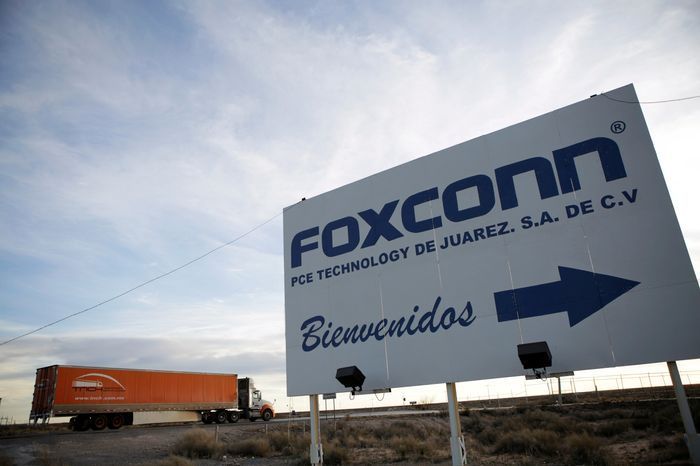
According to the Wall Street Journal (WSJ) on the 31st of last month (local time), Foxconn purchased land in Jalisco, western Mexico, for $27 million (approximately 36 billion KRW) in February.
Having invested $690 million (about 930 billion KRW) in Mexico over the past four years, Foxconn plans to build a factory on this site to expand AI server production. The AI servers produced in Mexico by Foxconn are expected to be supplied to American companies such as Amazon, Google, Microsoft (MS), and Nvidia.
Not only Foxconn but other major Taiwanese companies are also reportedly increasing investments in Mexico in response to demands from U.S. companies. Previously, Dell and Hewlett-Packard (HP) requested their key partners to reduce dependence on China for server and cloud computing production and relocate operations to Southeast Asia or Mexico. Both companies have expressed their intention to diversify supply chains that have been dependent on China.
As Taiwanese companies choose to move away from China and head to Mexico, the number of Taiwanese companies operating in Mexico has reached 300, employing 70,000 people. The trade volume between Taiwan and Mexico stands at around $15 billion (approximately 20.2 trillion KRW).
Companies are turning their attention to Mexico because it is geographically close to the United States, the world's largest export market, while maintaining lower labor costs. Above all, the U.S. imposes low tariffs on Mexico based on the United States-Mexico-Canada Agreement (USMCA), making Mexico an optimal foothold for exports to the world's largest market, the U.S. In contrast, China, which has served as Asia's manufacturing hub, is facing intense U.S. scrutiny aimed at diversifying supply chains.
The WSJ reported that since the USMCA took effect in 2020, "companies that have relocated production bases from China to Mexico have invested billions of dollars in Mexico," and "AI is one of the advanced manufacturing sectors where Mexico is playing an increasingly significant role amid rising U.S.-China tensions."
Currently, major manufacturers in Asia, Europe, and the U.S. are moving factories to Mexico. The automotive sector is the most representative example, with Mexico transforming into the world's fifth-largest automobile exporter. Electric vehicle companies, including Tesla, are considering establishing new factories in Mexico, and Taiwanese companies are expanding investments in central and southern Mexico. This trend is expected to spread to advanced technology sectors such as AI and semiconductors. Recently, the U.S. State Department also expressed its intention to cooperate with Mexico to expand and diversify the semiconductor ecosystem.
The share of Mexico in U.S. imports is also rising. Last year, China's share of U.S. imports was 13.9%, down from 21.5% in 2015. During the same period, Mexico's share increased by 2 percentage points to 15.4%, making it the top U.S. import partner.
James Huang, chairman of the Taiwan External Trade Development Council, stated, "North American countries hope to replace as many products imported from Asia as possible," and evaluated that "Mexico is ready to become the most important manufacturing base under the USMCA."
© The Asia Business Daily(www.asiae.co.kr). All rights reserved.
![From Bar Hostess to Organ Seller to High Society... The Grotesque Con of a "Human Counterfeit" [Slate]](https://cwcontent.asiae.co.kr/asiaresize/183/2026021902243444107_1771435474.jpg)
















