Persistent 'Chronic Disease' of Rebates in Pharmaceutical Industry
Limitations of Domestic Pharma Companies Focused on Generic Drugs
JW Jungwoo Pharmaceutical Provided to 1,500 Hospitals and Clinics Over 8 Years
Recently, Kyungbo Pharmaceutical and Hanmi Pharm Also Penalized
The government has once again launched a campaign to eradicate pharmaceutical rebates. This move comes in response to ongoing concerns that rebates, which are clearly illegal, continue to be widespread despite several institutional improvements.
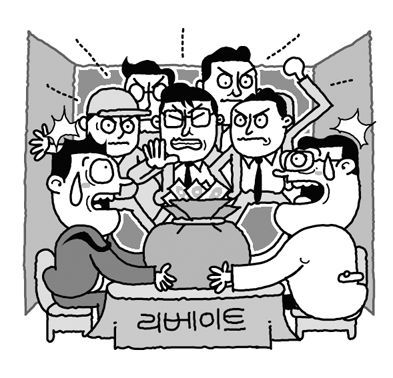
The Ministry of Health and Welfare is operating a concentrated reporting period for pharmaceutical and medical device rebates until May 20. Through this focused reporting period, the plan is to detect rebates by encouraging voluntary reporting. Reporters will receive reduced penalties even if their involvement in illegal activities is confirmed, and if it is judged that they have contributed to the public interest by recovering unfair profits, they may be awarded up to 3 billion KRW in compensation or up to 500 million KRW in rewards.
Rebates refer to the act of providing money or entertainment to promote the sale of specific products. In the pharmaceutical industry, this mainly targets prescription drugs. Prescription drugs cannot be sold to patients unless prescribed by a doctor, no matter how effective the medicine is. Due to the structure of the domestic pharmaceutical industry, which has few original drugs and a high dependence on generics, there is a temptation to gain a competitive edge by using illegal means.
Pharmaceutical sales-related rebates are illegal in South Korea. The government prohibits rebates citing reasons such as the deterioration of the National Health Insurance finances and increased burden on citizens' medication costs. Before the rebate prohibition system was fully implemented, the sales and administrative expenses of pharmaceutical companies were about 36% of sales, overwhelmingly higher than the manufacturing industry average of 11%. In 2007, the Fair Trade Commission estimated that "rebates accounted for 20% of total pharmaceutical sales."
Rebates are not simply provided in cash or gifts. Beyond simple labor such as food delivery or warehouse organization, it is known that pharmaceutical company employees sometimes act as designated drivers when doctors travel to provincial areas or assist at doctors' family events. In 2018, there was even a case where a pharmaceutical company employee was caught attending reserve forces training in place of a doctor and received a suspended sentence.
Besides operating the simple reporting period, the government has repeatedly strengthened punishment regulations to block rebates. After implementing a full-scale rebate prohibition system in 2008, it introduced a 'dual punishment system' in 2010 that punishes both the provider and the recipient of rebates. Since then, administrative sanctions and penalties have been continuously tightened. Currently, providers of rebates face administrative sanctions ranging from a three-month sales suspension of the relevant product to cancellation of product approval, while recipients can face qualification suspension for up to one year. In severe cases, both parties can be sentenced to up to three years in prison or fined up to 30 million KRW.

Nevertheless, pharmaceutical companies still do not break the rebate habit. In October last year, JW Pharmaceutical was fined a record-high 29.8 billion KRW related to rebates. The Fair Trade Commission found that JW Pharmaceutical provided economic benefits worth about 7 billion KRW to over 1,500 hospitals and clinics nationwide over eight years from 2014 to 2022. Professional techniques such as the so-called 'Treasure Map' and 'White Horse' were also employed. The Treasure Map method selects rebate targets based on existing prescription volumes of hospitals and clinics, while White Horse refers to a '100 to 100' method of providing entertainment equivalent to the prescription amount. At the time, the Fair Trade Commission stated, "We impose the highest-ever fine in a pharmaceutical rebate case to strictly sanction the organized and comprehensive rebate activities conducted at the company headquarters level."
Recently, Kyungbo Pharmaceutical was caught in a rebate scandal involving hundreds of billions of KRW, leading to arrest warrants for the relevant executives, and Hanmi Pharmaceutical was found to have provided economic benefits to medical institutions to promote ophthalmic drugs, resulting in a three-month sales suspension of the related products.
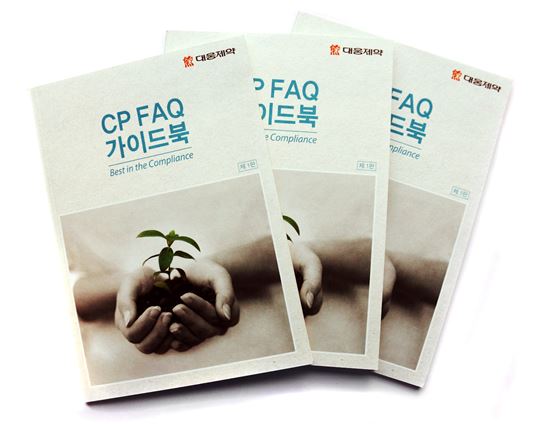 Daewoong Pharmaceutical's Rebate Fair Trade Compliance Practice Guidebook
Jung Yuntaek, director of the Pharmaceutical Industry Strategy Research Institute, said, "Although significant improvements have been made with the strengthening of rebate punishments and pharmaceutical companies adopting fair trade compliance programs, past sales practices still exist, making complete eradication difficult. Companies should avoid setting excessive sales targets that tempt frontline sales staff into rebates and should actively pursue self-regulation efforts such as the 'hotline reporting' system implemented by global pharmaceutical companies."
© The Asia Business Daily(www.asiae.co.kr). All rights reserved.
![Clutching a Stolen Dior Bag, Saying "I Hate Being Poor but Real"... The Grotesque Con of a "Human Knockoff" [Slate]](https://cwcontent.asiae.co.kr/asiaresize/183/2026021902243444107_1771435474.jpg)

















