Jinseongjun, Former Aide to Democratic Party Lawmaker
Accused of Pre-Election Campaigning and Political Funds Law Violations
The guilt of Kim Seung-hyun, then the Democratic Party candidate for Mayor of Gangseo District, Seoul (37), who was indicted for engaging in pre-election campaigning and receiving illegal political funds during the June 1, 2022 local elections, has been confirmed.
Kim was a former aide to Jin Seong-jun, a Democratic Party lawmaker. Jin was referred for investigation on charges of aiding Kim's pre-election campaigning but was cleared by the prosecution.
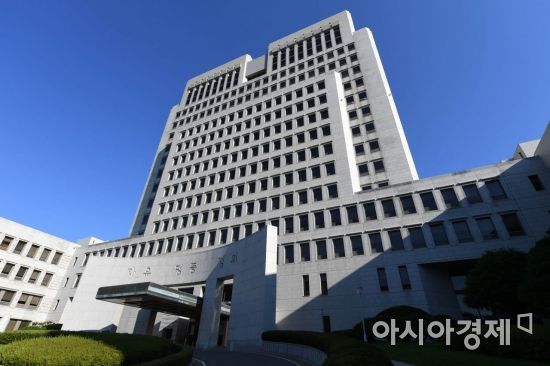
According to the legal community on the 29th, the Supreme Court's First Division (Presiding Justice Kim Seon-su) upheld the original court ruling that sentenced Kim to a fine of 3 million won and ordered the confiscation of 15.3 million won on charges of violating the Public Official Election Act (pre-election campaigning) and the Political Funds Act.
The court stated the reason for dismissing the appeal was that "there was no error in the lower court's judgment that violated the rules of logic and experience or exceeded the limits of free evaluation of evidence, nor was there a misinterpretation of the legal principles regarding primary election campaigning and election campaigning under the Public Official Election Act."
Kim was accused of conducting pre-election campaigning by holding four meetings aimed at winning the election at the local volunteer organization 'Daham Volunteer Society,' led by construction businessman Jo, between March and April 2022, before the official election campaign period.
Kim was also accused of receiving 15.3 million won from Jo under the pretext of paying rent for the election office and staff salaries.
The first trial court recognized both charges against Kim as guilty, sentencing him to a fine of 3 million won and ordering the confiscation of 15.3 million won.
A key issue in the trial was whether primary election campaigning within the party could be considered election campaigning under the Public Official Election Act.
The Supreme Court's position is to strictly distinguish between primary election campaigning and election campaigning in principle, but recognizes exceptions where ▲ winning the party primary practically guarantees election victory, thus the primary can be considered election campaigning, or ▲ when the party primary involves public opinion polls including general citizens, effectively constituting election campaigning.
During the trial, Kim argued that "the events were internal gatherings of a local volunteer organization and not election campaigning. Furthermore, the appeals for support were primary election campaigning aimed at winning the party primary, not election campaigning."
However, the court judged, "No prospective candidates from other parties attended the events, and only the defendant attended four consecutive times, publicly announcing his candidacy for Mayor of Gangseo District and appealing for support. Additionally, the meeting chairman also publicly appealed for support for the defendant, so attendees could clearly understand that the events aimed to promote the defendant's election."
It added, "Especially since the events were held about two months before the election day, attendees could easily recognize the connection between the events and the election."
The court also pointed out, "While winning the party primary is the first goal, once a candidate is selected, they run in the election. Therefore, if the activities can be evaluated as effectively aimed at winning the Gangseo District mayoral election, they should be regarded as election campaigning."
It further stated, "At that time, the party's primary candidates and selection methods had not been decided, and the participation of the general public in the primary was random. Considering these points, the necessity for the defendant to conduct primary election campaigning was not significant."
Both Kim and the prosecution appealed, but the appellate court's judgment was the same.
The Supreme Court also found no problem with this judgment and dismissed Kim's appeal.
© The Asia Business Daily(www.asiae.co.kr). All rights reserved.
![Clutching a Stolen Dior Bag, Saying "I Hate Being Poor but Real"... The Grotesque Con of a "Human Knockoff" [Slate]](https://cwcontent.asiae.co.kr/asiaresize/183/2026021902243444107_1771435474.jpg)
















