Starting this June, the maritime transportation procedures to Europe will become more stringent. This is because the sharing of risk management information for cargo imported from third countries outside the European Union (EU) member states is being expanded from air cargo to maritime cargo. If the regulations are not properly followed, sanctions may be imposed, highlighting the need for export companies, including those in Korea, to prepare accordingly.
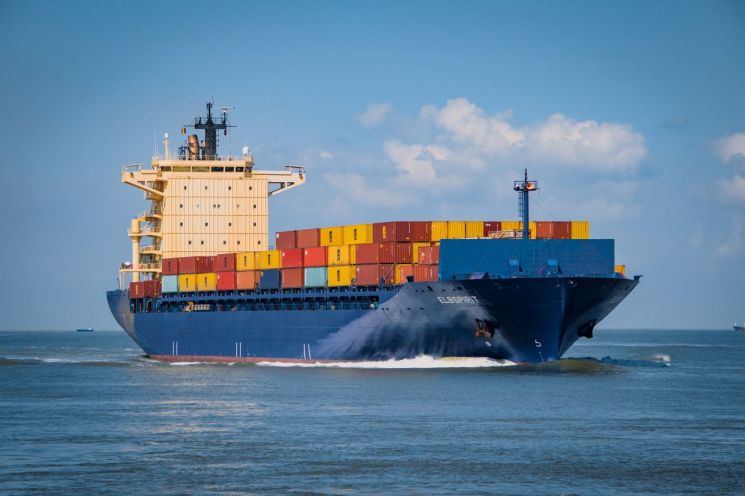
According to the EU on the 29th, the EU's 'Import Control System' (ICS 2) will be expanded to maritime transportation starting June 3rd. Until now, it has only applied to air cargo.
ICS 2 is an IT-based risk management system implemented to block the entry of cargo classified as 'risky,' such as those related to terrorism, into EU territory. Risk management information for cargo entering each of the 27 member states is shared in real time.
From June, carriers intending to send cargo to EU territory by sea must submit an 'Entry Summary Declaration' (ENS) within a specified deadline before shipment. The information entered by the carrier is transmitted through the ICS 2 central server to the customs authorities of the relevant member states for risk analysis. The customs authorities notify the carrier of the pre-assessment results, including whether container shipment is prohibited, inspections after arrival, or inspections before shipment.
The problem is that the ENS input form itself is complicated, and failure to comply properly may result in refusal of entry. Due to the nature of the EU single market, where cross-border movement is free, once risky goods are imported, it is difficult to filter them out, so strict requirements are imposed from the cargo shipment stage.
After the application of ICS 2, so-called 'port shopping,' which was commonly practiced in the maritime transport sector, is expected to become impossible. Port shopping refers to the act of exploiting the lack of risk-related information sharing among customs authorities of EU member states by attempting customs clearance at another country's port if blocked at a specific country's customs.
Since most Korean companies export to the EU via maritime transportation, the impact is expected to be significant. Some voices have also pointed out that despite the imminent expansion of ICS 2, related government agencies and export companies are inadequately prepared.
© The Asia Business Daily(www.asiae.co.kr). All rights reserved.
![Clutching a Stolen Dior Bag, Saying "I Hate Being Poor but Real"... The Grotesque Con of a "Human Knockoff" [Slate]](https://cwcontent.asiae.co.kr/asiaresize/183/2026021902243444107_1771435474.jpg)
















