The Constitutional Court has ruled that the government's act of concluding an agreement with the United States and deploying the Terminal High Altitude Area Defense (THAAD) system does not appear to infringe upon the peaceful right to live, the right to health, the right to environment, the freedom of occupation of the claimants residing in Seongju-gun and Gimcheon-si, Gyeongbuk Province, or the religious freedom of the claimants who are Won Buddhism followers and their organizations.
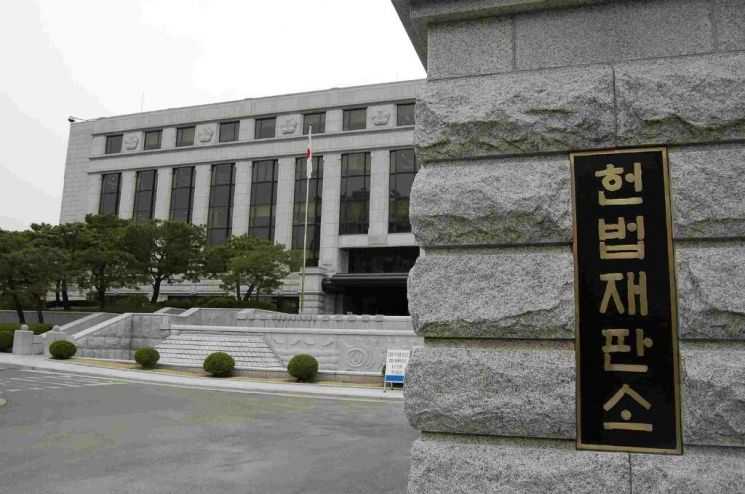
On the 28th, the Constitutional Court unanimously dismissed two cases filed by residents of Seongju-gun, Gyeongbuk Province, and Won Buddhism followers against the government, seeking a declaration of unconstitutionality regarding the approval of THAAD deployment.
The Court stated, “The exercise of public authority under this agreement does not affect the legal status of the claimants, so there is no possibility of infringement of fundamental rights, and therefore, filing a constitutional complaint against the exercise of such public authority is not permitted.”
Regarding the claim of infringement of the peaceful right to live due to THAAD deployment, the Court noted, “THAAD deployment is understood as a defensive posture in response to North Korea’s nuclear tests, ballistic missile test launches, or provocations,” and added, “It cannot be seen that this agreement could cause the people to be involved in an aggressive war, thereby threatening their peaceful survival.”
Furthermore, the Court said, “It is difficult to view that the right to health and the right to environment of the claimants are directly infringed by the THAAD deployment, and even if such concerns exist, they potentially arise during the operation of the THAAD system by the U.S. Forces Korea,” and “Considering the contents of the environmental impact assessment report, it has been confirmed that the risks of electromagnetic waves and noise generated during the operation of the THAAD system are at a negligible level, significantly below the human protection standards under the Radio Waves Act and the regulations on ambient noise.”
Regarding the claim that restriction of access to farmland infringes on the freedom of occupation, the Court judged, “This is due to measures taken by the Seongju Police Station or the Chinese government, and cannot be attributed to this agreement.”
Regarding the claim of infringement of religious freedom of Won Buddhism, the Court stated, “Even if the U.S. Forces Korea use the site under this agreement, it cannot be said that the doctrines of a specific religion are infringed or that the claimants’ religious activities are directly affected,” and added, “The claimants’ assertions regarding infringement of freedom of religious acts and freedom of religious assembly arise from subsequent actions by military authorities and cannot be attributed to this agreement.”
The Constitutional Court concluded, “Since this agreement does not affect the legal status of the claimants, the petition for judicial review of this agreement does not recognize the possibility of infringement of fundamental rights.”
© The Asia Business Daily(www.asiae.co.kr). All rights reserved.
![Clutching a Stolen Dior Bag, Saying "I Hate Being Poor but Real"... The Grotesque Con of a "Human Knockoff" [Slate]](https://cwcontent.asiae.co.kr/asiaresize/183/2026021902243444107_1771435474.jpg)
















