'Measures to Support Construction Market Recovery' Announced
Introduction of CR REITs, Resolution of Local Unsold Units
LH and REITs Restructure PF Project Sites
Construction Costs Realized Considering Price Increases
To resolve the post-completion unsold inventory (malignant unsold units) accumulated in local areas, Corporate Restructuring (CR) REITs will be introduced. Real estate project financing (PF) distressed projects will be purchased by the Korea Land and Housing Corporation (LH) through a reverse auction method or acquired by publicly supported private rental REITs to provide liquidity support. An appropriate level of construction cost adjustment reflecting inflation will also be reviewed.
On the afternoon of the 28th, the government announced the "Construction Industry Recovery Support Plan" at an emergency economic ministers' meeting to address difficulties faced by the construction industry. The plan aims to prevent regional economic stagnation caused by the contraction of the construction market and minimize job losses among vulnerable groups. The Ministry of Land, Infrastructure and Transport explained that it incorporated industry requests as much as possible during the practical review process.
Mitigating Construction Project Risks Such as Unsold Units and PF Distress
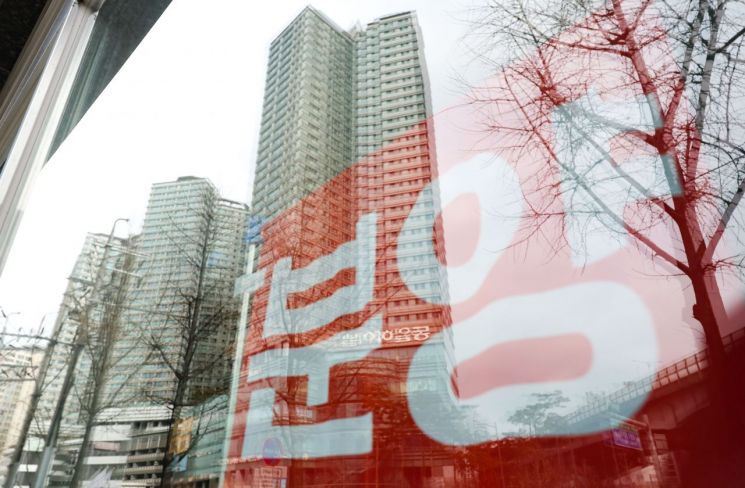
First, CR REITs receiving tax benefits such as acquisition tax and comprehensive real estate tax will be introduced to reduce local unsold inventory risks and minimize delays in new construction starts. For acquisition tax, surcharges (tax rates of 1-3%) will be exempted only for post-completion unsold units, and comprehensive real estate tax will be excluded from aggregation for five years after acquisition. These measures will be applied temporarily until the end of this year. However, since the unsold inventory is at an extreme level of about 60,000 units, capital gains tax exemptions will be considered based on trends.
REITs pool funds from investors to invest in domestic and international real estate, regularly distributing profits such as rental income or capital gains. Unsold CR REITs have the same basic structure but limit investment targets to unsold housing units.
After the financial crisis, nine unsold CR REITs operated and purchased 3,343 unsold housing units. According to the Korea Housing Industry Research Institute, construction companies holding unsold projects at that time faced losses exceeding 30%. However, through CR REITs, the loss scale was reduced to around 7%. Investors earned annual returns of about 6-7%. Kim Seung-beom, Director of the Real Estate Investment System Division at the Ministry of Land, Infrastructure and Transport, said, "CR REITs can lease unsold units and convert them to sales when the market improves," adding, "We plan to conduct a demand survey in April after explanatory sessions."
REITs will also be used to restructure PF distressed projects. Projects that become difficult to proceed during the pre-construction bridge loan stage will be purchased by LH or publicly supported private rental REITs to provide liquidity. LH will acquire land holdings through a reverse auction method, paying bonds (5-year government bond rates) within 90% of the individual publicly announced land price or supply price.
Yoo Sam-sul, Director of the Land Policy Division at the Ministry of Land, Infrastructure and Transport, said, "Applications will be accepted from May 5 to 26, and on-site inspections will be conducted to check whether the land is physically usable and free of restrictions such as mortgages," adding, "We plan to use about 20 trillion won of the total 30 trillion won budget in the first half of the year, and if not fully used, a second announcement will be made around July." He continued, "In the past, we only purchased land, but this time we plan to use about 10 trillion won for commitments to help developers extend loans under better conditions without selling the land."
Additionally, the deadline for applying for PF loan refinancing guarantees will be extended to up to three months before completion. Currently, applications must be submitted three months before the final payment of the interim payment. A new PF guarantee for non-residential properties such as knowledge industry centers will also be established. The Construction Guarantee Association plans to introduce guarantees worth about 4 trillion won, with early implementation for contractor self-executed projects within the first half of the year.
Reviewing Appropriate Levels of Construction Cost Adjustment... Disputes Under Mediation
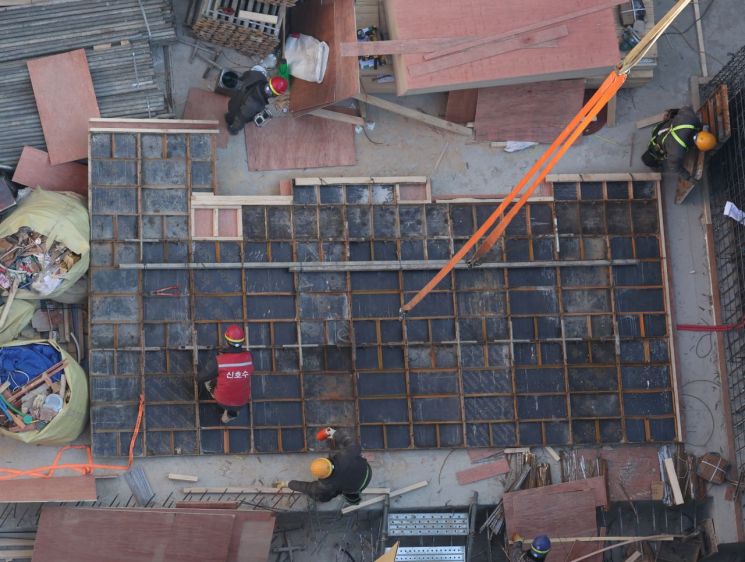
For public construction projects, construction costs will be subdivided considering construction conditions such as building location and number of floors. For example, if a 2% surcharge was previously applied uniformly for basements 2 to 5 floors, going forward, a differential surcharge of 2-5% will be applied by floor. The industrial safety and health management cost rate will be increased. Construction costs for public housing projects with private participation will also be adjusted upward by about 15% compared to last year. In particular, compensation for bidders who lose bids will be doubled from 0.25% of the total project cost to encourage private participation. However, the timing for construction cost adjustment has not been fixed. The government plans to announce it after simulations to determine an appropriate level.
For private construction projects, the focus is on preventing construction cost disputes and facilitating prompt mediation. Projects promoted through trust methods will be allowed to apply for project plan approval with only a general meeting resolution without resident consent. Additionally, construction cost experts will be proactively dispatched to projects where disputes are anticipated. Currently, experts are dispatched to seven projects nationwide, and one project has reportedly found a breakthrough, according to the Ministry of Land, Infrastructure and Transport. Construction costs have risen about 30% over the past three years due to high inflation, causing conflicts between contractors and maintenance project promotion associations.
Disputes are also being mediated through the public-private joint PF mediation committee, which resumed operation last September after 10 years. Kim Kyu-chul, Director of the Housing and Land Office at the Ministry of Land, Infrastructure and Transport, said, "Twenty-six private participation public housing projects have agreed to the construction cost sharing guidelines, and adjustment plans for project plan changes have been prepared for six cases including industrial complexes." He added, "We have listened to industry difficulties through various channels and prepared solutions. Although not intended, this will also help dispel the so-called 'April crisis theory' circulating without substance."
© The Asia Business Daily(www.asiae.co.kr). All rights reserved.
![Clutching a Stolen Dior Bag, Saying "I Hate Being Poor but Real"... The Grotesque Con of a "Human Knockoff" [Slate]](https://cwcontent.asiae.co.kr/asiaresize/183/2026021902243444107_1771435474.jpg)

















