Christopher Waller, a member of the Federal Reserve Board (Fed), said on the 27th (local time) that "there is no need to rush rate cuts." He once fueled market expectations for an early rate cut with a surprising dovish (monetary easing preference) remark but has revealed a hawkish (monetary tightening preference) stance again. He also indicated that the number of rate cuts this year might need to be reduced or delayed depending on economic indicators such as inflation.
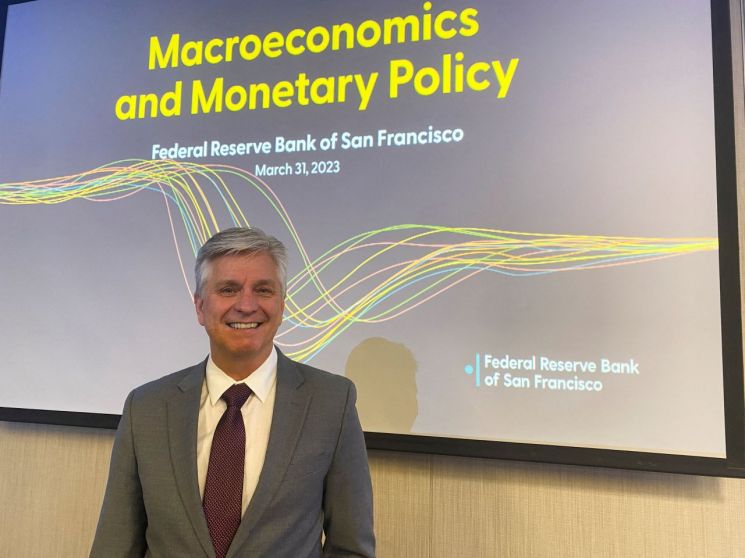
On the afternoon of the 27th (local time), Waller said in a speech at the New York Economic Club, "The Fed may need to keep rates at the current level longer than expected." Holding voting rights at this year's Federal Open Market Committee (FOMC), he emphasized, "Despite progress on inflation, recent indicators are disappointing. Messages about employment are also mixed," adding, "More progress on inflation must be confirmed before supporting rate cuts."
Waller, considered a representative hawkish figure within the Fed, withdrew his previous stance in a public speech at the end of November last year, stating that the current monetary policy is appropriate for achieving the 2% price stability target, which triggered market expectations of a pivot. However, in recent speeches, he expressed a cautious tone, saying, "There is no reason to cut rates quickly."
Waller expressed concerns about a rebound in inflation. He pointed out that analyzing the core Consumer Price Index (CPI), excluding volatile food and energy prices, over three- and six-month periods suggests that inflation progress may have slowed or stalled. He added, "Waiting a bit longer to cut rates is less risky than acting too quickly," and said, "We want to avoid the risk of inflation surging again due to premature cuts."
He also confirmed his position that it might be appropriate to reduce the number of rate cuts or delay their timing this year based on recent indicators, but there is still no need to rush. According to Waller, the stronger-than-expected U.S. economy gives the Fed more leeway to monitor the situation for a longer period. He stated, "The Fed is expected to cut rates by the end of this year," making it clear that the rate cut option has not disappeared from the discussion table.
Waller's remarks drew attention as they were made amid confirmed divisions within the Fed over rate cut prospects. At the March FOMC, the Fed kept rates steady at 5.25-5.5% and maintained the year-end rate forecast at 4.6% on the dot plot, implying the possibility of three rate cuts by the end of the year.
However, a closer look at the dot plot shows that 9 out of 19 members expect two cuts, reducing the previous forecast of three cuts. Raphael Bostic, president of the Federal Reserve Bank of Atlanta and an FOMC voter, stated that only one cut might be possible. According to the Chicago Mercantile Exchange (CME) FedWatch, the federal funds (FF) futures market on the day reflected more than a 70% chance that the Fed would cut rates by at least 0.25 percentage points at the June FOMC.
The key will be the February Personal Consumption Expenditures (PCE) price index, to be released this week. Wall Street estimates that the year-on-year increase in the February PCE will rebound from 2.4% in the previous month to 2.5%. A slight month-on-month increase is also expected. The core PCE, an inflation indicator closely watched by the Fed, is forecast to remain at the previous month's level (2.8%).
© The Asia Business Daily(www.asiae.co.kr). All rights reserved.

















