Naju City in Jeollanam-do has prepared the first supplementary budget for 2024 amounting to 1.0342 trillion KRW and submitted it to the city council on the 20th.
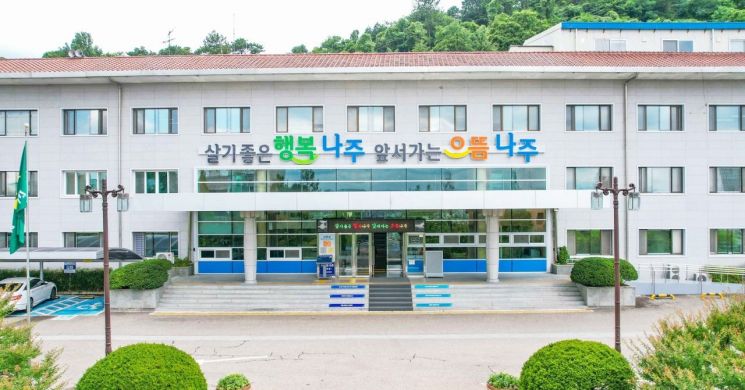
According to Naju City on the 22nd, this first supplementary budget increased by 94.6 billion KRW (10.1%) compared to the original budget. The general account increased by 85.4 billion KRW to 965.1 billion KRW, and the special account rose by 9.2 billion KRW to 69.1 billion KRW.
On the revenue side, based on the general account, local allocation tax of 27.4 billion KRW, city-county adjustment grants of 9.4 billion KRW, national and provincial subsidies of 17.2 billion KRW, and public fund borrowings of 12.5 billion KRW for refinancing local bonds were reflected.
Among these revenues, 61 billion KRW (71%) are earmarked for specific purposes such as national and provincial subsidies and corresponding city contributions, local bond repayments, and national and provincial refunds, resulting in very limited actual available resources relative to the budget size.
Naju City allocated 15.4 billion KRW for general administration and safety, 14.4 billion KRW for culture, tourism, and education, 9 billion KRW for social welfare, environment, and health, 13.6 billion KRW for agriculture and forestry, 30.7 billion KRW for transportation and regional development, and 2.4 billion KRW for industry, small and medium enterprises, and energy in this supplementary budget.
Mayor Yoon Byung-tae explained, “Despite prolonged economic downturn and high inflation causing difficulties in the livelihood economy and a tight fiscal situation, we have prepared an essential budget reflecting various voices directly related to citizens’ daily lives and local issues.”
Newly established budgets in this supplementary include 10 million KRW for operating the ‘Citizen Direct Consultation Office and Immediate Text Service’ to strengthen direct communication with citizens, and 76 million KRW for the ‘Ai Ssuksukk Library Project’ aimed at resolving low birth rates and creating a child-friendly city.
The library project distributes childcare book packages worth about 100,000 KRW to households with pregnant women and newborns and offers various programs at the library to build emotional bonds between parents and children.
Additionally, the supplementary budget includes 200 million KRW for ‘Downtown Revitalization Startup Support,’ 50 million KRW for ‘Comprehensive Plan Establishment for Downtown Commercial Area Revitalization,’ 220 million KRW for ‘Moksagoeul Market Cultural Tourism Market Development,’ 2.8 billion KRW for ‘Remote Route Loss Compensation,’ 1 billion KRW for ‘Bitgaram Complex Innovation Center Construction,’ 2.4 billion KRW for ‘Electric Bus Supply Project,’ and 270 million KRW for ‘Bitgaram Lake Park Children’s Theme Park Development,’ focusing on revitalizing the old downtown and improving residential conditions in the Innovation City.
Youth policy budgets include 100 million KRW for ‘Support for Eco-friendly Agricultural Product Packages for Infertile Couples’ and 200 million KRW for ‘Temporary Special Support for Youth Monthly Rent,’ as well as 4.2 billion KRW for 109 projects proposed during dialogues with residents of towns, townships, and neighborhoods in January.
For citizens’ safe daily lives, disaster prevention project budgets were also allocated: 4.8 billion KRW for ‘Pyeongsan and Ichang Natural Disaster Risk Improvement District Maintenance,’ 1 billion KRW for ‘Shingwangcheon Stream Maintenance,’ 1 billion KRW for ‘Naju Stream Flood and Wind Disaster Comprehensive Maintenance,’ and 1.3 billion KRW for ‘Installation of Traffic Safety Facilities.’ Great care was also taken in budgeting for tourism, aiming to leap into an era of 5 million tourists with the slogan “Naju, a city you want to visit again.”
Naju City allocated 1.3 billion KRW for the representative festival held for the first time last year and 290 million KRW for a year-end event themed on light.
Moreover, projects to enhance tourism appeal by utilizing historical, cultural, and ecological resources include 1.4 billion KRW for the ‘Historical and Cultural Zone Maintenance and Development Leading Project,’ 300 million KRW for the ‘Jeollado Millennium Historical and Cultural Garden Creation,’ 970 million KRW for the ‘Yeongsangang Retention Basin National Garden Creation,’ 700 million KRW for the ‘Jiseokcheon Riverside City Trail Creation,’ 20 million KRW for ‘Naju Bapsang Commercialization,’ 3.5 billion KRW for the ‘Namdo Righteous Army History Museum Construction Support Contribution,’ 2 billion KRW for ‘Naju Geumseonggwan Dismantling and Repair,’ and 100 million KRW for ‘Tourism Signage and Facility Maintenance.’
Careful attention was also given to agricultural policy budgets focusing on improving village residential conditions, fostering returning farmers, rural migrants, and young farmers, preventing crop disasters, and securing sales channels for a sustainable rural future full of hope.
Major reflected projects include 700 million KRW for ‘Winter Forage Crop Quality Improvement Production Cost Self-Compensation Support,’ 40 million KRW for ‘Village Communal Meal Self-Support Project during Farming Season,’ 20 million KRW for ‘2025 International Agriculture Expo Win-Win Development Policy Development Service,’ 50 million KRW for ‘Returning Farmer and Rural Migrant Harmony Village Creation and Startup Activation Support,’ 1.2 billion KRW for ‘Munpyeong-myeon Rural Space Maintenance,’ 20 million KRW for ‘Fruit Tree Cold Damage Prevention Facility Support,’ 200 million KRW for ‘Young Farmers Fostering for Eco-friendly Agricultural Product Contract Farming,’ 450 million KRW for ‘Organic Farming Ecological Village Development,’ 200 million KRW for ‘High-Quality Rice Distribution Activation,’ 420 million KRW for ‘Agricultural Product Export Competitiveness Enhancement,’ 500 million KRW for ‘Pear Museum Facility Improvement and Program Development,’ 630 million KRW for ‘Young Successor Farmer Farming Settlement Support,’ and 50 million KRW for ‘Naju Hanwoo Brand Development.’
Efforts are also focused on creating a future advanced science city based on new energy industries and securing future growth engines to drive regional development.
This year’s budget includes 72 million KRW for the new policy ‘Establishing a Business-Friendly City Naju,’ 400 million KRW for ‘New Industrial Complex Creation Service,’ 570 million KRW for ‘Energy New Industry Global Innovation Regulatory Free Zone Support,’ 400 million KRW for ‘Renewable Energy Supply Convergence Support,’ and 35 million KRW for ‘Establishment of a Performance Evaluation and Inspection Management Technology Development Platform for Electric Vehicle Battery Removal.’
Meanwhile, Naju City has prepared a budget of 12.5 billion KRW to refinance local bonds acquired by financial institutions at variable interest rates with public funds at lower interest rates. This is expected to reduce annual interest expenses by 250 million KRW, thereby strengthening fiscal soundness.
Mayor Yoon Byung-tae of Naju stated, “While maintaining sound city finances, we have prepared the first supplementary budget focusing on essential budgets directly related to citizens’ lives and fostering future growth engines. We will do our best to promptly execute the budget as soon as it is approved by the city council so that citizens can feel the results.”
Naju = Kim Yukbong, Honam Reporting Headquarters, Asia Economy bless4ya@asiae.co.kr
© The Asia Business Daily(www.asiae.co.kr). All rights reserved.
![Clutching a Stolen Dior Bag, Saying "I Hate Being Poor but Real"... The Grotesque Con of a "Human Knockoff" [Slate]](https://cwcontent.asiae.co.kr/asiaresize/183/2026021902243444107_1771435474.jpg)
















