Increase from -0.1% to 0.0~0.1%
Gradual phase-out of monetary easing policy
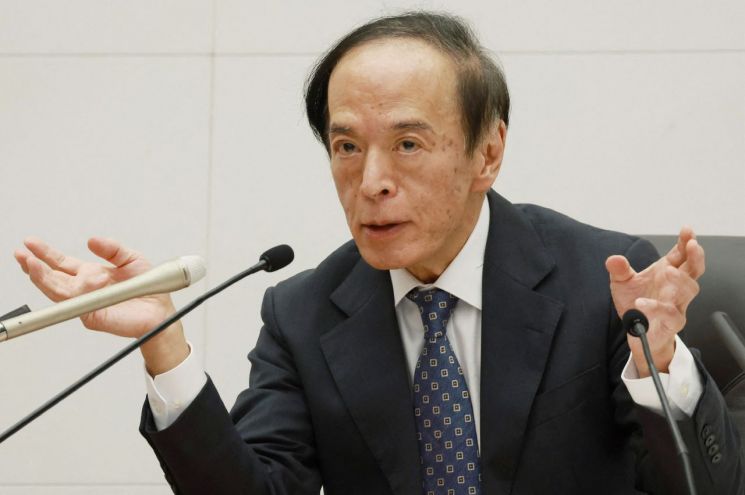
The Bank of Japan (BOJ), Japan's central bank, raised its benchmark interest rate for the first time in 17 years. This move is seen as a turning point in the BOJ's large-scale easing policy.
According to local media including the Nihon Keizai Shimbun on the 19th, the BOJ held a monetary policy meeting from the 18th to that day and decided to raise the short-term benchmark interest rate by 0.1 percentage points from -0.1% to guide it to 0~0.1%.
Additionally, the BOJ decided to gradually phase out its direct market intervention easing policies. This includes ending the yield curve control (YCC) aimed at keeping long-term interest rates low, as well as stopping purchases of exchange-traded funds (ETFs) and real estate investment trusts (REITs). The YCC, under which the BOJ controls interest rate fluctuations by purchasing large amounts of government bonds, was introduced in September 2016. The BOJ removed the 1% upper limit on long-term interest rate fluctuations and decided to allow interest rate variability.
This is the first time the BOJ has raised interest rates since February 2007, 17 years ago. Japan had been implementing an easing policy with a short-term policy rate (current account balance interest rate) of -0.1%, meaning commercial banks had to pay a kind of fee when depositing money with the BOJ. This was intended to encourage commercial banks to lend to households and stimulate domestic demand.
The BOJ's decision to end the negative interest rate policy was based on the judgment that a virtuous cycle of rising prices and wages could be stably maintained. Last year, Japan's consumer price index (excluding fresh food) rose by 3.1%, marking the highest level since 1982. The largest labor union in Japan, Rengo (Japanese Trade Union Confederation), reported on the 15th that the median wage increase rate this year was 5.28%, the highest in 33 years. The wage increase rate for small and medium-sized enterprises with fewer than 300 employees, where 70-80% of Japanese workers are employed, was also relatively high at 4.42%.
The Nihon Keizai Shimbun stated, "With the BOJ's termination of the negative interest rate policy today, large-scale easing has entered history." However, even if the BOJ continues an accommodative financial environment, it is unlikely to raise rates further in the near term. This is because, unlike major countries such as the US and Europe, Japan has experienced long-term deflation (economic recession with falling prices), making rapid quantitative tightening difficult. The International Monetary Fund (IMF) has also recommended that the BOJ raise policy rates over the next few years but advised that the process should be gradual. The BOJ emphasized on this day that "even after ending the negative interest rate, it will continue to purchase long-term government bonds at roughly the same amount."
The market is paying close attention to the direction of the yen. Many analyses suggest that the end of the negative interest rate could lead to yen appreciation. Conversely, the stock market may turn weak. This is because the prices of Japanese companies' export products may become more expensive, weakening earnings, and the rising yen could cause foreign investment to hesitate.
However, some argue that despite the BOJ's rate hike, the large interest rate gap with major countries like the US means the impact of exchange rates on the stock market will be limited. Morgan Stanley expects the short-term policy rate to rise to 0.25% by July.
© The Asia Business Daily(www.asiae.co.kr). All rights reserved.

















