"Considering Difficulty for Compensation... Discussion at This Month's Health Insurance Policy Committee"
Increase in Age Limit for Pediatric Additional Fees
Expansion of Supplementary Public Policy Fees in Surgery and Emergency Fields
On the 19th, the government announced that it will strengthen compensation in areas where fee-for-service payments are insufficient through the 'Supplementary Public Policy Fee.' Accordingly, additional compensation will be provided for high-difficulty surgeries in severe pediatric fields such as pediatric cancer and pediatric surgery, taking into account the level of difficulty. In the future, this will be expanded not only to childbirth and pediatrics but also to surgical and emergency fields.
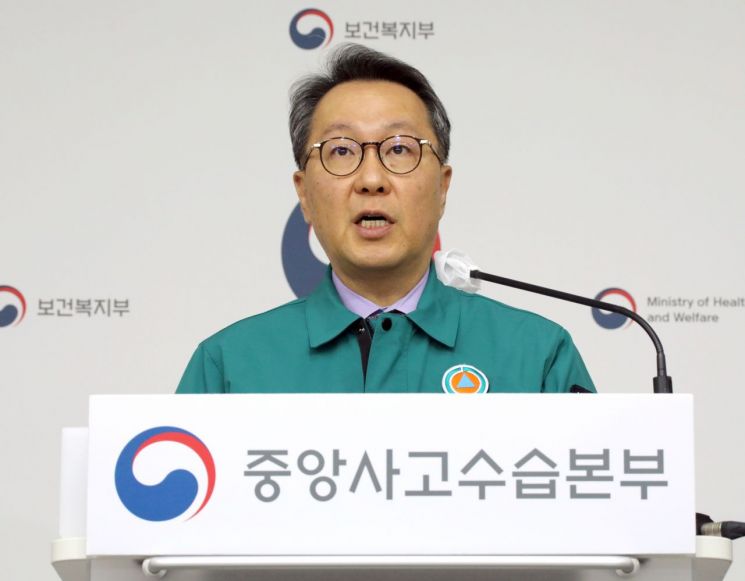
Park Min-su, the 2nd Vice Minister of the Ministry of Health and Welfare, explained the currently introduced 'Supplementary Public Policy Fee' during a briefing at the Central Accident Response Headquarters for the doctors' collective action on the morning of the same day.
The 'Supplementary Public Policy Fee' described by the government is a new fee model that provides additional compensation for areas difficult to cover by fee-for-service payments, such as the difficulty, risk, urgency, medical staff proficiency, non-clinical time like waiting times, and regional disparities. It is being introduced first in childbirth and pediatric fields.
Vice Minister Park said, "Since January this year, the childbirth policy fee has been providing an additional 550,000 KRW each for two areas not considered in the fee-for-service system: regional and safety aspects." He added, "As a result of measures to compensate for emergency childbirth requiring urgent on-call medical staff gathering and ward adjustments, as well as high-risk childbirth involving many medical personnel and time, which were not reflected in the existing fees, the childbirth fee, which was about 800,000 KRW, has increased more than threefold to 2,560,000 KRW, contributing to maintaining childbirth infrastructure."
Vice Minister Park stated, "In the future, to maintain medical personnel and infrastructure in the childbirth field, which is difficult to sustain due to low demand, we will consider and promote a plan to prepay a certain amount of fees and provide additional compensation for childbirth acts. We are also reviewing additional compensation plans considering the difficulty of high-difficulty surgeries in severe pediatric fields such as pediatric cancer and pediatric surgery, which will be discussed and decided at the Health Insurance Policy Deliberation Committee (건정심) in March."
At this month's Health Insurance Policy Deliberation Committee, plans to significantly increase pediatric age surcharges for 281 pediatric surgery-related procedures and anesthesia fees will also be discussed. The committee will consider raising the age limit for pediatric surcharge application from the current under 6 years old and will promptly promote fee increases for high-risk mothers and fetuses.
The Ministry of Health and Welfare is also pushing to establish a 'Regional Fee for Neonatal Intensive Care Unit Specialists' to ensure sufficient staffing of dedicated specialists in neonatal intensive care units at regional hospitals.
Such supplementary public policy fees will be expanded not only in pediatric fields but also in surgical and emergency fields.
For example, it is explained that the waiting time for medical professionals such as doctors and nurses preparing for emergency cardiovascular surgery will also be compensated.
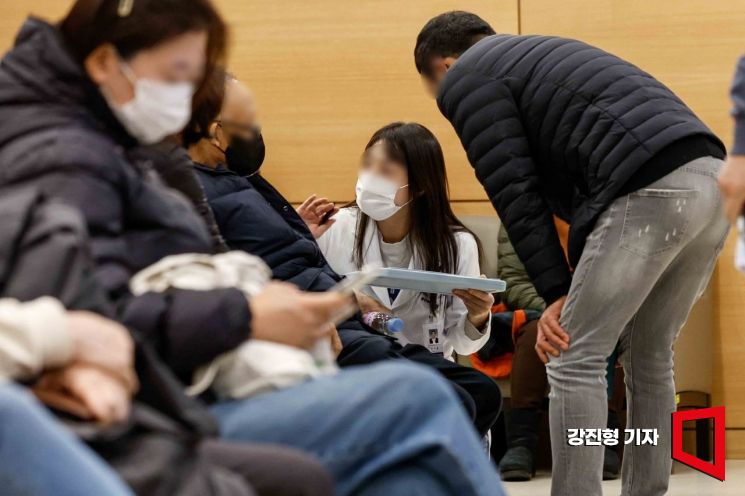 On the 7th, medical staff at a university hospital in Seoul, where large hospitals have begun downsizing operations by reducing the number of beds and personnel, are continuously consulting with visitors. Photo by Jinhyung Kang aymsdream@
Vice Minister Park said, "We will prepare and promptly implement additional compensation measures for non-clinical time such as emergency standby and on-call duties within the first half of this year."
A payment method that compensates retrospectively will also be introduced to ensure the stable maintenance of essential medical infrastructure. A pilot project to compensate for health insurance losses retrospectively has been implemented since this year to ensure the stable operation of children's public specialized medical centers treating severe pediatric patients and to strengthen investment in essential medical care. Currently, 13 out of 14 children's public specialized medical centers nationwide are participating in this pilot project. Going forward, the government plans to enable these centers to actively provide high-difficulty pediatric care without concerns about deficits through sufficient compensation.
From the second half of this year, a 'Regional Medical Innovation Pilot Project' will be implemented, forming essential medical networks within regions centered on regional base hospitals to provide timely and quality medical care to local residents. Selected pilot projects will receive support of up to 50 billion KRW over three years per region.
Vice Minister Park said, "We will strengthen management to ensure that these supplementary public policy fees and alternative/innovative payment systems operate effectively based on scientific evidence and evaluations," and added, "We once again propose that the government and the medical community unite to innovate and improve the unreasonable fee system that has been felt in medical sites."
On the same day, Vice Minister Park urged medical school professors to join forces to bring back residents who have left their specialties.
He said, "We will continue meetings with medical societies of major essential clinical departments such as surgery, neurosurgery, thoracic surgery, and emergency medicine, and on the 21st, we will hold a forum on improving specialist treatment. In the future, forums on strengthening regional medical care and improving health insurance will be held weekly. The government is always willing to engage in unconditional dialogue with the medical community," he reiterated.
He also appealed to medical school professors who have announced collective resignation on the 25th, saying, "Please do not take lightly the disappointment and anger of the public, and work together with the government so that residents can return to the field."
© The Asia Business Daily(www.asiae.co.kr). All rights reserved.
![Clutching a Stolen Dior Bag, Saying "I Hate Being Poor but Real"... The Grotesque Con of a "Human Knockoff" [Slate]](https://cwcontent.asiae.co.kr/asiaresize/183/2026021902243444107_1771435474.jpg)

















