Strengthening Seafood Safety Management to Expand Consumption
Fostering Competitive Advanced Aquaculture Industry through AI Adoption
Overcoming Fishing Village Extinction Crisis by Enhancing Openness of Fishing Villages, etc.
Yeosu City, Jeollanam-do (Mayor Jeong Gi-myeong) announced on the 19th that it has taken the nationwide first step toward a major transformation into a future-oriented fisheries industry to foster fisheries as a future industry.
Facing various challenging conditions such as climate change and the discharge of contaminated water from Japanese nuclear power plants, the city plans to secure competitiveness through a major transformation of the fisheries industry into a future industry.
To this end, the city intends to promote ▲expansion of seafood consumption through securing safety ▲development of a competitive advanced aquaculture industry by introducing AI ▲overcoming the crisis of fishing village extinction by expanding the openness of fishing villages.
Fisheries have historically played a key role in the Yeosu regional economy.
In particular, fisheries are an essential industry for Yeosu, which aims to become an international marine tourism and resort city and a hub city on the southern coast.
Attention is focused on whether the city can revive the former reputation of Yeosu’s fisheries through this major transformation.
■ Strengthening Seafood Safety Management to Expand Consumption
Recently, changes in seafood consumption trends and concerns about the crisis in the fisheries industry have arisen due to the increase in single-person households, aging population, and the discharge of contaminated water from Japanese nuclear power plants.
Accordingly, the city has taken measures to respond.
First, it will establish the nation’s first independent seafood safety center among basic local governments.
By the end of next year, the city plans to invest 5.4 billion KRW of its own budget to build the center in the Wuduri area of Dolsan-eup, aiming to enhance trust in Yeosu seafood and strengthen safety through rapid testing.
Previously, to monitor seawater radioactivity, the city invested 100 million KRW last year?the first in the nation?to install and operate a real-time seawater radioactivity measurement system on a fisheries guidance vessel.
The seawater radioactivity measurement results are disclosed once a week on the city’s website and at 459 major electronic bulletin boards to alleviate local concerns about seafood consumption.
The city also plans to invest 13.2 billion KRW to establish two wholesale markets equipped with hygienic facilities covering the entire process of seafood unloading, sorting, auctioning, and delivery within this year to supply clean and safe seafood.
Additionally, 7 billion KRW will be invested in mussel farms, which account for 40% of the national production, to secure the safety of farmed seafood by distributing eco-friendly attachment devices and certified buoys.
These efforts to alleviate consumer anxiety and enhance the image of Yeosu seafood are expected to contribute to the successful hosting of the 2026 Yeosu World Islands Expo.
Alongside this, to expand seafood consumption, the city plans to actively respond to changing consumption trends through promotional events such as operating direct trading markets in metropolitan areas and campaigns to buy seafood, as well as supporting direct seafood delivery shipping costs and small packaging materials for small households.
■ Fostering a Competitive Future-Oriented Advanced Aquaculture Industry through AI Introduction
The city is also making swift progress toward transitioning to a future advanced aquaculture industry.
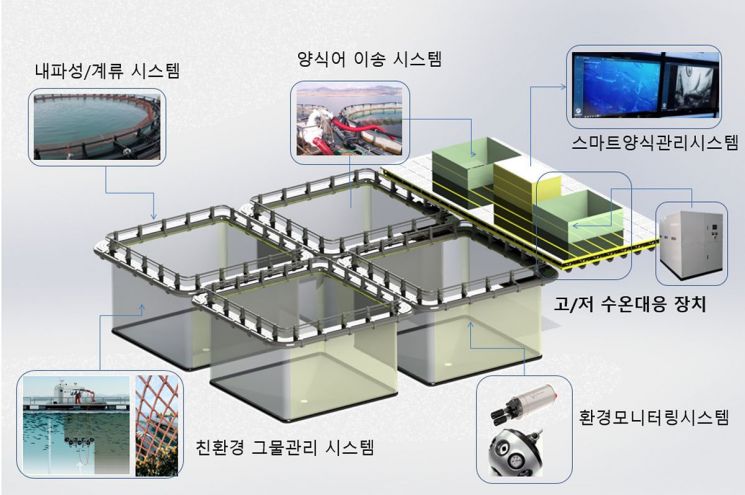
In particular, it plans to apply rapidly evolving AI technology to offshore aquaculture farms and implement the nation’s first offshore ICT convergence smart aquaculture model to transition into a future industry.
Currently, the city is conducting a feasibility study, which is expected to be completed by July this year, and plans to participate in a Ministry of Oceans and Fisheries contest early next year.
Furthermore, by 2026, the city plans to establish a future-oriented offshore fish farming model (TESTBED) tailored to Yeosu’s characteristics.
The future-oriented offshore fish farming model (TESTBED) will include ▲breaking away from labor-intensive traditional aquaculture ▲artificial water temperature control and automatic feeding ▲environmental measurement and automatic control ▲technology-intensive advanced smart eco-friendly aquaculture with real-time monitoring.
Through this structural improvement, the city expects to ▲prevent damage caused by abnormal weather ▲stabilize fishery management by shortening production periods ▲and secure competitiveness.
In addition, the city will actively promote the creation of healthy and abundant fishery resources by investing 10.5 billion KRW in projects such as reducing fishing intensity in fixed net fisheries, sea garden development and artificial reef management, and spawning ground creation.
Moreover, it plans to invest 5.4 billion KRW to expand aquaculture disaster insurance and support disaster-prevention aquaculture facilities, and to discover and nurture high-income regional specialty species through seed supply of promising aquaculture species and support for aquaculture automation equipment.
■ Overcoming the Crisis of Fishing Village Extinction by Expanding Openness
Recently, fishing villages face the risk of extinction due to aging and population decline, and the shortage of labor negatively affects the stagnation of the fisheries industry. Accordingly, the city will invest 3.8 billion KRW to respond to the crisis of fishing village extinction.
The main measures include ▲three types of fisheries public interest direct payment projects to support fishermen’s income preservation and settlement ▲leasing businesses for fishing vessels and aquaculture farms ▲support projects for excellent fishing villages to ease barriers to entering fishing villages ▲return-to-fishing and rural settlement support projects ▲youth fishing village settlement support projects ▲support for automation equipment and introduction of foreign seasonal workers to resolve labor shortages in fishing villages.
In particular, the excellent fishing village support project and the foreign seasonal worker program, both launched for the first time this year, are expected to greatly help ease entry barriers to fishing villages and resolve labor shortages.
Additionally, excellent fishing villages that attract many new members will receive 100 million KRW in necessary project funds, and the city plans to expand the required industries further based on performance analysis of the foreign seasonal workers pilot program operated this year.
Mayor Jeong Gi-myeong of Yeosu said, “To actively respond to the rapidly changing internal and external fisheries conditions, we plan to promote the ‘2030 Fisheries and Fishing Village Development Plan Establishment Project’ this year,” adding, “Through this, we will complete the foundation for the fisheries industry to leap into a future growth industry by 2030.”
Yeosu = Asia Economy Honam Reporting Headquarters, Reporter Heo Seon-sik hss79@asiae.co.kr
© The Asia Business Daily(www.asiae.co.kr). All rights reserved.
![Clutching a Stolen Dior Bag, Saying "I Hate Being Poor but Real"... The Grotesque Con of a "Human Knockoff" [Slate]](https://cwcontent.asiae.co.kr/asiaresize/183/2026021902243444107_1771435474.jpg)
















