Interview with Korea Accounting Standards Board on the 15th
"Stop Complaints... Need to Prepare and Manage Future Shocks"
Understanding Policies and Indicators Essential for Democracy
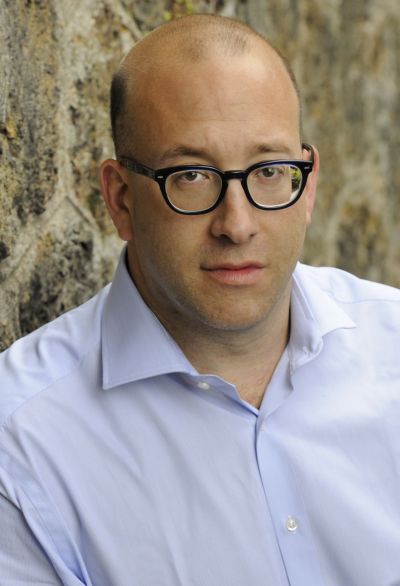
"We live in an era of abundance and scarcity. The state must manage all assets well and recognize all liabilities, which is a matter that requires very serious consideration. Citizens must also realize the importance of accounting."
Jacob Sol, a professor at the University of Southern California in the United States, mentioned the importance of accounting as a "medium for democracy" during a face-to-face interview with our newspaper on the morning of the 15th at the Korea Accounting Standards Board located in Jung-gu, Seoul. Professor Sol came to Korea to attend a joint seminar hosted by the National Center for Government Accounting and Fiscal Statistics, the Korea Accounting Research Institute, and the Korean Accounting Association. This is his first visit to Korea.
Recently, he published a book titled How Accounting Can Save Democracy (original title: Public net worth: Accounting, Government, Democracy), which focuses on the impact of accounting on national finances in democratic countries. While examining long-term fiscal challenges faced by governments worldwide, such as climate change and aging populations, he also emphasized the significance of accounting as a "virtue" necessary for citizens in democratic societies.
Professor Sol stated, "The United Kingdom has reached a near-collapse state due to debts accumulated over the past 12 years and poor fiscal management," adding, "We cannot afford to handle poorly managed matters at this point. It is important to understand accounting so that we can face problems before a crisis hits."
He urged that the accounting standards traditionally applied mainly to corporations should be expanded to national finances. He also said that Korea should boldly cut public assets that impose enormous costs on the state and actively manage liabilities. Professor Sol warned, "After the next (U.S.) presidential election, it is necessary to consider how much the United States will protect Korea," and added, "Korea must manage its budget to prepare for anticipated challenges in the defense sector."
Conversely, Korea is also a country abundant in assets. For example, Korea’s cultural assets such as K-dramas and K-pop, which have gained worldwide popularity, are representative. Professor Sol showed his own Netflix account on his smartphone and said, "It seems that about a quarter of Netflix’s content is Korean," mentioning Korean original drama series like Sky Castle and Kingdom. Korea’s global enthusiasm for education is also one of the driving forces that can generate long-term wealth and economic power.
Professor Sol emphasized, "Compared to other Asian countries, Korea is a very unique country with highly developed democracy. Koreans should stop complaining and think about how valuable it is to protect what they currently have," adding, "For this, all tools are needed, and we must better manage and prepare for future shocks. We must also recognize that Korea has the world’s best accountants and public accounting associations and institutions."
The public net worth, which is also the title of his book, is a concept that encompasses a broad meaning beyond a nation’s deficit, tax revenue, or gross domestic product (GDP). It includes everything of value that a country holds according to accounting standards. Therefore, he argues for the necessity of a comprehensive financial statement for the nation. For example, the United States holds an unnecessarily large number of parking lots. Not only parking lots but also unused infrastructure generate only costs without producing revenue and are liabilities that erode national finances. By managing such public assets more efficiently, it becomes possible to reflect various social demands such as education, healthcare, and the military.
Accounting is not only a means of managing national finances but also holds important meaning for individuals living in democratic societies. Professor Sol said, "If there are economic or social issues such as pension or demographic crises, they must be resolved democratically based on discussion," and pointed out, "Citizens in democratic societies do not just leave decisions to be made by 'Big Brother' on their behalf." Big Brother is a fictional character from George Orwell’s novel 1984, who monopolizes information and controls society through telescreens, representing totalitarianism and dictatorship.
Professor Sol emphasized, "'Accountability' in English is a term derived from accounting," and said, "If people want better policies, they need to understand how these work, and the only way to understand this is by looking at indicators, which can be found not only in accounting but also ideally in comprehensive financial statements."
Professor Sol, who teaches history, philosophy, and accounting at the University of Southern California, was recognized as a "brilliant young scholar" in academia after receiving the MacArthur Genius Fellowship in 2011. He has served as an economic policy advisor to the governments of Spain and Portugal and advised the Greek government on financial reform and debt management in 2017.
© The Asia Business Daily(www.asiae.co.kr). All rights reserved.
![User Who Sold Erroneously Deposited Bitcoins to Repay Debt and Fund Entertainment... What Did the Supreme Court Decide in 2021? [Legal Issue Check]](https://cwcontent.asiae.co.kr/asiaresize/183/2026020910431234020_1770601391.png)
















