Exclusive Interview with Former Supreme Court Justice Kim Young-ran
"Majority Groups Take All... Consideration for Consensus Needed"
"Even with the Supreme Court en banc rulings, 'overlapping consensus' is necessary. In a divided Republic of Korea, the role of the judiciary has become even more important."
Kim Young-ran (68, Judicial Research and Training Institute Class 11), former Supreme Court Justice, who published a new book Beyond Judgment: Freedom (published by Changbi) after four years, said in an exclusive interview with Law Times on the 14th, "At least for the judiciary, I wanted to convey the message that 'even if we have different thoughts, we must consider what minimum consensus should be reached,' which led me to write this book."
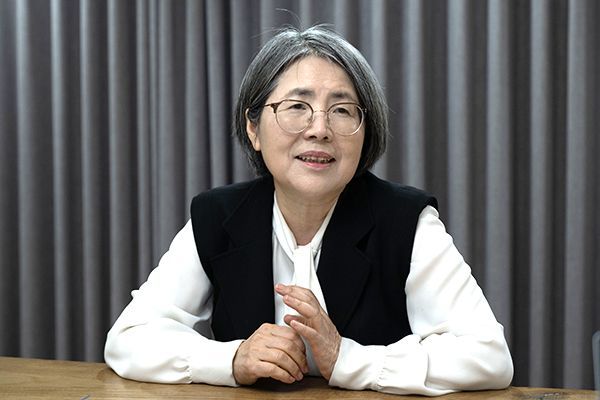
Currently serving as a distinguished professor at Ajou University Law School, former Justice Kim analyzed ten recent en banc rulings to contemplate the biggest issues facing our society. It was the perception that if someone thinks differently from me, they are 'wrong,' and the 'division' escalating into extreme confrontation. He diagnosed, "Our society shows a pattern where groups that gather people who agree with their thoughts form a 'majority' that holds 'everything.' Even if it is '51 to 49,' the '49' side becomes an unhappy society."
Former Justice Kim said, "Supreme Court en banc rulings demonstrate a high level of logical reasoning, but more effort is needed to reach overlapping conclusions through consensus with justices who think differently."
He continued, "When opinions differ, there are rulings that show stubbornness in saying, 'I will leave my opinion through a dissenting opinion because I differ from the majority,' even though it is possible to bring out a moderate opinion as the majority opinion through 'overlapping consensus' by setting aside one's own opinion and accepting the other's."
Regarding one of the judiciary's biggest issues, trial delays, he gave a harsh critique, saying, "Structural innovation is necessary."
Former Justice Kim emphasized, "People talk as if solving trial delays would solve all problems of the judiciary, but that approach and solution are wrong. Structural improvements must accompany this, such as requiring both sides to submit all evidence just before the trial and allowing post-trial submissions only in very exceptional cases."
Park Soo-yeon, Han Soo-hyun, Law Times reporters
※This article is based on content supplied by Law Times.
© The Asia Business Daily(www.asiae.co.kr). All rights reserved.

















