80% of Patients in the US Contracted in Florida
Armadillo Identified as Cause of Resurgence in Mammals
The infectious disease 'Hansen's disease,' once thought to have disappeared, is reemerging in the United States. In particular, many cases have been reported where infection occurred through contact with pets, requiring special caution. On the 17th (local time), Live Science, a U.S. science media outlet, reported that the number of Hansen's disease patients is rapidly increasing in Florida.
According to a recent disease report released by the World Health Organization (WHO), Hansen's disease has been reemerging with over 10,000 new cases each in Brazil, India, and Indonesia since 2019. Additionally, between 1,000 and 10,000 new cases were reported in more than 12 countries during the same period. In 2020, 159 Hansen's disease patients were reported in the United States, with 81% residing in Florida.
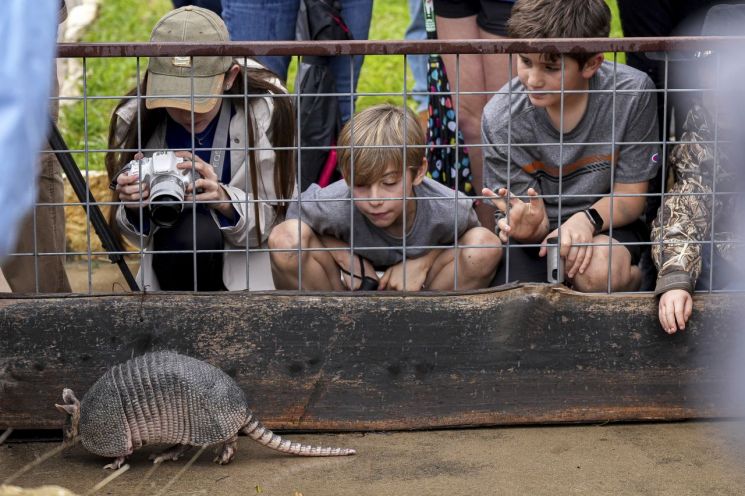 The cause of the resurgence of leprosy in armadillos, which are mammals, is being attributed to the armadillo. Armadillos are animals primarily raised as food or pets by people in the United States and Latin America.
 [Photo by AP·Yonhap News]
Hansen's disease is a chronic infectious disease caused by the bacterium Mycobacterium leprae. If not treated promptly, it can cause nerve paralysis or sequelae in the hands and feet. However, since the development of treatment in 1967, it has become a rare disease occurring at less than one case per 10,000 people annually worldwide, except in some regions. Hansen's disease, an ancient disease frequently mentioned in the Bible, was historically called 'mundungbyeong' or 'nabyung' in Korea and was mistakenly known as a terrifying contagious disease, leading to the establishment of Sorokdo Island for isolation. Some even referred to Hansen's disease as 'Cheonhyeongbyeong' (天刑病) or 'Eopbyeong,' meaning a divine punishment or karmic disease.
In the United States, the reemergence of Hansen's disease has been linked to the mammal 'armadillo.' Armadillos are animals mainly kept as pets or for food by people in the U.S. and Latin America. However, recently, Hansen's disease has frequently occurred in armadillos raised for food in Latin America, Texas, Louisiana, and Florida, requiring special caution.
 Hansen's disease, an ancient disease frequently mentioned in the Bible, was called 'Mundungbyeong' or 'Nabyeong' in Korea in the past. It was mistakenly known as a terrifying contagious disease, leading to the establishment of Sorokdo, a separate quarantine area. The photo shows the Guratap in Sorokdo. Built in 1963, it depicts Archangel Michael eradicating the Hansen's bacillus. The phrase at the bottom, "Hansen's disease can be cured," reflects the earnest hopes of the patients.
 [Photo by Asia Economy DB]
In particular, the Florida Fish and Wildlife Conservation Commission (FWC) and the U.S. Centers for Disease Control and Prevention (CDC) have advised avoiding contact with armadillos whenever possible. Karen Parker, a spokesperson for FWC, advised in an interview with The New York Times, "Teach children not to touch or catch armadillos." She also urged people not to let their pets outside and to avoid holes near their homes or yards.
However, experts believe that the outbreak of Hansen's disease will not cause a nationwide public health crisis in the United States. A CDC spokesperson recently told The New York Times, "The number of Hansen's disease infection cases is very low, so it is not considered a major concern for Americans," adding, "Hansen's disease is mainly transmitted through respiratory droplets expelled by infected patients, but once treatment begins, its contagiousness is extremely low, and 95% of the world's population has immunity to Hansen's disease."
© The Asia Business Daily(www.asiae.co.kr). All rights reserved.
![Clutching a Stolen Dior Bag, Saying "I Hate Being Poor but Real"... The Grotesque Con of a "Human Knockoff" [Slate]](https://cwcontent.asiae.co.kr/asiaresize/183/2026021902243444107_1771435474.jpg)











