Tokyo Electric Power Company (TEPCO) has completed the fourth ocean discharge of contaminated water from the Fukushima Daiichi Nuclear Power Plant (referred to as "treated water" by the Japanese government).
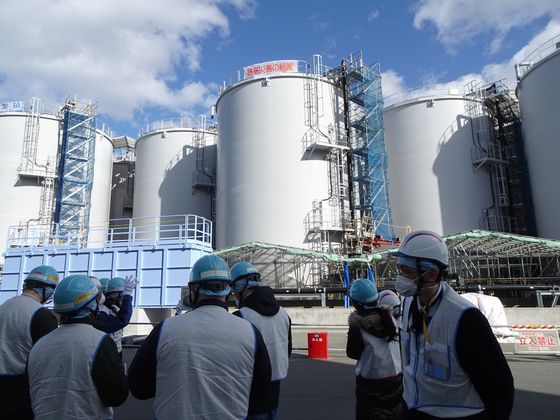 Contaminated water storage tanks at Tokyo Electric Power Company's Fukushima Daiichi Nuclear Power Plant / Photo by Yonhap News
According to Kyodo News on the 17th, TEPCO discharged approximately 7,800 tons of contaminated water into the sea from the 28th of last month until this day. With this, the discharge of contaminated water for 2023 has ended. During the discharge period, trace amounts of tritium were detected in seawater near the Fukushima Daiichi Nuclear Power Plant, but Kyodo News reported that the levels were below the standard limits.
On the 15th, at around 00:14, when a magnitude 5.8 earthquake occurred off the coast of Fukushima Prefecture, TEPCO manually suspended the discharge of contaminated water for the first time. After confirming that there were no abnormalities in the facilities, the discharge was resumed about 15 hours later.
The discharge of contaminated water from the Fukushima Daiichi Nuclear Power Plant began in August of last year, and through four discharges up to this day, a total of approximately 31,200 tons has been disposed of. The total amount of tritium contained in the contaminated water discharged last year was 4.5 trillion becquerels, which is below the annual limit of 22 trillion becquerels.
TEPCO has planned to discharge 54,600 tons of contaminated water over seven discharges from next month until March of next year. The amount of contaminated water discharged per session will remain the same as before, at 7,800 tons.
© The Asia Business Daily(www.asiae.co.kr). All rights reserved.

















