Research Results on Future Plans of the 'N-po Generation' Announced
"Giving Up Affects Youths' Depression and Happiness"
About half of young people in their early 20s have already given up on marriage and childbirth, according to a recent survey.
On the 16th, academia reported that Lee Seung-jin, a doctoral candidate in the Department of Social Welfare at Ewha Womans University Graduate School, and Professor Jeong Ik-jung of the Department of Social Welfare recently published research titled "What Are Young People Giving Up?" revealing these findings. The paper was published in the academic journal Korean Social Welfare.
The research team utilized data from the "2022 Korean Future Generation Dream Survey" conducted by World Vision, surveying 500 young people aged 19 to 23 from six regions nationwide about their future plans in 10 areas including dating, marriage, childbirth, home ownership, and self-development.
The survey results classified the youth into three types. The "Marriage and Childbirth Abandonment Type," who have plans in other areas but almost no plans for marriage and childbirth, accounted for 50.4%, nearly half. The "Future Planning Type," who responded that they have plans in all future planning items, made up 31.2%, and the "N-Abandonment Type," who gave up plans in many areas, accounted for 18.4%.
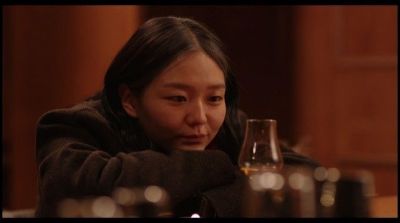 A scene from the movie "Microhabitat," which deals with the stories of the so-called 'N-po generation' youth [Image source=Naver Movie]
The research team explained, "Korea's 'N-Abandonment Generation' consists of the Marriage and Childbirth Abandonment Type and the N-Abandonment Type, making up a very high proportion of 68.8% overall," adding, "It is particularly noteworthy that more than half give up only on marriage and childbirth." Reasons for not wanting to marry included "marriage costs" and "importance of personal life and leisure," while reasons for not planning childbirth included "childcare burden" and "lack of personal life."
Among the Future Planning Type, over 97% responded that they have plans in almost all categories. However, only 76.2% of them reported having plans for childbirth, which was lower than other categories.
For the Marriage and Childbirth Abandonment Type, more than 80% reported having plans in areas such as interpersonal relationships, hobbies, health management, and self-development. Those planning to purchase a home accounted for 66.1%, well over half. However, only 35.8% of this group had plans for dating, and plans for marriage and childbirth were only 0% and 0.3%, respectively.
The N-Abandonment Type youth reported having plans in each category at a maximum of 45.7% (employment/startup), indicating that more than half have no plans for the future. Among them, only 13.2% and 11.5% had plans for marriage and childbirth, respectively, the lowest rates.
Examining characteristics by type, the Future Planning Type, Marriage and Childbirth Abandonment Type, and N-Abandonment Type showed progressively higher levels of final education and employment experience. Happiness levels were highest in the Future Planning Type, followed by the Marriage and Childbirth Abandonment Type, and lowest in the N-Abandonment Type. Conversely, the N-Abandonment Type exhibited higher levels of depression and anxiety compared to the other two types.
The research team urged, "Since the majority of young people have given up on multiple future plans, and this abandonment affects their depression, anxiety, and happiness, it is necessary to intensively promote policies that reduce the psychological burden related to marriage and childbirth among them."
© The Asia Business Daily(www.asiae.co.kr). All rights reserved.
![Clutching a Stolen Dior Bag, Saying "I Hate Being Poor but Real"... The Grotesque Con of a "Human Knockoff" [Slate]](https://cwcontent.asiae.co.kr/asiaresize/183/2026021902243444107_1771435474.jpg)
















