Since the 8th Minseon Administration, efforts to improve employee treatment and morale... Introduction of important duty pay system and special promotion system, Birthday Celebration Day, support for flexible lodging expenses, creation of employee rest areas, wedding congratulatory points
Efforts to improve workplace culture including expansion of childcare support system for work-family balance
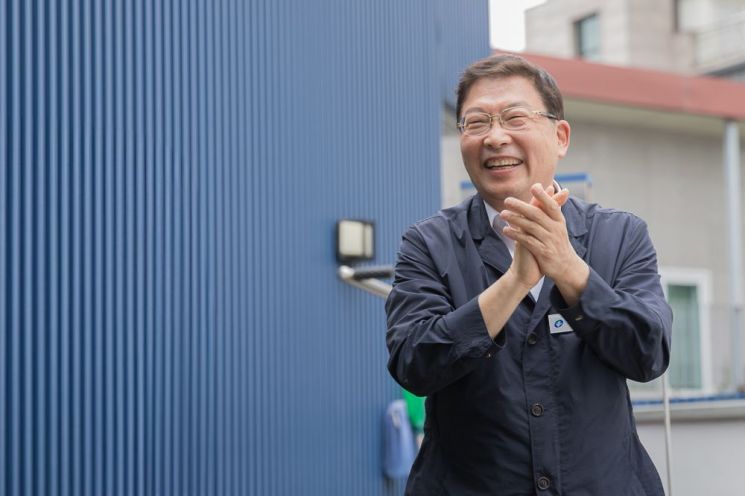
“The workplace culture has become much softer.” “A natural atmosphere of hard work has formed, making the organization run faster.” “Employee welfare has also increased.”
These are comments from Gwangjin-gu employees since Mayor Kim Kyung-ho took office.
Kim Kyung-ho, Mayor of Gwangjin-gu, has always been interested in improving workplace culture.
He believed that “when employees are happy, the organization is happy, and we can provide kind and high-quality administrative services to residents.”
Since taking office, Mayor Kim has carefully managed employee morale and welfare benefits.
He has worked to create a good workplace by boosting employee morale and welfare. Continuous communication has been maintained. The workplace culture has become more flexible, and benefits have greatly increased. In particular, the treatment of young employees regarding their work life has improved.
High Employee Response to Introduction of Important Duty Allowance and Special Promotion System
The important duty allowance system and special promotion system have been effective. The important duty allowance is a system that pays allowances based on the importance and difficulty of the duties performed. Employees assigned to important duties receive a monthly allowance of 100,000 KRW. Seven employees who made significant contributions to the district’s administrative development through proactive civil complaint handling were given a special promotion with an additional first step on the pay scale.
Also, flexible staffing adjustments that reduced the number of Grade 9 positions and increased Grade 8 positions to encourage faster promotions received enthusiastic support from new employees.
Employee Morale Boosting Measure: ‘Autonomous Accommodation Expense’ Support
Along with morale-boosting measures, new welfare policies were implemented. The autonomous accommodation expense support, introduced for the first time this year, is a representative example. Employees can freely use any accommodation facility they want and submit receipts afterward. Support is available for up to two nights. An exclusive rest area for employees was also created. It was newly established in the basement of the Safety Management Building last February to reduce stress and improve work efficiency. It is popular among employees as it is equipped with amenities such as massage chairs, coffee machines, and bookshelves. A new marriage congratulatory point system was also introduced, providing welfare points to employees who get married.
Introduction of Reading Leave for Employee Self-Development
Attention was also paid to employee self-development. To provide opportunities for self-improvement and enhance learning effects, a reading culture is being promoted. The Gwangjin Small Library operates, and reading leave, reading correspondence courses, and other healthy communication and learning atmospheres within the workplace are encouraged. External professional training institutions, graduate school education, and the Gwangjin Cyber Training Center continuously provide workplace education to improve work skills and organizational adaptability. The employee training system aimed at cultivating problem-solving abilities for district tasks and enhancing creativity and expertise is expected to contribute to strengthening organizational competitiveness.
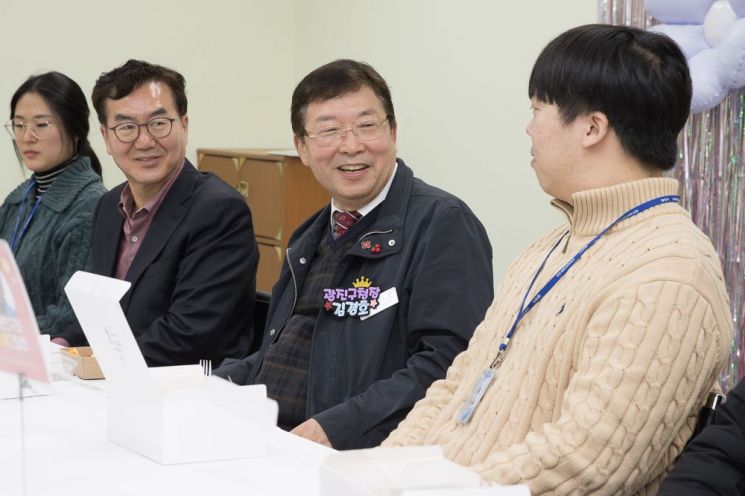
Creating a Workplace Balancing Work and Family... Extending Childcare Leave Age from 5 to 8 Years, Allowing Up to 2 Hours Off Per Day
Efforts are also being accelerated to create a workplace that balances work and family. Recently, the district announced the ‘2024 Personnel Operation Basic Plan,’ reflecting improvements in the work environment so that employees raising children can balance work and childcare. The age of children eligible for childcare leave was extended from 5 to 8 years old. Childcare leave allows employees to reduce working hours to care for their children, with up to 2 hours off per day.
Special childcare leave is also provided. It applies to employees with minor children. If there is a need to attend school events, hospital visits, or other childcare-related matters, employees can take up to 3 days off annually. The plan was prepared to provide practical help by reflecting employee opinions, including ▲extension of long-term service leave periods ▲inclusion of childcare leave periods in the review for practical clerk positions ▲increase in childcare leave allowances.
A district official stated, “We plan to revise the ‘Gwangjin-gu Local Government Officials Service Ordinance’ to include these contents and implement it by the second half of the year at the latest.”
Mayor Kim Kyung-ho of Gwangjin-gu said, “I think it is still insufficient compared to the efforts of the employees. I would like to express my gratitude for the dedication and efforts of the employees who work hard to make Gwangjin-gu a happy place,” and added, “We will continue to communicate more with employees and do our best to create a better working environment.”
© The Asia Business Daily(www.asiae.co.kr). All rights reserved.


















