Provisional 'Future-Oriented Administrative System Reform Committee' Established
"Need to Review New Directions for Local Administration Maintained for 30 Years"
Implementation of Zero Paperwork and Digital Wallets
The Ministry of the Interior and Safety will establish a committee to support discussions on the reorganization of local administrative systems, including the 'Mega City' concept. It also plans to accelerate the implementation of the Digital Platform Government, including zero paperwork requirements and the introduction of digital wallets.
On the 15th, the Ministry announced its 'Major Work Promotion Plan' containing these details. It includes key tasks such as the reorganization of local administrative systems, which has been reignited by the issue of Gimpo's incorporation into Seoul, digital administration, and policies that citizens can tangibly feel in their daily lives. The plan is organized into five major areas and 14 policy directions: Local Era Government, National Safety Government, Digital Platform Government, Livelihood Government, and Great Integration Government.
30th Anniversary of Local Autonomy... Supporting the Reorganization of an Outdated System
First, the Ministry of the Interior and Safety will establish and operate a 'Future-Oriented Administrative System Reorganization Committee (tentative name)' to explore the reorganization of the outdated local administrative system in preparation for the 30th anniversary of local autonomy in 2025. A ministry official explained, "To respond to changes in the administrative environment such as population decline and local extinction, we need to review a new direction for the local administrative system that has been maintained for 30 years since the launch of local autonomy."
The committee, scheduled to launch next month, will serve as an advisory body, playing roles such as selecting key tasks related to the reorganization of the local administrative system, establishing basic plans, and promoting public discussions. Major tasks are expected to include integration between local governments, the formation of special local governments, and Mega City projects. However, areas where administrative district reorganization is already under discussion, such as Gimpo City's incorporation into Seoul, will proceed through local consensus verification regardless of the committee's schedule.
Additionally, the Ministry will actively expand the investment base for regional development through the establishment of a Regional Revitalization Investment Fund and the relaxation of investment restrictions on local public enterprises. The Regional Revitalization Investment Fund was created by investing 100 billion KRW from the Local Extinction Response Fund and aims to induce about 3 trillion KRW in regional development investments. For local public enterprises, regulations will be eased to actively contribute to regional projects, such as expanding the special limit on bond issuance for industrial complex development from 300% to 350% of net assets.
Ensuring National Safety Based on 'Data'
The Ministry of the Interior and Safety, the main agency responsible for disaster management, plans to strengthen safety management based on data and AI. It will convert CCTV monitoring to AI-based intelligent monitoring and continuously expand the monitoring scope by replacing over 6,100 outdated and low-resolution CCTVs.
The 'Smart Measurement Management System' and 'Crowd Management Support System' will also be expanded. The Smart Measurement Management System, which predicts river flooding, will be installed at 440 locations this year and increased to 2,200 locations by 2027. The Crowd Management Support System, which analyzes risk based on population density and other factors, will be applied to 100 key management areas nationwide. Additionally, a 'Potential Disaster Risk Analysis Center' will be established to analyze latent risks such as fire hazards from personal mobility devices and gas explosions in manholes.
The Ministry will also respond to disasters in the so-called 'New Normal' era. To prepare for the climate crisis, it will mandate the establishment of drought countermeasures and reduce the number of emergency water supply recipients in island areas from 4,190 last year to a target of 3,000 this year. To enhance cooperation with related ministries, the Ministry will comprehensively reorganize the lead agencies by type of social disaster to increase accountability, and in cases of unclear jurisdiction over disasters and accidents, the Ministry will promptly intervene to minimize initial confusion.
Digital Administration, 'More Convenient and Uninterrupted'
The Ministry of the Interior and Safety will fully implement the 'Measures to Enhance Public Trust in Digital Administrative Services' announced last January to ensure that there are no inconveniences in using digital administrative services due to issues like 'network paralysis.' The plan centers on installing 'barriers to system failures' between systems and diversifying authentication methods so that administrative work does not become paralyzed even if some systems or components fail.
For more convenient services, the Ministry will promote the joint use of administrative information to enable the application for 1,500 types of public services without paperwork by 2026, achieving 'zero paperwork.' By 2025, a total of 2,145 unnecessary seal certificate requests will also be streamlined.
Moreover, a 'digital wallet' allowing convenient use of various certificates, notices, and IDs issued by the government through familiar private websites or apps such as Naver and Kakao will be implemented in December. Twenty-one new services, including passport reissuance applications and vaccination record inquiries, will be newly opened this year.
Delivery Fee Support for Good-Price Businesses... Stronger Protection for Disaster Victims
The Ministry will revitalize the alley economy by promoting good-price businesses to support small business owners. More than 10,000 additional designations will be made this year, and about 5,000 dining establishments will receive approximately 2 million KRW annually in support. Incentives such as cashback will also be provided to customers using good-price businesses to stabilize dining prices. A ministry official stated, "Starting this year, we will begin a delivery fee support service with a budget of 3 billion KRW," adding, "We have signed MOUs with private delivery companies and are also consulting with local government public delivery apps."
Local tax reforms in housing and living support areas, which have high public sensitivity, will also be implemented. Households with children born this year will be exempt from acquisition tax up to 5 million KRW when purchasing a home for actual residence with the newborn child. Additionally, acquisition tax and automobile tax exemptions for living and prosthetic vehicles will be extended to support the livelihood activities and mobility convenience of persons with disabilities and veterans.
Support measures to protect disaster victims more comprehensively are also being prepared. The Ministry plans to promptly establish a dedicated organization for victims and bereaved families that integrates scattered information on funerals, treatment, and compensation by institution and sector during major disasters. The supply form of temporary housing prefabricated units, currently fixed as one room and one living room, will also be diversified. Various models will be provided considering the number of households and required space, such as rooms with storage, two rooms, and multipurpose rooms. Procedures related to the rapid declaration of special disaster areas during disasters will be improved, and plans to expand damage support in the agriculture and livestock sectors will be reviewed with the Ministry of Agriculture, Food and Rural Affairs.
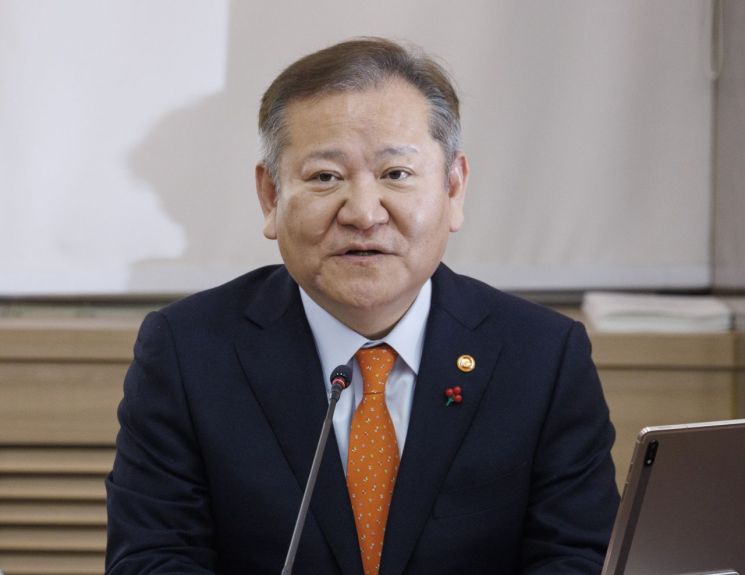
Minister Lee Sang-min of the Ministry of the Interior and Safety emphasized, "The policy environment in 2024 is challenging due to deepening low birth rates, the risk of regional extinction, unpredictable and complex disaster patterns, and difficulties in the livelihood economy," but added, "The Ministry will do its best to serve as a bridge connecting central and local governments and as a core platform ministry encompassing the entire government, placing the people as the top priority of state affairs and leading a 'government that acts to solve problems.'"
© The Asia Business Daily(www.asiae.co.kr). All rights reserved.


















